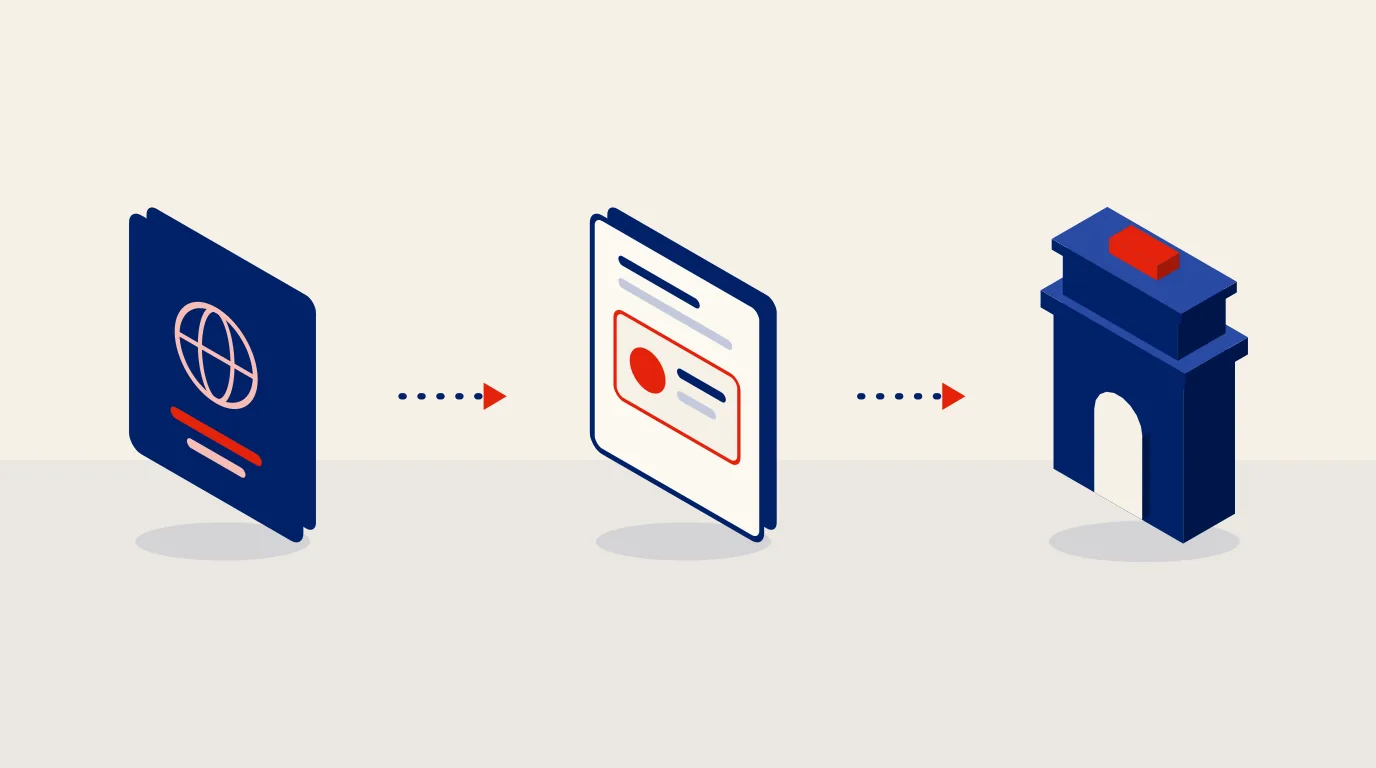
IP Monetization & Transfer

IP Assignment and Licensing in India:
Unlock the Value of Your Intellectual Property

Your intellectual property is more than just a shield; it's a valuable asset that can be sold or licensed to generate significant revenue. We provide expert guidance to structure deals that maximize your financial returns.

Monetize Your IP
Expert Negotiation Robust Legal Agreements Maximized Returns
From Asset to Revenue

Assignment vs. Licensing: Selling vs. Renting Your IP

Understanding the fundamental difference between assigning (selling) and licensing (renting) your IP is the first step in choosing the right monetization strategy for your business goals.

IP Assignment: The Permanent Sale

An IP assignment is the complete and permanent transfer of your ownership rights to another party. It's equivalent to selling a physical property; you transfer the title and all associated rights.

  • Transfers Ownership: The buyer (assignee) becomes the new owner of the IP.
  • Lump-Sum Payment: Typically involves a one-time payment or fixed installments.
  • Loss of Control: The original owner (assignor) gives up all control over the IP.
  • Best For: Selling non-core assets, raising immediate capital, or as part of a business acquisition.

Key Takeaway

Assignment provides a clean break and immediate cash, but you forfeit all future rights and potential income from the asset.

IP Licensing: The Strategic Rental

An IP license is a contractual permission granted by the IP owner (licensor) to another party (licensee) to use the IP under agreed terms, while the licensor retains full ownership.

  • Retains Ownership: You remain the owner of the IP asset.
  • Ongoing Royalties: Generates a continuous stream of revenue based on usage or sales.
  • High Degree of Control: You can define the scope, territory, duration, and exclusivity.
  • Best For: Market expansion, brand collaborations, software distribution, and franchising.

Key Takeaway

Licensing offers long-term revenue potential and strategic flexibility, but requires ongoing management and monitoring of the licensee.

Strategic Advantages

Benefits of Strategic IP Transactions

Leverage your intangible assets to create tangible business growth, market presence, and financial returns.

Create New Revenue Streams

Licensing turns your dormant IP into an active, royalty-generating asset, providing a steady income flow with minimal additional investment.

Expand Market Reach

License your IP to partners in new geographic regions or industries, allowing you to enter new markets quickly and with reduced financial risk.

Build Strategic Alliances

Use IP licensing as a tool to form powerful partnerships, access complementary technologies, and leverage established distribution channels.

Enhance Brand Visibility

Through trademark licensing for merchandise, co-branding initiatives, or franchising, you can extend your brand's presence and consumer recognition.

Generate Immediate Capital

Assigning (selling) non-core patents or other IP can provide a significant, immediate injection of cash to fund core business operations or new R&D.

Reduce Commercialization Risk

Shift the risks associated with manufacturing, marketing, and distribution to your licensees, who are often better equipped to handle them in their markets.

Our Structured Approach

The IP Transaction Roadmap

A disciplined process to ensure your IP transactions are secure, profitable, and legally sound.

1

Valuation & Due Diligence

We assess the commercial value of your IP and conduct thorough legal due diligence to verify ownership, validity, and enforceability.

2

Partner Identification

Leveraging our network, we help you identify and screen potential licensees or buyers who are a strong strategic fit for your technology and brand.

3

Deal Negotiation

Our experts lead or support negotiations on key terms like royalty rates, upfront fees, scope of rights, and performance milestones to secure the best deal.

4

Agreement Drafting

We draft comprehensive, watertight assignment deeds or license agreements that clearly define all rights and obligations to protect your interests.

LEGAL BASIS

Which law governs an IP assignment or licence, and where is it recorded?

Each type of IP has its own statute, its own writing rule and its own register. A deed that binds the parties can still fail as proof of title in court if nobody recorded it.

IPWhat the law requiresRecord withForm and fee (e filing)If not recorded
Trade markRegistered and unregistered marks can be assigned with or without goodwill (sections 38 and 39)Trade Marks RegistryTM-P, ₹9,000 per mark; registered user on TM-U, ₹4,500Not admitted in evidence of title (section 45(2))
CopyrightAssignment in writing and signed, naming the work, rights, term, territory and royalty (section 19); licence in writing (section 30)Copyright Office, for a registered workForm XV, ₹200 per literary workThe Register keeps showing the old owner
PatentAssignment, licence or other interest valid only in writing, in a document with all terms, duly executed (section 68)Patent OfficeForm 16, ₹1,600 or ₹8,000 per patentNot admitted as evidence of title (section 69(5))

Sources: Trade Marks Act, 1999, sections 38, 39 and 45; Copyright Act, 1957, sections 19 and 30; Patents Act, 1970, sections 68 and 69. IP India trade mark fees, copyright and patent fee schedules. Read 26 Oct 2026.

For a trade mark assigned without the goodwill of the business, section 42 adds a step. The assignee must apply to the Registrar for directions on advertising the assignment within six months, extendable by three months. Until then, the assignment does not take effect.

The Registrar ordinarily disposes of a TM-P request within three months (rule 76). For patents, either party to the transaction can apply on Form 16 (section 69(2)). We file the recording as soon as the stamped deed is back.

WHEN IT APPLIES

When does a cross border group need an IP assignment or licence?

  • An Indian subsidiary or capability centre builds software or inventions for the parent. Unless agreed otherwise, section 17(c) of the Copyright Act makes the Indian employer the first owner of employee works. The parent needs a written assignment.
  • A foreign parent lets its Indian subsidiary use the group brand. Use by a permitted user counts as use by the owner (section 48 of the Trade Marks Act). The permission should still be written and priced.
  • A founder moves IP into a new company after incorporation.
  • A group moves its holding company and IP to India in a reverse flip.
  • A buyer acquires a business and takes its marks, patents and code.
  • A foreign licensor licenses technology or content to an Indian company for a royalty.

Each case has a corporate side, the deed and the recording, and a cross border side, which covers tax, transfer pricing and FEMA. We handle both, so the deed and the remittance papers say the same thing. Our guide to the reverse flip of a holding company to India covers the IP move in that case.

DOCUMENTS

What goes into the deed, and which documents do we need?

Clauses we always cover

  • Each IP item, with its registration or application number.
  • The rights moved or licensed, the field of use and exclusivity.
  • Term and territory, in words. For copyright, section 19 defaults to five years and India.
  • The consideration or royalty: the base, the rate and the payment dates.
  • For a trade mark, whether it moves with or without the goodwill of the business.
  • Who bears Indian withholding tax, and whether payments are grossed up.
  • Quality control over the licensee's use of a trade mark.
  • Who files TM-P, TM-U, Form 16 or Form XV, and by when.
DocumentWho provides itFormatNotes for foreign parents
Assignment deed or licence agreementKrystal7 drafts, both parties signSigned original, stamped in IndiaAuthorised signatories of each party sign.
Board resolutions authorising the signatoriesEach partyCertified copyThe foreign parent uses the form its own law allows.
Registration certificates or application numbersCurrent ownerPDFFor trade marks, patents and registered copyrights.
Authorisation of agentOwner or assigneeTM-48 for trade marks; Form 26 for patentsNeither form carries a government fee.
Valuation or royalty benchmarkingKrystal7 or a registered valuerReportSupports the price for transfer pricing.
Tax residency certificateForeign partyIssued by its home tax authorityNeeded for the treaty rate (section 159(8)).
Form 41Foreign partyOnlineThe prescribed information for a treaty claim; it replaced Form 10F.
Forms 145 and 146Indian payer and its chartered accountantOnlineBefore each remittance; they replaced Forms 15CA and 15CB.

Sources: Patents Act, 1970, sections 68 and 69. Trade Marks Act, 1999, section 45. Income Tax Act, 2025, section 159. CBDT transition FAQs. Read 26 Oct 2026.

Stamp duty

Stamp duty on an IP assignment or licence is a state levy. The rate depends on the state where the deed is signed or first brought into India, and on how the instrument is classed. We confirm the state schedule before signing and stamp the deed before it goes to any registry.

Where the price needs support, we prepare the valuation report as part of the engagement.

PROCESS

How does the transfer run, step by step?

StepWho actsTime limit or usual timeBasis
Scoping call and fee quoteKrystal7Fixed fee in writing within 48 hours of the callKrystal7 terms
Valuation or royalty benchmarkKrystal7 or a valuerBefore signingTransfer pricing
Sign and stamp the deedBoth partiesBefore any registry filingState stamp law
Trade mark without goodwill: apply for advertisement directionsAssignee6 months from the assignment, extendable by 3 monthsSection 42
Record a trade mark assignment on TM-PAssigneeRegistrar ordinarily disposes within 3 monthsSection 45; rules 75 and 76
Record a patent assignment or licence on Form 16Either partyNo fixed period in rule 90; we file promptlySection 69; rule 90
Record a copyright change on Form XVOwnerNo fixed periodCopyright Rules, 2013, rule 70(1)
Deduct tax and file Forms 145 and 146Indian payerBefore each remittanceSection 393, Income Tax Act, 2025
Remit through the AD bankIndian payerOn the payment datePurpose code S0902 or S0901

Sources: Trade Marks Act, 1999, sections 42 and 45. Trade Marks Rules, 2017, rules 75 and 76. Patents Rules, 2003, rule 90. RBI Form A2 purpose codes. Read 26 Oct 2026.

TAX

How is royalty paid to a foreign licensor taxed in India?

Section 207 of the Income Tax Act, 2025 taxes royalty paid by an Indian concern to a non resident or foreign company at 20 percent. The tax applies to the gross amount, with no deduction for expenses. The agreement must meet the section's conditions on government approval or industrial policy.

For a foreign company, surcharge is 2 percent where the payments subject to deduction exceed ₹1 crore, and 5 percent above ₹10 crore. These rates come from Part II of the First Schedule to the Finance Act, 2026. Health and education cess applies on top.

A tax treaty can lower the rate. Section 159(4) applies the Act only to the extent it is more beneficial, so the payee takes the lower treaty rate. To claim it, the payee needs a tax residency certificate and the prescribed information, filed as Form 41 (section 159(8)).

Licensor's countryTreaty rate on royalty for IPArticle
United States15% (10% for use of equipment)Article 12
United Kingdom15% (10% for use of equipment)Article 13
Singapore10%Article 12
United Arab Emirates10%Article 12
No treaty claim20% plus surcharge and cessSection 207

Sources: Income Tax Department, DTAA texts with the USA, UK, Singapore and UAE. Income Tax Act, 2025, sections 159 and 207. Read 26 Oct 2026.

Worked example

Assume an Indian subsidiary pays its US parent a royalty of ₹50,00,000 in tax year 2026-27. It makes no other payment to the parent that year. The parent holds a valid TRC and has filed Form 41.

  • At the treaty rate of 15 percent, TDS is ₹7,50,000 and the parent receives ₹42,50,000.
  • Without the treaty claim, TDS at 20 percent under section 207 is ₹10,00,000, plus cess.
  • No surcharge applies in either case, because the payments do not exceed ₹1 crore.

The Indian payer deducts under section 393 and files Form 145, backed by a chartered accountant's Form 146, before the money leaves India. Our guides on TDS on payments to non residents and Forms 145 and 146 cover the filing steps.

GST on the royalty

A royalty paid to a licensor outside India is an import of services. The Indian licensee pays GST under reverse charge, under entry 1 of Notification No. 10/2017 Integrated Tax (Rate). Our guide on reverse charge on services from a foreign parent explains the credit and the return.


TRANSFER PRICING

How does transfer pricing apply to royalty and IP moves within a group?

A royalty paid to a parent, or an IP sale between group companies, is an international transaction between associated enterprises. The price must be at arm's length. The Indian company reports it in the accountant's report on international transactions, the old Form 3CEB.

For FY 2025-26, the CBDT transition FAQ puts the audit report due date in transfer pricing cases at 31 Oct 2026. The return is due by 30 Nov 2026.

We benchmark a royalty against comparable licence agreements where they exist. Where they do not, we test the profit the licensee keeps after paying it. Our guide to arm's length price methods explains the choices.

Questions a transfer pricing officer asks

  • What the Indian company gets for the royalty, and the evidence that it uses the IP.
  • Whether the Indian company built the IP it now pays to use.
  • Whether the rate matches what the group charges unrelated licensees.
  • Whether a brand royalty and a management fee pay twice for the same benefit.

Our transfer pricing advisory service prepares the benchmark before the first invoice.

FEMA

Does a royalty remittance need RBI approval under FEMA?

No. A royalty or licence fee is a current account transaction. Royalty, trade mark and franchise payments do not appear in Schedules I to III of the Foreign Exchange Management (Current Account Transactions) Rules, 2000. The AD bank remits them without RBI or government approval.


The bank still needs the papers. We prepare the agreement, the invoice, Forms 145 and 146, and the purpose code. RBI's Form A2 purpose code list uses S0902 for payments for the use, through licensing arrangements, of produced originals and protected rights. It uses S0901 for franchise services.

Pick the code that matches the agreement and the tax treatment. Our guide on purpose codes for foreign remittances lists the related codes. The India repatriation planner compares royalty with dividends and service fees as ways to pay a parent.

COMPARISON

Assignment, registered user or permitted use for a trade mark?

PointAssignmentLicence recorded as registered userLicence not recorded (permitted use)
OwnershipMoves to the assigneeStays with the ownerStays with the owner
Registry filingTM-P, ₹9,000 per markTM-U, ₹4,500None
Can the user sue infringers in its own name?Yes, as the new proprietorYes, with the owner joined as defendant (section 52)No (section 53)
Does the use protect the mark from non use removal?The assignee uses its own markYes, it counts as the owner's use (section 48)Yes, it counts as the owner's use (section 48)
Usual paymentLump sum or instalmentsRoyaltyRoyalty
Transfer pricing within a groupAppliesAppliesApplies

Sources: Trade Marks Act, 1999, sections 45, 48, 49, 52 and 53; IP India trade mark fees; read 26 Oct 2026.

For patents, an assignment and a licence must each be in writing (section 68), and both are registered on Form 16 (section 69). For copyright, record changes in a registered work on Form XV.

COMMON MISTAKES

Which IP transfer mistakes do we see?

  1. Licensing a brand the parent has not filed in India. Fix: file TM-A in the parent's name before the licence starts, and record the subsidiary as registered user once the mark registers.
  2. Leaving the deed unrecorded. Fix: file TM-P or Form 16 soon after signing. Sections 45(2) and 69(5) keep unrecorded documents out of evidence of title.
  3. A copyright assignment with no term or territory. Fix: state both, or section 19 limits it to five years and to India.
  4. Remitting at the treaty rate without a TRC and Form 41. Fix: collect both before the first payment, or deduct at the section 207 rate.
  5. A royalty rate with no benchmark. Fix: support the rate before the first invoice, because the accountant's report will cover it.
  6. A patent licence agreed by email. Fix: sign a document with all the terms, as section 68 requires.
  7. The wrong purpose code. Fix: use S0902 for licence royalties and S0901 for franchise fees, matching the agreement.

More questions

More questions clients ask us

What TDS rate applies to royalty paid to a foreign parent?

20 percent plus surcharge and cess under section 207 of the Income Tax Act, 2025, or the lower treaty rate. The treaty rate is 15 percent for the US and the UK, and 10 percent for Singapore and the UAE. The parent needs a tax residency certificate and Form 41 to claim it.

Does a royalty remittance need RBI approval?

No. Royalty is a current account transaction and does not appear in Schedules I to III of the Current Account Transactions Rules, 2000. The AD bank remits it against the agreement, the invoice and Forms 145 and 146.

Do I have to record a trade mark assignment?

Yes, on TM-P under section 45, with a fee of ₹9,000 per mark on e filing. Until it is recorded, section 45(2) keeps the assignment out of evidence of title, unless the Registrar or a court directs otherwise.

Is a patent licence valid if it was agreed by email?

We would not rely on it. Under section 68, a licence is valid only if it is in writing, in a duly executed document that holds all its terms. Sign a proper licence and record it on Form 16.

Does GST apply to royalty paid to a foreign licensor?

Yes. The Indian licensee pays IGST under reverse charge on the import of the service, under entry 1 of Notification No. 10/2017 Integrated Tax (Rate).

Is royalty paid to a parent subject to transfer pricing?

Yes. It is an international transaction with an associated enterprise, so the rate must be at arm's length and appear in the accountant's report. For FY 2025-26, that report is due by 31 Oct 2026 in transfer pricing cases.

Can our Indian subsidiary use the parent's trade mark without a written licence?

It should not rely on informal use. Section 48 treats permitted use as use by the owner, but we put the permission, quality control and royalty in a written licence. We record the subsidiary as a registered user where it needs to sue infringers.

What does recording a patent assignment cost?

Form 16 costs ₹1,600 for natural persons, startups, small entities and educational institutions, and ₹8,000 for others, on e filing. Either party to the transaction can apply under section 69.

Monetize Your Innovation

Transform Your IP Into a Revenue Engine

Your patents, trademarks, and copyrights are valuable business assets. Stop letting them sit idle. Let us help you structure the right deals to turn your IP portfolio into a powerful source of income.

IP Valuation
Know Your Worth

Deal Negotiation
Maximize Your Terms

Watertight Agreements
Secure Your Rights

Contact us for a free consultation on your IP monetization potential.

Fill the form to start exploring licensing and assignment opportunities.

Let's Connect

Share a few details so we can understand the support you need.

Click to select services...
Foreign Subsidiary Setup
FEMA Compliance
Transfer Pricing
E-CFO Services
Company Registration in India
LLP Registration in India
GST Registration
Tax Filing (ITR)
Trademark Registration
General Compliance
Compliance Rescue (cleanup from other firm)
Company/LLP Closure
Other / Not Sure

We respect your privacy. No spam. Details stay with Krystal7 Consultants.

Message Received

Thank you. Our team will review your enquiry and contact you.

Questions Answered

Frequently Asked Questions

Key details about IP assignment and licensing agreements

An exclusive license grants the rights to only one licensee, and even the licensor (the IP owner) cannot use the IP. A non-exclusive license allows the licensor to grant the same rights to multiple licensees and continue using the IP themselves. Exclusive licenses typically command higher royalties.

A royalty is a payment made by the licensee to the licensor for the right to use the IP. It is typically calculated as a percentage of the revenue generated from the licensed product or service (e.g., 5% of net sales). It can also be a fixed fee per unit sold or a lump-sum amount.

A 'field of use' restriction limits the licensee's use of the IP to a specific industry or application. For example, a patented chemical compound could be licensed to one company for use in pharmaceuticals and to another company for use in agricultural products. This allows the licensor to maximize revenue from a single invention across multiple markets.


A well-drafted license agreement will include specific clauses for breach of contract. Remedies typically include the right to terminate the license, claim unpaid royalties, seek financial damages, and obtain an injunction to stop the unauthorized use of the IP.

Yes, an assignment is a permanent sale of the asset. Ownership transfers when the written assignment deed is executed. You should then record it with the Patent Office or Trade Marks Registry where applicable. Reclaiming ownership would require a new transaction, essentially buying the IP back from the new owner.

Yes. Since intellectual property rights are territorial, you can have different strategies for different regions. You could license your European patents to a partner while assigning (selling) your separate US and Canadian patents to another company. This requires careful legal drafting to ensure the agreements do not conflict.

Why choose us

Why clients choose Krystal7 Consultants for IP assignment and licensing

Six things you can check before you sign, and hold us to after.

A Chartered Accountant signs off

Filings go out through our Chartered Accountant practice, led by CA Nandini Hasija, All India Rank 49, ICAI.

A reply within 4 business hours

The team is online from 9:30 AM to 11:59 PM IST, which covers the working day in the UK and the UAE, the afternoon in Singapore and the morning in the US.

The fee is fixed before work starts

You see the professional fee in writing first. Government fees are passed on at cost.

Both sides of the border, one team

Company law, FEMA and RBI reporting, tax and transfer pricing sit with the same advisers.

Your due dates, tracked by us

We keep the compliance calendar for your entity and tell you what is due before it is due.

500+ clients across 5 continents

More than 50 advisers on the bench when a matter needs a specialist.

Client reviews

What clients say

5.0from 33 Google reviewsView more reviews on Google ↗
Dhruv
Google review
5/5Trademark

Best experience ever Handle me with respect & patience and make me feel at ease while registering my trademark and other works

Posted 19 Jul 2025On Google ↗
Kiran Nimashakavi
Google review
5/5India entry

Working with the Kristal7 team has been an absolute pleasure. Their professionalism, attention to detail, pace they work at and commitment to delivering top-quality results stand out. They took the time to understand our needs and executed seamlessly. Highly recommend Kristal7 to anyone looking for a reliable partner to establish business in India.

Posted 18 Aug 2026On Google ↗
Charu Verma
Google review
5/5Income tax return

I had a great experience with this firm while filing my ITR! The team handled my ITR filing end-to-end, answered all my queries patiently, and made the entire process smooth and hassle-free. Nandini is highly professional, responsive, and took complete ownership throughout. Highly recommended for anyone looking for reliable tax filing assistance.

Posted 15 Jul 2026On Google ↗
WebHostMost Admin
Google review
5/5Compliance

We can't be happier after dealing with true professionals who really do things in India. Absolutely recommended, high-class professionals, Nihal knows his stuff better than anybody in India, trust me. Highly recommended if you ever need any type of business needs to be done properly and ON TIME in India! Thank you guys!!!

Posted 6 Jun 2026On Google ↗
Rohan Jha
Google review
5/5Advisory

Very energetic and young professionals with best consultation and commitment of work completion on time in regionable fees. Mr. Nihal is very punctual & committed .

Posted 31 Mar 2026On Google ↗
Zona Bera
Google review
5/5Registrations

Very happy with my experience with them. They have thoroughly guided me through the processes and executed them as planned, for all my registrations. Definitely would recommend using their services.

Posted 5 Nov 2025On Google ↗
Bhavya Kri
Google review
5/5Client service

“I had an excellent experience. The process was smooth, quick, and handled very professionally. I’m really impressed with the service!”

Posted 14 Sep 2025On Google ↗
Yash Karaday
Google review
5/5Annual compliance

Recap Crystal Seven Consultants, especially Nandini Hassija and Nihal Srivastava, have redefined my experience with compliance management. From professionalism to problem-solving, they delivered trust, accuracy, and peace of mind—qualities rare in this industry. Detailed Review When Nandini first called me from Crystal Seven Consultants, I’ll admit I was hesitant. In the compliance and consultancy space, it’s common to see aggressive sales tactics with little to no delivery. But Nandini immediately broke that stereotype with her professionalism, clear communication, and genuine approach. She personally assisted me with something as important as a resignation process, ensuring it was handled responsibly and without stress. Later, Nihal stepped in and impressed me with his technical expertise and eye for detail. He uncovered a serious compliance error (a mug-up) created by my previous consultant—something that could have been risky and damaging for my company. The way Nihal managed this issue with care, accuracy, and professionalism gave me full confidence that my compliance matters were finally in safe hands. Today, I rest assured knowing that Daxy’s compliances are being managed with integrity, precision, and accountability. Both Nandini and Nihal have shown me that this industry can, in fact, be built on trust, transparency, and delivery. I genuinely recommend Crystal Seven Consultants to any business owner who wants their legal, financial, and compliance matters handled not just properly—but with care, reliability, and genuine expertise.

Posted 26 Aug 2025On Google ↗
Dwijraj Singh
Google review
5/5Company closure

Company closure was managed without a single visit to any office. Krystal7 team is very professional and kept me informed.

Posted 20 Jul 2025On Google ↗
Vedant Pathare
Google review
5/5Company registration

I had a small delay in DSC courier for Pvt Ltd registration, but Ashwin Agarwal kept me informed throughout. Overall, excellent service.

Posted 18 Jul 2025On Google ↗
Anand Kumar
Google review
5/5GST

Simply the Best for GST!Krystal7 Consultants made GST filing an absolute breeze! Their team is incredibly professional, efficient, and genuinely helpful. They handled everything seamlessly, making a usually stressful process completely stress-free compared to my previous vendor. Highly recommend their excellent service – truly a 5-star experience!

Posted 17 Jul 2025On Google ↗
Prapti Gholap
Google review
5/5Registrations

Riti from Krystal7 handled our FSSAI license beautifully. She was always available on WhatsApp, gave me a checklist, and made sure my application was filed the first time with zero errors. Process took less than 2 weeks—thanks for the smooth experience!

Posted 17 Jul 2025On Google ↗