Advance Tax Due Dates for Companies in India Under the 2025 Act
Advance tax for companies in India: the four due dates, the INR 10,000 threshold, section 405 computation, interest under sections 424 and 425 (old 234B and 234C), online payment and a cost plus example.
Krystal7 Consultants · India entry, tax and compliance
Written by CA Nandini Hasija, Krystal7 Consultants. Last updated 23 October 2026.
Companies in India pay advance tax in four instalments under section 408 of the Income Tax Act, 2025. The cumulative targets are 15 percent by 15 June, 45 percent by 15 September, 75 percent by 15 December and 100 percent by 15 March. It applies when the year's tax after TDS is INR 10,000 or more. Shortfalls attract interest under section 425 (old 234C), and underpayment below 90 percent attracts section 424 (old 234B).
This page is for the finance leads of Indian subsidiaries and for foreign parents who fund their tax. It covers the dates, the threshold, the computation, the two interest charges, online payment and a worked example for a cost plus subsidiary. INR 1 lakh is 100,000 and INR 1 crore is 10 million.
What are the advance tax due dates for companies?
A company pays advance tax in four instalments in each tax year. Section 408(1) of the Income Tax Act, 2025 sets cumulative targets. They are 15 percent by 15 June, 45 percent by 15 September, 75 percent by 15 December and the whole amount by 15 March. Section 408(3) treats tax paid by 31 March as advance tax for that year.
The dates are the same as under section 211 of the Income Tax Act, 1961. Only the section number and the label of the year changed. Tax year 2026-27, which runs from 1 Apr 2026 to 31 Mar 2027, is the first year under the 2025 Act.
Instalment
Due date for tax year 2026-27
Cumulative share of advance tax (%)
Interest if short (section 425)
First
15 Jun 2026
15
3%, unless at least 12% is paid
Second
15 Sep 2026
45
3%, unless at least 36% is paid
Third
15 Dec 2026
75
3%
Fourth
15 Mar 2027
100
1%
Sources: sections 408 and 425, Income Tax Act, 2025; Income Tax Department FAQs on interest under sections 423 to 426.
On 23 Oct 2026, two instalments for tax year 2026-27 remain: 15 Dec 2026 and 15 Mar 2027. A company that underpaid in June or September can still pay the balance by 15 December. That avoids a further 3 percent charge on the December date, though the interest already due for June and September stays. Our batch year end closing checklist sets the March instalment inside the wider close.
A business on presumptive taxation under section 58(2) pays the whole amount by 15 March in one instalment, under section 408(2). That rule rarely helps a company. Most foreign owned subsidiaries pay all four instalments.
Which companies must pay advance tax?
Every company whose tax for the year, after TDS and TCS, is INR 10,000 or more must pay advance tax. Section 404 of the Income Tax Act, 2025 sets that threshold, as section 208 of the 1961 Act did. It applies to domestic companies, foreign owned subsidiaries and foreign companies with taxable income in India.
The threshold uses the computation in section 405. A company subtracts the TDS and TCS on its income before it tests the INR 10,000 figure. A subsidiary that earns only from services to its parent abroad suffers no TDS on that income. It therefore pays almost all its tax as advance tax.
Type of company
Usually pays advance tax?
Why
Indian subsidiary providing services to its foreign parent
Yes
Its export income carries no TDS, so its tax is well above INR 10,000
Indian subsidiary with domestic customers
Yes, on the balance after TDS
Indian customers deduct TDS, which section 405 subtracts
Company with a tax loss and no MAT for the year
No
It has no tax payable for the year
Company liable to MAT
Yes, on MAT where it exceeds normal tax
MAT is the tax payable for the year
Foreign company with only royalty or technical fees taxed by TDS
Usually no
Section 405 subtracts the tax actually deducted
Foreign company with a branch or permanent establishment in India
Yes
Its business profits are not covered by TDS
Sources: sections 404 and 405, Income Tax Act, 2025.
A new subsidiary starts paying in the instalment that falls after it begins earning. Section 425(4) excludes a shortfall caused by business income "accruing or arising for the first time". The condition is that the tax is paid in the later instalments. We still ask a new subsidiary to pay from the first quarter in which it bills its parent.
How is advance tax computed under the Income Tax Act, 2025?
Section 405(1) uses the formula A = B − C. A is the advance tax payable. B is income tax on the "specified sum", the estimated current income, at the rates in force in the financial year. C is the tax deducted or collected at source on income included in that sum. The company pays A in the four instalments.
Section 406 makes the company estimate its own current income and pay "on his own accord". Section 406(2) lets it increase or reduce the remaining instalments when the estimate changes. It need not tell the Assessing Officer.
The rates come from the Finance Act. The Memorandum to the Finance Bill, 2026 states the rates for advance tax for tax year 2026-27. It says the rate in section 200 is 22 percent and "surcharge would be at 10% on such tax". It levies cess at 4 percent in all cases.
Company and income band
Base rate (%)
Surcharge (%)
Effective rate with 4% cess (%)
Domestic company in the section 200 regime, any income
22
10
25.168
Domestic company, turnover in tax year 2024-25 up to INR 400 crore, income INR 1 crore to INR 10 crore
Foreign company, income INR 1 crore to INR 10 crore
35
2
37.128
Foreign company, income above INR 10 crore
35
5
38.22
Sources: Finance Act, 2026, First Schedule, Part III; Memorandum explaining the Finance Bill, 2026; section 200, Income Tax Act, 2025.
A company outside section 200 also checks minimum alternate tax. MAT is 14 percent of book profit from tax year 2026-27 under section 206, as a final tax. We estimate advance tax on the higher of normal tax and MAT. Our batch note on minimum alternate tax covers the computation, and our guide to corporate tax rates covers the regimes.
How should a subsidiary with transfer pricing income estimate advance tax?
Start from the budgeted operating cost and apply the mark up in the transfer pricing policy. Add other income, such as bank interest and exchange gains, and subtract TDS on that income. Re estimate before each instalment, because costs, headcount and exchange rates move during the year.
A cost plus subsidiary has a predictable profit. Its revenue equals its cost plus a fixed mark up, so its taxable profit moves with its cost base. If the cost base grows by a fifth during the year, so does the tax. A June estimate built on last year's costs then leaves the September instalment short.
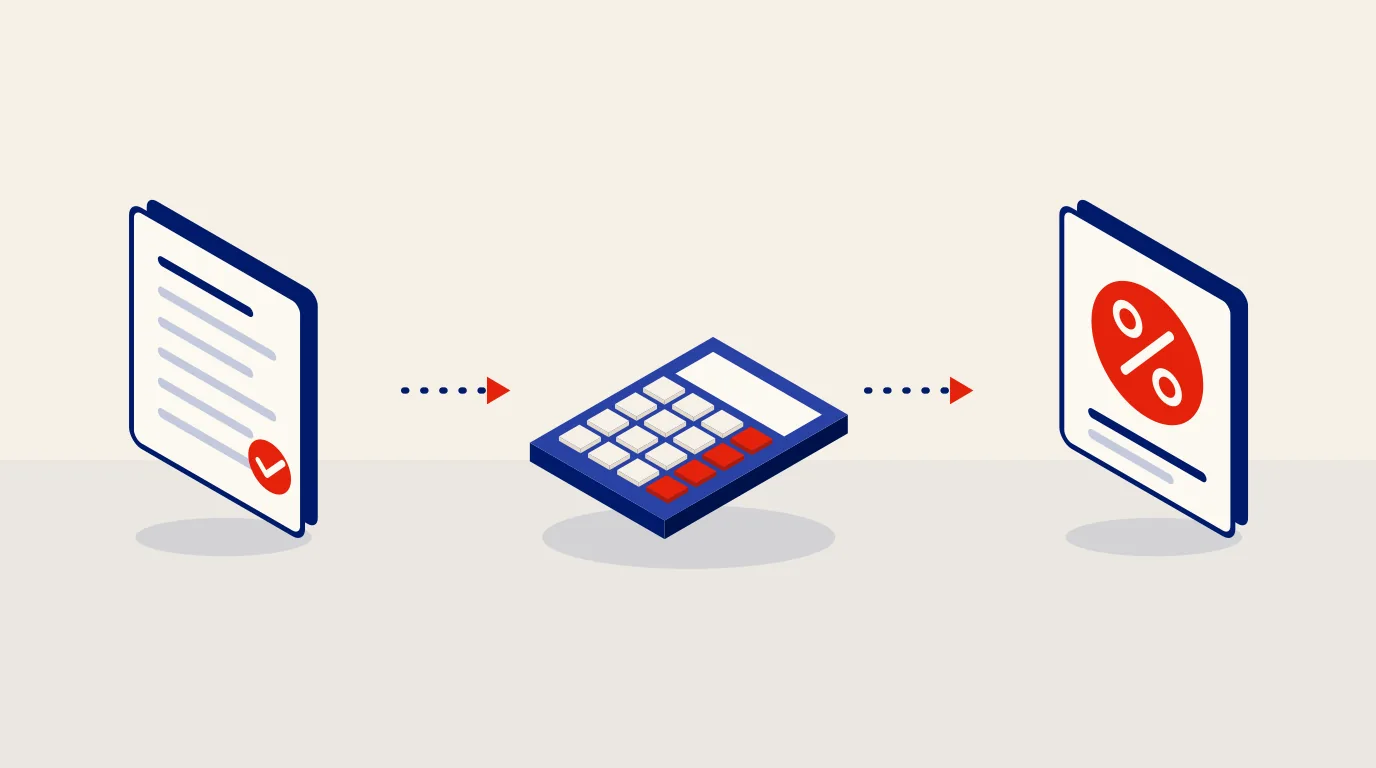
We use a simple quarterly routine. Before each due date, we take the actual cost to date and the forecast to 31 March. We apply the policy mark up, check it against the arm's length range, and add other income. We then pay the difference between the cumulative target and the tax already paid.
Input
Where it comes from
What changes it during the year
Operating cost base
Budget, then actuals
Hiring, salary revisions, new premises, ESOP recharges
Mark up
Intercompany agreement and transfer pricing study
Benchmarking update, safe harbour election, APA
True up for the year
Margin test on April to March figures
Cost overruns, a policy change by the group
Other income
Bank and treasury records
Interest rates, idle cash, exchange gains on receivables
TDS on income
Form 168 (old Form 26AS)
Interest and any domestic receipts
Tax rate
Section 200 or the normal regime
Only a change of regime, which section 200 does not allow back
The safe harbour can fix the margin. For eligible IT services, rule 89 of the Income Tax Rules, 2026 allows a margin of 15.5 percent on operating expense. An advance pricing agreement under section 168 fixes it too. Either makes the estimate more certain. Our pages on safe harbour rules and transfer pricing between a US parent and its subsidiary explain both. Our batch note on a 31 March year end under a December parent shows how the instalments fall inside a calendar year group.
What interest applies under section 425 for deferment of advance tax?
Section 425 of the Income Tax Act, 2025 (old section 234C) charges simple interest when an instalment falls short. It is 3 percent on the shortfall at 15 June, 15 September and 15 December, and 1 percent at 15 March. The shortfall is measured against the "tax due on the returned income".
The table in section 425(1) builds in the period. The 3 percent is 1 percent a month for three months, and the 1 percent is one month. The Income Tax Department's FAQ on sections 423 to 426 states the same periods.
Section 425(2) gives two safe harbours. No interest arises for June if the company has paid at least 12 percent by 15 June. None arises for September if it has paid at least 36 percent by 15 September. The December and March tests have no margin.
Section 425(4) excludes some shortfalls. These are shortfalls caused by failing to estimate capital gains, income under section 2(49)(n), business income arising for the first time, or dividends. The company must pay the tax on that income in the remaining instalments, or by 31 March if none remain.
Due date
Target (%)
Safe harbour (%)
Interest on shortfall
Period
15 June
15
12
3%
Three months
15 September
45
36
3%
Three months
15 December
75
None
3%
Three months
15 March
100
None
1%
One month
Sources: section 425, Income Tax Act, 2025; Income Tax Department FAQs on interest under sections 423 to 426.
Rule 269(c) of the Income Tax Rules, 2026 rounds the amount on which interest runs to the nearest multiple of INR 100 and ignores any fraction of INR 100. In practice that rounds it down. Rule 269 replaces rule 119A of the Income Tax Rules, 1962. The Department's interest page shows the same rounding with an example.
What interest applies under section 424 for default in advance tax?
Section 424 (old section 234B) charges simple interest of 1 percent "for every month or part of a month". It applies when a company pays no advance tax or pays less than 90 percent of the assessed tax. Interest runs from 1 April after the tax year until the income is determined under section 270(1) or the regular assessment. Rule 269(b) counts a part of a month as a full month.
The base is the assessed tax less the advance tax paid. Assessed tax is the tax on the income determined, less TDS, TCS, specified reliefs and tax credits. A company that paid 95 percent of its tax as advance tax pays no section 424 interest at all. A company that paid 85 percent pays interest on the whole 15 percent gap.
Self assessment tax stops the clock. Section 424(4) computes interest up to the date of payment and then runs it on the remaining shortfall. So a company that finds a shortfall in April should pay it at once, without waiting for the return.
Reassessment can bring it back. Section 424(5) charges 1 percent a month on any increase from a reassessment or recomputation under section 279. Section 424(6) adjusts the interest when an order under one of the sections it lists increases or reduces the base.
Feature
Section 424 (old 234B)
Section 425 (old 234C)
What it penalises
Paying less than 90% of the year's tax by 31 March
Paying an instalment late or short
Base
Assessed tax less advance tax paid
Instalment target less tax paid by the date
Rate
1% a month or part of a month
3% for each of the first three dates, 1% for March
Period
From 1 April after the tax year to determination or assessment
Fixed: three months or one month
Affected by an addition at assessment
Yes, the assessed tax rises
No, it uses tax due on the returned income
Sources: sections 424 and 425, Income Tax Act, 2025.
How do transfer pricing adjustments affect advance tax interest?
A transfer pricing addition at assessment raises the assessed tax. If the advance tax paid then falls below 90 percent of the new assessed tax, section 424 applies. Interest runs on the gap from 1 April after the tax year. Section 425 does not change, because it measures instalments against the tax due on the returned income.
The time gap makes section 424 expensive. A transfer pricing assessment usually ends two or three years after the tax year. Interest at 1 percent a month for 34 months adds 34 percent to the extra tax. The worked example below shows the arithmetic.
A voluntary adjustment works differently. If the company's own Form 48 shows a margin below the arm's length range, it may raise its income in the return. That adjustment is part of the returned income. It then counts for section 425, so the company should pay the tax on it in the instalments.
We advise clients to settle the policy margin early. A true up invoice before 31 March, inside the tax year, keeps the books, the return and the instalments aligned. A margin that the company already knows is low should be corrected in the advance tax, not left for the assessment. Our arm's length price methods page covers the tests.
A subsidiary of a US group should read our guide to the India US trade deal, which covers the tariffs and their transfer pricing impact.
How does a company pay advance tax online?
A company pays advance tax through the e-File > e-Pay Tax menu on the income tax portal. It selects the Act, the tax year and minor head 100 for advance tax. It then pays through the portal's payment gateway with an authorised bank, or by NEFT or RTGS from another bank. Companies use the Corporation Tax tile, major head 0020.
The portal's user manual on creating a challan sets out the steps. The company logs in with its PAN, opens the payment menu, selects the Act and creates a new payment. It chooses the tax year, the minor head and the tax breakup, then the payment mode. The bank returns a challan identification number once the payment succeeds.
The Act matters on the portal. The 1961 Act tile covers assessment year 2026-27 and earlier, with challans based on the assessment year. The 2025 Act tile covers tax year 2026-27 onwards, with challans based on the tax year. Advance tax with minor head 100 appears only under the 2025 Act tile.
Rule 333 of the Income Tax Rules, 2026 now governs electronic payment of tax, in place of old rule 125. The portal's user manual names Challan ITNS 280 for income tax and corporation tax under the 1961 Act, and ITNS 280N under the 2025 Act. The company does not fill in a form. The e-Pay Tax screens build the challan.
Check the challan against the annual information statement in Form 168 (old Form 26AS) within a few days. If a challan carries the wrong minor head or tax year, the portal's challan correction service covers minor head 100 on an unconsumed challan. It allows a change of year within 7 days of the deposit, and other corrections within 30 days. Our compliance calendar shows the instalments beside the other filings.
What happens if the Assessing Officer orders advance tax?
Section 407 lets the Assessing Officer order a company to pay advance tax if it has been assessed before and is liable. The order fixes the instalments on the higher of the latest assessed income and the income in a later return. The officer can pass it at any time in the financial year, but not after the last day of February.
The company can still pay on its own lower estimate. It sends an intimation in the prescribed form and pays on that estimate. If it expects a higher income, it pays on the higher figure by the last instalment. An order must be followed by a demand notice under section 289.
A company that receives an order should reply with its own estimate before the next instalment. We attach the cost budget and the transfer pricing policy, so the officer can see how the estimate was built.
Does a foreign parent pay advance tax in India?
A foreign company pays advance tax only on Indian income that TDS does not cover. Royalty, technical fees and interest paid by its Indian subsidiary usually suffer TDS under section 393. Section 405 subtracts that tax, so the parent often has nothing left to pay. A branch or permanent establishment in India pays advance tax on its profits.
The subtraction covers only tax the payer actually deducted. Section 405(1)(b)(i) subtracts tax only on income paid or credited "after deduction of tax". If the Indian subsidiary forgets to deduct, the parent's advance tax liability does not disappear. That is one more reason to get TDS on parent invoices right.
A foreign company's rate depends on its income. The table above shows 37.128 and 38.22 percent for business income above INR 1 crore. Treaty rates on royalty and fees apply only through TDS and the return. Our guide to Income Tax Act, 2025 changes for foreign owned companies covers the wider transition.
What changed in 2026
The Income Tax Act, 2025 came into force on 1 Apr 2026. It moved advance tax from sections 207 to 211 and 234B and 234C of the 1961 Act into sections 404 to 408, 424 and 425. The dates, the percentages and the interest rates did not change. The label did: "tax year" replaced "previous year" and "assessment year".
Item
Income Tax Act, 1961
Income Tax Act, 2025
From
Instrument
Conditions of liability (INR 10,000)
Section 208
Section 404
Tax year 2026-27
Income Tax Act, 2025
Computation of advance tax
Section 209
Section 405
Tax year 2026-27
Income Tax Act, 2025
Payment on own accord or on an order
Section 210
Sections 406 and 407
Tax year 2026-27
Income Tax Act, 2025
Instalments and due dates
Section 211
Section 408
Tax year 2026-27
Income Tax Act, 2025
Interest for default
Section 234B
Section 424
Tax year 2026-27
Income Tax Act, 2025
Interest for deferment
Section 234C
Section 425
Tax year 2026-27
Income Tax Act, 2025
Interest calculation rule
Rule 119A
Rule 269
1 Apr 2026
Income Tax Rules, 2026 (G.S.R. 198(E) of 20 Mar 2026)
Electronic payment rule
Rule 125
Rule 333
1 Apr 2026
Income Tax Rules, 2026
Challan basis
Assessment year
Tax year, minor head 100
Tax year 2026-27
Income tax portal
MAT rate
15 percent
14 percent, final tax
Tax year 2026-27
Finance Act, 2026
Sources: Income Tax Act, 2025 sections named; Income Tax Rules, 2026 navigator; income tax portal user manual; Finance Act, 2026.
What has happened since 10 March 2026
The last instalment under the 1961 Act fell due on 15 Mar 2026, for FY 2025-26. The Income Tax Rules, 2026 were notified on 20 Mar 2026 as G.S.R. 198(E). The 2025 Act and the Rules came into force on 1 Apr 2026.
The first two instalments under section 408 fell due on 15 Jun 2026 and 15 Sep 2026. The portal now asks for the Act and the tax year before it builds a challan. The interest for FY 2025-26 still runs under sections 234B and 234C, in returns for assessment year 2026-27.
Worked example
IndiaCo Private Limited provides software development services to its US parent at cost plus 15 percent. The facts are hypothetical. It pays tax under section 200 at 25.168 percent. For tax year 2026-27 it budgets an operating cost of INR 20 crore. It also expects bank interest of INR 20 lakh, with TDS of INR 2 lakh.
Suppose IndiaCo paid June and September on last year's cost of INR 14 crore. That gives income of INR 2.30 crore, tax of INR 57,88,640 and advance tax of INR 55,88,640. It paid 15 percent (INR 8,38,296) by June and 45 percent (INR 25,14,888) by September. It caught up in December. Its returned income matches the budget.
June: INR 8,38,296 is 10.67 percent of INR 78,53,760, below the 12 percent safe harbour. The shortfall against 15 percent is INR 11,78,064 − INR 8,38,296 = INR 3,39,768, rounded down to INR 3,39,700. Interest at 3 percent is INR 10,191.
September: INR 25,14,888 is 32.02 percent, below the 36 percent safe harbour. The shortfall against 45 percent is INR 35,34,192 − INR 25,14,888 = INR 10,19,304, rounded down to INR 10,19,300. Interest at 3 percent is INR 30,579.
December: IndiaCo pays INR 33,75,432, bringing the total to INR 58,90,320, or 75 percent. No interest.
March: IndiaCo pays INR 19,63,440, bringing the total to 100 percent. No interest.
Section 424 interest after a transfer pricing addition
The Transfer Pricing Officer later holds that the arm's length mark up is 20 percent. The addition is 5 percent of INR 20 crore, or INR 1 crore. We assume the assessment order is passed on 31 Jan 2030.
Extra tax: INR 1,00,00,000 × 25.168 percent = INR 25,16,800.
Assessed tax: INR 78,53,760 + INR 25,16,800 = INR 1,03,70,560. Ninety percent of it is INR 93,33,504.
Advance tax paid of INR 78,53,760 is below 90 percent, so section 424 applies to the gap of INR 25,16,800.
Section 425 interest stays at INR 40,770, because the returned income did not change.
The addition costs IndiaCo INR 33,72,512 before any penalty: INR 25,16,800 of tax and INR 8,55,712 of interest. A margin settled at the arm's length level before 31 March would have avoided both.
Common mistakes
Paying June and September on last year's figures. A growing cost plus subsidiary then falls below the 12 and 36 percent safe harbours. Fix: re estimate on actual cost to date before every instalment.
Forgetting other income. Interest on deposits and exchange gains on receivables add to the estimate. Fix: include them each quarter and subtract only the TDS actually deducted.
Treating 31 March as the deadline. Tax paid by 31 March counts as advance tax. Section 425 still charges 1 percent on a March shortfall. Fix: pay the final instalment by 15 March.
Choosing the wrong minor head or tax year on the portal. The payment then sits against the wrong liability. Fix: select the 2025 Act, the right tax year and minor head 100, and check Form 168 within a few days.
Leaving a known margin shortfall for the assessment. Section 424 interest then runs for years on the extra tax. Fix: raise a true up invoice before 31 March and pay the tax in the instalments.
Ignoring MAT in a company outside section 200. Where MAT exceeds normal tax, the estimate is too low. Fix: compute both every quarter and pay on the higher figure.
Assuming the parent's TDS covers the parent. Section 405 subtracts only tax actually deducted. Fix: confirm TDS on every remittance to the parent before relying on it.
Waiting for the return to pay a known shortfall. Section 424 interest runs to the date of payment. Fix: pay self assessment tax as soon as the shortfall is known.
To have us run the quarterly advance tax computation for your subsidiary, send the budget and the intercompany agreement through our transfer pricing advisory page.
Checklist
Confirm the company's tax regime: section 200, the normal regime, or MAT.
Build the current year's income estimate from the cost budget and the transfer pricing mark up.
Add other income and subtract TDS and TCS actually deducted, using Form 168.
Compute the tax with surcharge and cess at the rates in force.
Pay 15 percent of the estimated advance tax by 15 June.
Re estimate on actual cost to date and pay up to 45 percent by 15 September.
Re estimate again and pay up to 75 percent by 15 December.
Settle the transfer pricing true up and pay the balance to 100 percent by 15 March.
Pay on the income tax portal under the 2025 Act, with minor head 100 and the correct tax year.
Match every challan with Form 168 and raise a correction request for any error.
Compute section 425 interest and any section 424 interest in the return.
Pay any shortfall as self assessment tax at once, before filing the return.
Frequently Asked Questions
What are the advance tax due dates for companies in India?+
15 June, 15 September, 15 December and 15 March. Section 408 of the Income Tax Act, 2025 requires cumulative payments by those dates. They are 15, 45, 75 and 100 percent of the year's advance tax. Tax paid by 31 March still counts as advance tax for the year.
Who has to pay advance tax?+
Any person whose tax for the year, computed after TDS and TCS, is INR 10,000 or more. Section 404 of the Income Tax Act, 2025 sets the threshold, as section 208 of the 1961 Act did. Most foreign owned subsidiaries cross it, because their export income carries no TDS.
Which section replaced section 234C?+
Section 425 of the Income Tax Act, 2025 replaced section 234C from tax year 2026-27. It charges 3 percent on a short instalment at 15 June, 15 September or 15 December, and 1 percent at 15 March. Paying at least 12 percent by June and 36 percent by September avoids the first two charges.
Which section replaced section 234B?+
Section 424 of the Income Tax Act, 2025 replaced section 234B. It charges simple interest of 1 percent a month or part of a month. It applies when advance tax paid is below 90 percent of the assessed tax. Interest runs from 1 April after the tax year to the determination of income or the assessment.
Is interest under section 425 charged on the assessed income?+
No. Section 425 measures each instalment against the tax due on the returned income, as defined in section 425(5). An addition made at assessment, such as a transfer pricing adjustment, does not change section 425 interest. It can raise section 424 interest, which runs on assessed tax.
How do companies pay advance tax online?+
Through the e-Pay Tax menu on the income tax portal. The company selects the Income Tax Act, 2025, the tax year, the Corporation Tax tile (major head 0020) and Advance Tax (minor head 100). It pays through the portal's payment gateway with an authorised bank, or by NEFT or RTGS.
Is Challan 280 still used for advance tax?+
Not as a form the company fills in. The portal's user manual names ITNS 280 for income tax and corporation tax under the 1961 Act and ITNS 280N under the 2025 Act. The challan is built online through the e-Pay Tax menu, and rule 333 of the Income Tax Rules, 2026 governs electronic payment. Challans for tax year 2026-27 are based on the tax year.
How should a cost plus subsidiary estimate advance tax?+
Apply the policy mark up to the budgeted operating cost, add other income and subtract TDS actually deducted. Section 406(2) of the Income Tax Act, 2025 lets the company raise or cut the remaining instalments as the estimate changes. We re estimate on actual cost before every due date.
Does a transfer pricing adjustment lead to interest?+
Yes, under section 424 if advance tax paid falls below 90 percent of the new assessed tax. Interest at 1 percent a month runs from 1 April after the tax year to the assessment order. A three year gap adds about 36 percent to the extra tax.
What if a company pays all its advance tax on 31 March?+
Section 408(3) treats it as advance tax for the year, so section 424 interest does not arise. Section 425 still charges interest on every instalment that was short. That is 3 percent each for June, September and December, and 1 percent for March.
Does a company with a loss pay advance tax?+
No, if its estimated tax for the year is below INR 10,000 under section 404 of the Income Tax Act, 2025. A company that expects a loss pays nothing. If it returns to profit during the year, it pays the tax in the remaining instalments. Section 425 interest may apply to earlier shortfalls.
Does advance tax apply to MAT?+
Yes. A company outside the section 200 regime pays MAT under section 206 when MAT exceeds its normal tax. MAT is then the tax payable for the year, so the advance tax estimate uses it. MAT is 14 percent of book profit from tax year 2026-27, as a final tax.
Does a foreign parent have to pay advance tax in India?+
Only on Indian income that TDS does not cover. Section 405 of the Income Tax Act, 2025 subtracts tax actually deducted on royalty, fees and interest paid by the Indian subsidiary. A foreign company with a branch or permanent establishment in India pays advance tax on its business profits.
Can the Assessing Officer fix the advance tax?+
Yes. Section 407 of the Income Tax Act, 2025 lets the officer order a previously assessed company to pay advance tax. The order must come by the last day of February. The company may send an intimation in the prescribed form and pay on its own lower estimate. A demand notice under section 289 follows the order.
Is the rate of interest under sections 424 and 425 simple or compound?+
Simple. Section 424 charges simple interest at 1 percent for every month or part of a month. Section 425 charges simple interest on the shortfall at the rates in its table, 3 percent or 1 percent. Rule 269(c) of the Income Tax Rules, 2026 rounds the amount on which interest runs to the nearest INR 100 and ignores any fraction.
Sources
Income Tax Department, Income Tax Act, 2025, Section 404, conditions of liability to pay advance tax, accessed 23 Oct 2026, https://www.incometaxindia.gov.in/w/section-404-6
Income Tax Department, Income Tax Act, 2025, Section 405, computation of advance tax, accessed 23 Oct 2026, https://www.incometaxindia.gov.in/w/section-405-6
Income Tax Department, Income Tax Act, 2025, Section 406, payment of advance tax on own accord, accessed 23 Oct 2026, https://www.incometaxindia.gov.in/w/section-406-6
Income Tax Department, Income Tax Act, 2025, Section 407, payment on an order of the Assessing Officer, accessed 23 Oct 2026, https://www.incometaxindia.gov.in/w/section-407-6
Income Tax Department, Income Tax Act, 2025, Section 408, instalments of advance tax and due dates, accessed 23 Oct 2026, https://www.incometaxindia.gov.in/w/section-408-6
Income Tax Department, Income Tax Act, 2025, Section 424, interest for defaults in payment of advance tax, accessed 23 Oct 2026, https://www.incometaxindia.gov.in/w/section-424-6
Income Tax Department, Income Tax Act, 2025, Section 425, interest for deferment of advance tax, accessed 23 Oct 2026, https://www.incometaxindia.gov.in/w/section-425-6
Income Tax Department, Income Tax Act, 2025, Section 200, accessed 23 Oct 2026, https://www.incometaxindia.gov.in/w/section-200-77
Income Tax Department, Income Tax Rules, 2026, Rule 269, procedure to be followed in calculating interest under section 533(2)(u), accessed 23 Oct 2026, https://www.incometaxindia.gov.in/w/rule-269-1
Income Tax Department, FAQs on interest under sections 423, 424, 425 and 426, accessed 23 Oct 2026, https://www.incometaxindia.gov.in/documents/d/guest/faqs-on-interest-under-section-423-424-425-426
Income Tax Department, Interest payable by the taxpayer under the Income Tax Act (1961 Act, as amended by the Finance Act, 2026), accessed 23 Oct 2026, https://www.incometaxindia.gov.in/w/interest-payable-by-the-taxpayer-under-the-income-tax-act%E2%80%8B%E2%80%8B
Income Tax Department, Navigator, Income Tax Rules, 2026, accessed 23 Oct 2026, https://www.incometaxindia.gov.in/documents/20117/15818071/navigator-Income-tax-Rules-2026.pdf
Income Tax Department, Finance Act, 2026, First Schedule, accessed 23 Oct 2026, https://www.incometaxindia.gov.in/w/first-schedule-104
Ministry of Finance, Memorandum explaining the provisions of the Finance Bill, 2026, 1 Feb 2026, https://www.indiabudget.gov.in/doc/memo.pdf
Income Tax Department, income tax portal user manual, challan creation through PAN login, accessed 23 Oct 2026, https://www.incometax.gov.in/iec/foportal/help/all-topics/e-filing-services/create-challan-pan-login-UM
Income Tax Department, income tax portal help, challan correction request, accessed 23 Oct 2026, https://www.incometax.gov.in/iec/foportal/help/all-topics/e-filing-services/challan-correction-request
Income Tax Department, FAQs and Guidance Notes on Forms as per Income Tax Rules, 2026, accessed 27 Sep 2026, https://www.incometaxindia.gov.in/faqs-and-guidance-notes-on-forms-as-per-income-tax-rules-2026
TALK TO AN ADVISOR
Facing this in your own entity?
Guides explain the rules. A conversation solves your specific case. Talk to a Krystal7 Consultants advisor about your India entry, FEMA or compliance position.
Nandini Hasija is a co-founder of Krystal7. She leads brand, business development and marketing, and works with founders to define their engagement. She is a Chartered Accountant and achieved All India Rank 49 in the CA examinations.
Six things you can check before you sign, and hold us to after.
A Chartered Accountant signs off
Filings go out through our Chartered Accountant practice, led by CA Nandini Hasija, All India Rank 49, ICAI.
A reply within 4 business hours
The team is online from 9:30 AM to 11:59 PM IST, which covers the working day in the UK and the UAE, the afternoon in Singapore and the morning in the US.
The fee is fixed before work starts
You see the professional fee in writing first. Government fees are passed on at cost.
Both sides of the border, one team
Company law, FEMA and RBI reporting, tax and transfer pricing sit with the same advisers.
Your due dates, tracked by us
We keep the compliance calendar for your entity and tell you what is due before it is due.
500+ clients across 5 continents
More than 50 advisers on the bench when a matter needs a specialist.
Working with the Kristal7 team has been an absolute pleasure. Their professionalism, attention to detail, pace they work at and commitment to delivering top-quality results stand out. They took the time to understand our needs and executed seamlessly. Highly recommend Kristal7 to anyone looking for a reliable partner to establish business in India.
We can't be happier after dealing with true professionals who really do things in India. Absolutely recommended, high-class professionals, Nihal knows his stuff better than anybody in India, trust me. Highly recommended if you ever need any type of business needs to be done properly and ON TIME in India! Thank you guys!!!
Krystal7 Consultants has an exemplary and professional attitude in their approach to services rendered by them. The team and it's leaders are thoroughly aggressive all throughout setting the processes timely and getting procedures done in a time bound and disciplined manner. Highly recommended Consultants to go-to.We wish them all the very best in all their future endeavours and growth story.
I had a great experience with this firm while filing my ITR! The team handled my ITR filing end-to-end, answered all my queries patiently, and made the entire process smooth and hassle-free. Nandini is highly professional, responsive, and took complete ownership throughout. Highly recommended for anyone looking for reliable tax filing assistance.
Very energetic and young professionals with best consultation and commitment of work completion on time in regionable fees. Mr. Nihal is very punctual & committed .
Very happy with my experience with them. They have thoroughly guided me through the processes and executed them as planned, for all my registrations. Definitely would recommend using their services.
Recap
Crystal Seven Consultants, especially Nandini Hassija and Nihal Srivastava, have redefined my experience with compliance management. From professionalism to problem-solving, they delivered trust, accuracy, and peace of mind—qualities rare in this industry.
Detailed Review
When Nandini first called me from Crystal Seven Consultants, I’ll admit I was hesitant. In the compliance and consultancy space, it’s common to see aggressive sales tactics with little to no delivery. But Nandini immediately broke that stereotype with her professionalism, clear communication, and genuine approach. She personally assisted me with something as important as a resignation process, ensuring it was handled responsibly and without stress.
Later, Nihal stepped in and impressed me with his technical expertise and eye for detail. He uncovered a serious compliance error (a mug-up) created by my previous consultant—something that could have been risky and damaging for my company. The way Nihal managed this issue with care, accuracy, and professionalism gave me full confidence that my compliance matters were finally in safe hands.
Today, I rest assured knowing that Daxy’s compliances are being managed with integrity, precision, and accountability. Both Nandini and Nihal have shown me that this industry can, in fact, be built on trust, transparency, and delivery.
I genuinely recommend Crystal Seven Consultants to any business owner who wants their legal, financial, and compliance matters handled not just properly—but with care, reliability, and genuine expertise.
We use Google Analytics to see how the site is used and Google Ads cookies to measure enquiries that come from our ads. You choose what we use, and you can change it at any time. Cookie policy