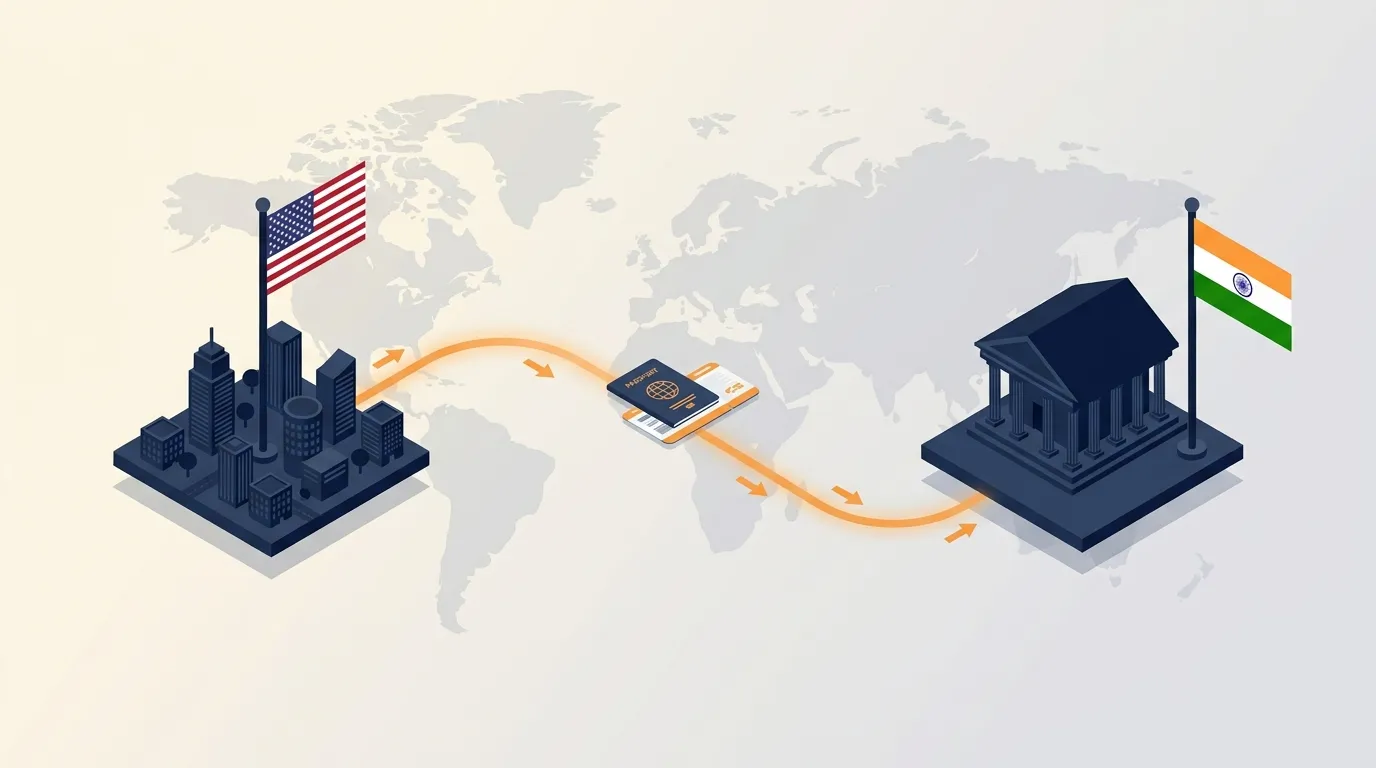
## What Transfer Pricing Means for a US Parent and Indian Subsidiary
When a US company sets up an [Indian subsidiary](/services/foreign subsidiary.html), one of the earliest compliance questions is how transfer pricing between US parent and Indian subsidiary should be structured. Transfer pricing is the framework used to price transactions between related entities, such as a US parent and its wholly owned Indian subsidiary, so that the income reported in each country reflects a fair and defensible allocation of value.
Before any intercompany invoicing begins, most founders benefit from working through a short sequence of steps rather than treating pricing as an afterthought:
1. List every transaction that will flow between the US parent and the Indian subsidiary.
2. Decide on a pricing method for each transaction type.
3. Put a written intercompany agreement in place.
4. Benchmark the pricing against comparable transactions.
5. Maintain documentation that supports the position taken.
The rest of this guide walks through each of these in more detail.
### Related party transactions between the parent and subsidiary
Under current transfer pricing rules in India, any transaction between the US parent and its Indian subsidiary is treated as a related party or associated enterprise transaction because the two entities are under common control. This generally covers services, cost reimbursements, loans, royalties, and any other arrangement where money or value moves between the two companies. The label applies regardless of whether the transaction is formalised in writing, which is part of why founders are encouraged to document it properly from the outset.
### Why Indian tax authorities review intercompany pricing
Indian tax authorities review intercompany pricing because related entities do not always negotiate at arm's length the way unrelated parties would. Left unchecked, pricing between a parent and subsidiary could be used to shift profit into whichever jurisdiction has a more favourable tax position. To prevent this, Indian transfer pricing regulations generally require that related party transactions be priced as if the parties were independent, and that the subsidiary be able to demonstrate this on request.
### How transfer pricing affects taxable income in India
If the pricing applied to a transaction is found not to reflect an arm's length position, the Indian tax authorities may adjust the subsidiary's taxable income upward, which can result in additional tax, interest, and potentially penalties. This makes transfer pricing directly relevant to how much tax the Indian subsidiary actually pays, not just a documentation exercise. Getting the pricing approach right early tends to be far less costly than defending an adjustment later.
## Common Intercompany Transactions to Review
Most US parent and Indian subsidiary structures involve a recurring set of transaction types. Reviewing these early helps founders decide what needs an agreement, a pricing method, and supporting benchmarking.
### Management and support services
Where the US parent provides strategic direction, finance, HR, or other management support to the Indian subsidiary, or where the Indian subsidiary provides support services back to the parent, this is generally treated as a service transaction requiring its own pricing and documentation.
### Software development and technology services
Many Indian subsidiaries of US companies operate as captive software development or technology support centres. These arrangements are closely watched under current transfer pricing practice because the value created in India, and the appropriate margin for it, is often a point of scrutiny.
### Cost reimbursements and shared expenses
Shared costs, such as software licences, group insurance, or common infrastructure, that are recharged between the parent and subsidiary should generally be allocated on a reasonable and consistent basis, with records that show how the allocation was calculated.
### Loans, royalties, and intellectual property arrangements
Intercompany loans, royalty payments for the use of parent owned intellectual property, and any licensing arrangements carry their own pricing considerations, including interest rates on loans and royalty rates that should reflect what an unrelated licensee would pay. These transactions are often reviewed closely because of the sums involved and their effect on taxable profit in the Indian subsidiary.
## Why an Intercompany Agreement Matters
An intercompany agreement is the written contract that records how the US parent and Indian subsidiary deal with each other commercially. Without one, the actual conduct between the two entities can be difficult to evidence if it is ever questioned.
### Commercial terms between the US parent and Indian subsidiary
The agreement should set out who the parties are, the nature of the relationship, and the commercial basis on which services or goods move between them. This gives both the US parent and the Indian subsidiary a shared reference point.
### Scope of services and responsibilities
A clear description of what each party is responsible for, whether that is software development, back office support, or use of licensed technology, helps avoid ambiguity about what is actually being paid for.
### Pricing mechanism and payment terms
The agreement should specify how pricing is determined, for example cost plus a margin, a fixed fee, or a royalty rate, along with invoicing frequency and payment terms. This mechanism should match what is actually being benchmarked and reported.
### Evidence for tax and compliance review
A properly drafted intercompany agreement serves as primary evidence during any transfer pricing review, showing that the arrangement was set up deliberately and consistently rather than reconstructed after the fact.
## Transfer Pricing Methods and Benchmarking
### Choosing a method for the transaction type
Different transaction types are suited to different pricing methods. The table below gives a general sense of how common methods are applied, though the appropriate method for any specific transaction should be confirmed with a transfer pricing advisor.
| Method | Typically used for |
|---|---|
| Cost plus method | Support services, captive development centres |
| Comparable uncontrolled price | Loans, royalties, and transactions with an observable market price |
| Resale price method | Distribution or resale of goods |
| Transactional net margin method | Services and transactions where a net profit margin is compared to independent companies |
### Using benchmarking to support pricing
Benchmarking involves comparing the pricing or margin applied on an intercompany transaction against data from comparable independent companies or transactions. This is generally what supports the claim that a related party price reflects an arm's length outcome, and it is usually prepared with the help of a transfer pricing advisor using recognised databases.
### Aligning the agreement with actual conduct
The pricing method chosen, the terms in the intercompany agreement, and what actually happens month to month should all line up. A common gap in early stage subsidiaries is an agreement that describes one arrangement while invoices and bank transfers reflect a slightly different one.
## Transfer Pricing Documentation for the Indian Subsidiary
### Records founders should maintain
Under current rules, an Indian subsidiary above certain transaction thresholds is generally expected to maintain contemporaneous transfer pricing documentation, along with an accountant's report on international transactions filed with the tax return. Founders should treat this as an annual obligation rather than a one time exercise.
### Documents that support the pricing position
Beyond the formal documentation, useful supporting records include the intercompany agreement itself, benchmarking reports, invoices that match the agreed pricing mechanism, board resolutions approving the arrangement, and correspondence that shows the commercial reasoning behind the pricing.
### Common gaps in early stage subsidiaries
It is common for early stage Indian subsidiaries to have informal arrangements with the US parent, invoices raised without a supporting agreement, or benchmarking that was never updated after the business model changed. These gaps are best closed before the subsidiary grows to a size where a transfer pricing review becomes more likely.
## Permanent Establishment and Cross Border Risk Areas
### Parent company involvement in Indian operations
If the US parent is too closely involved in the day to day management of the Indian subsidiary, for example directing operational decisions rather than acting as a shareholder, this can raise questions about whether the parent has a taxable presence in India beyond the subsidiary itself. This is generally referred to as a permanent establishment risk and is assessed separately from, though related to, transfer pricing.
### Employee and founder activities in India
Where US based employees or founders spend significant time in India negotiating contracts, closing deals, or directing local staff, this activity may also contribute to permanent establishment exposure. Keeping clear boundaries between the roles of the parent's team and the Indian subsidiary's own management is a useful practical safeguard.
### Contracting and decision making authority
Generally, if Indian based staff or the Indian subsidiary have the authority to negotiate and conclude contracts on behalf of the group, rather than simply performing services under a service agreement, the risk profile changes. Cross border payments connected to these arrangements may also require tax certification for foreign remittance purposes, depending on the nature and value of the payment, and the applicable forms and thresholds should be confirmed with your advisor under the current framework. Reviewing this alongside [FEMA compliance requirements](/services/fema compliances.html) for the subsidiary is generally a sensible part of the same exercise.
## Practical Steps for Founders Before Starting Intercompany Billing
### Map each related party transaction
Before any invoice is raised between the US parent and the Indian subsidiary, list every service, cost reimbursement, loan, or licence that will flow between them, along with the direction of payment.
### Put agreements in place before invoicing
Draft and execute the relevant intercompany agreements before invoicing begins, rather than after the fact. This is also a good moment to confirm that the [Indian subsidiary's incorporation structure](/services/private limited company.html) supports the intended commercial arrangement.
### Confirm the pricing approach with advisors
Work with a transfer pricing advisor to confirm the method and, where thresholds apply, arrange benchmarking before the first year end. Specialist [transfer pricing advisory](/services/transfer pricing advisory.html) support at this stage is generally far more cost effective than a later review.
### Review the structure as the business changes
As the Indian subsidiary's role evolves, for example moving from a small support function to a larger delivery centre, the pricing method and benchmarking should be revisited to make sure they still reflect the actual business. Ongoing [compliance management](/services/compliance company.html) for the subsidiary, alongside routine filings such as [GST registration](/services/gst registration.html) where applicable, should be reviewed at the same time. For a broader view of the setup process, see our guide on [expanding to India](/expanding to india) and [pricing](/pricing) for advisory support.
## Frequently Asked Questions
### Do tariffs apply to intercompany transfers?
Tariffs and transfer pricing are different concepts. Tariffs may apply when physical goods move across borders and are assessed at customs, while transfer pricing deals with how related party transactions, including services and intangibles, are priced for income tax purposes. Both can apply to the same cross border arrangement depending on what is being transferred.
### What effect does transfer pricing have on subsidiaries?
Transfer pricing affects how much income and cost is allocated to the Indian subsidiary, which in turn affects its taxable profit in India. It also determines what documentation and benchmarking the subsidiary may need to maintain to support the pricing used on its intercompany transactions.
### What is an intercompany agreement between parent and subsidiary?
It is a written agreement between the US parent and the Indian subsidiary that records their commercial relationship, including the scope of services, responsibilities of each party, the pricing mechanism, and payment terms. It generally serves as key evidence during any transfer pricing review.
### What is transfer pricing for intercompany transactions?
Transfer pricing is the approach used to set and justify the price applied to a transaction between related entities, such as a parent company and its subsidiary, so that the price reflects what independent parties would have agreed in comparable circumstances.
Frequently Asked Questions
Do tariffs apply to intercompany transfers?
What effect does transfer pricing have on subsidiaries?
What is an intercompany agreement between parent and subsidiary?
What is transfer pricing for intercompany transactions?
Facing this in your own entity?
Guides explain the rules. A conversation solves your specific case. Talk to a Krystal7 advisor about your India entry, FEMA, or compliance position.
Book a Discovery Call