GST
LUT Filing for Exporters Under GST: Guide (2026)
A practical guide for foreign founders running Indian entities on LUT filing for exporters under GST, covering the portal process, LUT versus IGST decisions, invoicing and common compliance gaps.
GST

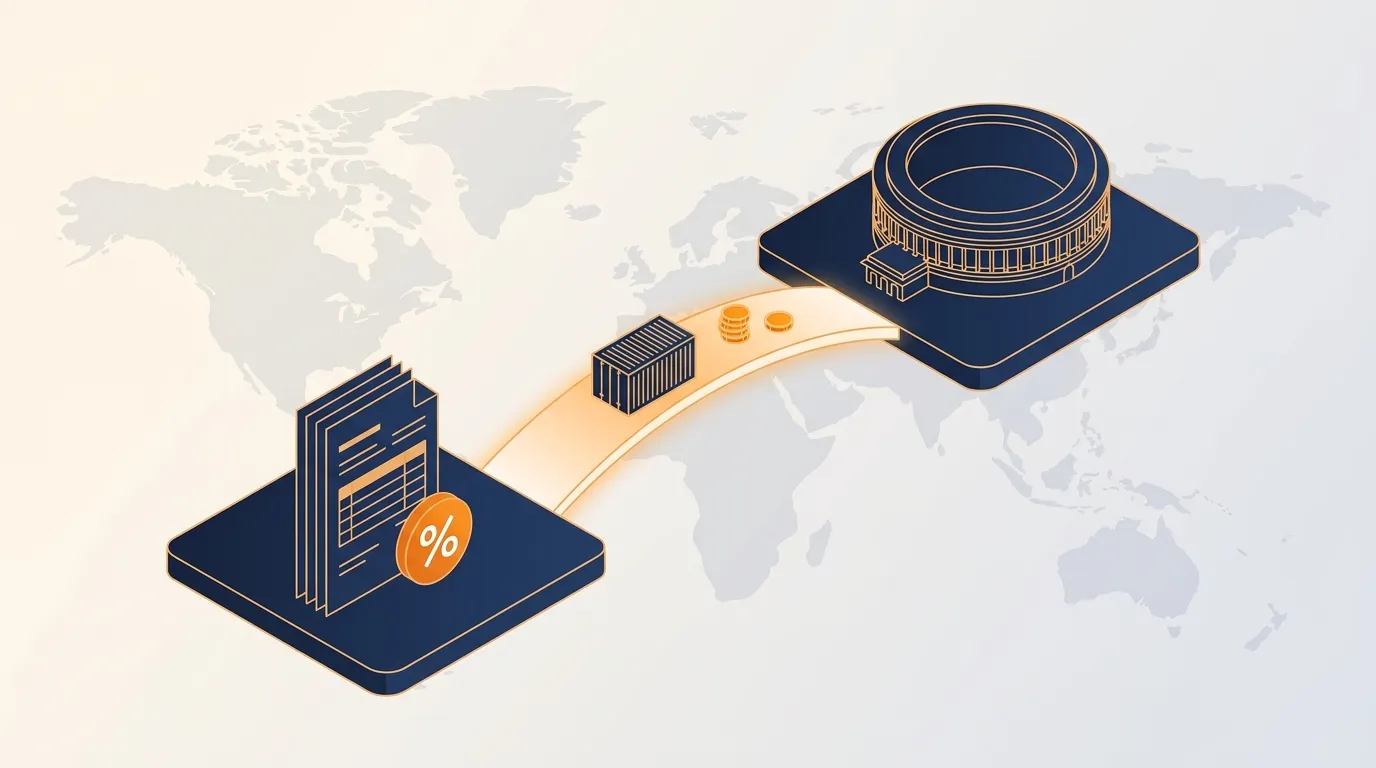
If you have set up an Indian entity to export goods or services from India, one of the earliest GST decisions you will face is whether to file a Letter of Undertaking, commonly called an LUT. LUT filing for exporters under GST allows a business to send invoices to overseas customers without charging or paying integrated tax upfront, which matters a great deal for cash flow in the first year of operations. This guide walks through what LUT filing means, who should use it, how it compares with the alternative IGST route, and where foreign owned exporters commonly run into trouble.
Before filing an LUT, your entity needs a live GST registration in India, since the LUT is furnished against an existing GSTIN rather than at the time of incorporation.
Here is the process in outline before we go section by section:
- Confirm your entity qualifies as an exporter of goods or services under current GST rules and has not been denied LUT eligibility for past tax related offences.
- Log in to the GST portal and open the LUT application under the services section.
- Select the financial year for which the LUT is being filed.
- Complete the self declaration, add witness details, and upload any supporting document the portal asks for.
- Submit using a digital signature or electronic verification code and download the acknowledgement.
- Start invoicing exports without charging IGST from the date the LUT is accepted, and keep the acknowledgement with your export records.
LUT Filing for Exporters Under GST
An LUT, the Letter of Undertaking in Form GST RFD-11, lets you export goods or services without charging IGST. File it on the GST portal before the first export invoice of each financial year: approval is instant, it costs nothing, and it stays valid for that financial year. Without it, you pay IGST on every export and claim the money back later, a full walkthrough sits in our GST on export of services guide.
Letter of Undertaking in GST
An LUT is a self declared undertaking filed on the GST portal, generally in Form GST RFD-11, where an exporter commits to fulfilling all conditions attached to a zero rated supply without payment of integrated tax. In effect, it is the exporter telling the tax department, upfront and in writing, that it will meet export requirements such as realising payment in convertible foreign exchange and completing shipment or service delivery within the prescribed timeframe.
Export of goods and export of services
Under current GST law, both export of goods and export of services are treated as zero rated supplies, meaning the government's intention is that no GST cost should sit embedded in an export transaction. Export of goods typically involves clearance through customs with shipping documentation, while export of services covers arrangements such as software development, consulting, design, marketing support, or back office work delivered from India to a customer located outside India. Founders running a services subsidiary should pay particular attention to how "export of services" is defined, since certain conditions around the location of the recipient and the place of supply need to be satisfied for the transaction to qualify at all.
Export without payment of IGST
Once an LUT is in place, an exporter can raise invoices without charging integrated tax, and does not need to first pay IGST and then claim a refund. This is the primary practical benefit for a new entity that would otherwise have to fund IGST out of its own working capital every time it invoices an overseas customer, only recovering that amount weeks or months later through a refund claim.
Who Should Consider LUT Filing
Indian entities exporting services
Any Indian entity, including a wholly owned subsidiary of a foreign parent, that regularly invoices overseas group companies or independent overseas customers for services is generally a strong candidate for LUT filing. Given that many foreign owned Indian entities are set up specifically to provide services back to the parent or to third country customers, LUT filing is often one of the first GST decisions the finance team needs to make after registration.
Indian entities exporting goods
Manufacturers, traders, and e commerce sellers shipping physical goods outside India face the same underlying choice. If export volumes are steady and the business wants to avoid tying up cash in IGST payments while refunds are processed, LUT filing is usually the more efficient path, subject to the entity meeting current eligibility conditions.
Foreign founders running Indian subsidiaries
For a foreign owned Indian subsidiary, LUT filing sits alongside other early compliance tasks such as FEMA reporting, bank account setup, and the first GST return cycle. Founders coming from the United States, United Kingdom, European Union, Canada or the Middle East often assume GST compliance mirrors VAT or sales tax systems back home, but the LUT mechanism is India specific and needs to be addressed separately, ideally before the first export invoice is raised rather than after.
LUT Versus IGST Route for Exports
Most exporters with recurring overseas billing are better served by the LUT route, since it avoids locking up cash in IGST payments while refunds are processed. The IGST route can still make sense for occasional or one off exports where refund timelines are less of a concern.
Export under LUT
Under the LUT route, invoices are raised without charging IGST, and the exporter's cash is not tied up at all. The trade off is that the entity must maintain clean documentation, since any failure to meet export conditions such as timely realisation of export proceeds can attract scrutiny.
Export with payment of IGST
Under this route, the exporter charges IGST on the export invoice, pays it as part of the regular GST liability, and then files a refund claim. This can suit businesses with irregular export volumes, or those still building internal processes and preferring the more form heavy refund route over LUT compliance obligations, though it does require patience with refund processing timelines.
Key decision points for founders
The table below summarises the practical trade offs founders should weigh before choosing a route.
| Factor | Export Under LUT | Export With IGST Payment |
|---|---|---|
| Cash flow impact | No IGST outlay, cash stays with the business | IGST paid upfront, refund claimed later |
| Compliance effort | Annual LUT filing plus ongoing export documentation | Refund application filed for each period or shipment |
| Suited to | Regular, recurring export invoicing | Occasional or irregular exports |
| Risk if conditions are not met | Possible denial of zero rating benefit and IGST demand | Refund delays if documentation is incomplete |
| Common choice for foreign owned subsidiaries | Preferred in most cases | Used selectively |
Given that most foreign owned subsidiaries invoice their parent or overseas customers on a monthly or quarterly basis, the LUT route is generally the more practical default, provided the entity can commit to the documentation discipline it requires.
Filing LUT on the GST Portal
GST Portal filing flow
The LUT is filed online through the GST portal under the relevant services menu, with the applicant selecting the financial year for which the undertaking applies. Under current rules, an LUT is generally valid for one financial year, so this is not a one time filing and needs to be repeated annually for the business to continue exporting without payment of IGST.
Declarations and undertaking details
The application asks the exporter to declare that it will export goods or services within the prescribed period, that it will comply with GST law, and that it will pay applicable tax along with interest if the export conditions are not fulfilled. Founders should read these declarations carefully rather than treating the filing as a formality, since the undertaking has real consequences if export proceeds are not realised as required.
Witness details
The LUT form requires details of two witnesses, including their name, occupation, and address. There is no fixed requirement that a witness be a chartered accountant or company secretary, and in practice founders often use employees or advisors as witnesses, though the exact fields and acceptable categories should be checked against the current GST portal requirements at the time of filing.
Acknowledgement and record keeping
Once submitted using a digital signature certificate or electronic verification code, the portal generates an acknowledgement with a reference number. This acknowledgement should be saved and kept alongside other export and compliance records, since it is the primary proof that a valid LUT was in place for the period during which invoices were raised without IGST.
Filing LUT on the Portal: The Seven Steps
- Log in at gst.gov.in and open Services, then User Services, then Furnish Letter of Undertaking.
- Select the financial year you are filing the LUT for.
- Attach the previous LUT only if you filed it offline in an earlier year.
- Tick the three self declarations: complete the export within the prescribed window, follow GST law, and pay IGST with 18 percent interest if the conditions fail.
- Enter two independent witnesses with their names and addresses.
- Sign with the authorised signatory DSC or EVC.
- Download the acknowledgment. The ARN is your proof: no officer approval is needed and the LUT is live immediately.
GST Invoicing After LUT Filing
Export invoice treatment
Once the LUT is accepted, export invoices are typically raised with a declaration that the supply is meant for export under LUT without payment of integrated tax, along with the LUT reference number. Getting this wording and reference correct on every export invoice is a small detail that auditors and tax officers do check, so it is worth building it into the invoicing template from day one.
Export of services under GST
Service exporters need to be doubly careful, since the definition of export of services under current GST law depends on conditions such as the location of the supplier, the location of the recipient, and the place of supply. Where a foreign owned Indian subsidiary provides services to its own parent company, founders should confirm that the arrangement genuinely meets the export of services conditions rather than assuming it automatically qualifies simply because the customer is located outside India.
Documents to keep with export records
Alongside the LUT acknowledgement and export invoices, exporters should retain shipping bills or bank realisation certificates for goods, and for services, documentation such as the service agreement, invoice, and proof of receipt of payment in foreign exchange, often evidenced through a Foreign Inward Remittance Certificate from the bank. These documents also matter for FEMA compliance, since export proceeds generally need to be realised and reported within the timelines applicable under current foreign exchange regulations, separately from the GST requirement. From 1 October 2026, that reporting includes a monthly Export Declaration Form (EDF) filed with your AD bank.
LUT Validity and Renewal: When to File Each Year
An LUT is valid for the financial year it is filed for and dies on 31 March. Renew it on the portal before 1 April, or at the latest before your first export invoice of the new year. The renewal takes ten minutes and generates a fresh ARN.
Exporting on an expired LUT is the most common slip. The zero rating condition fails, and the safe course is to regularise fast: file the fresh LUT the moment you notice, and speak to your advisor about the invoices raised in the gap, because the default position is IGST with interest on those supplies.
Can you export without an LUT at all? Yes. Charge and pay IGST on the export invoice and claim the refund later. For services, file the refund in Form RFD-01. For goods, the shipping bill is treated as the refund application under Rule 96 of the CGST Rules, and the refund is processed through ICEGATE. It is a cash flow choice, not a compliance escape, and the refund route is compared line by line here.
Common LUT Filing Issues for Exporters
Exports made before LUT filing
A frequent issue for newly incorporated entities is making the first export shipment or raising the first export invoice before the LUT has actually been filed and accepted. Where this happens, the exporter may need to evaluate whether IGST was payable on that specific transaction, since the zero rating benefit under LUT generally applies only from the date the LUT is in force, not retrospectively.
Mismatch between GST records and export documents
Another common gap is a mismatch between what is reported in GST returns and what customs or bank records show, for example differences in invoice value, currency conversion, or the export period declared. These mismatches can trigger queries from tax authorities and are best avoided through a simple monthly reconciliation between the accounting system, the GST return, and the underlying export documents.
Renewal and annual compliance tracking
Because LUT filing generally needs to be renewed every financial year, it is easy for a growing business to miss the renewal date, particularly if the finance function is still being built out. Missing a renewal can mean falling back to the IGST route for that period until a fresh LUT is filed. Building LUT renewal into a broader annual compliance calendar alongside other recurring GST, FEMA, and company law filings is generally the more reliable way to avoid this gap.
When to Get Professional Help
First export from India
The first export invoice raised by a newly set up Indian entity is usually the moment founders should bring in professional support, since getting the LUT, invoice format, and documentation right from the start avoids having to unwind errors later. Entities that have gone through private limited company incorporation recently often benefit from having the same advisor handle the first GST export cycle as well.
Multiple overseas customers
As an exporter starts billing several overseas customers across different countries, tracking export conditions, currency realisation, and invoice compliance across all of them becomes harder to manage manually. This is generally a good point to formalise export documentation processes rather than handling each customer relationship informally.
Cross border service arrangements
Where a foreign owned Indian subsidiary invoices its own parent or group companies for services, the pricing of those invoices also needs to hold up under transfer pricing rules, separately from the GST export treatment. Getting both the GST and transfer pricing positions aligned from the outset is generally simpler than correcting them after several quarters of invoicing have already gone out. For a broader view of how GST fits alongside company law, FEMA, and tax obligations when expanding to India, it is worth reviewing the full compliance picture rather than looking at LUT filing in isolation, and checking current pricing for professional support before your first export cycle.
Key Takeaways
- The LUT in Form RFD-11 removes IGST from export invoices and is filed online in minutes with instant approval.
- One LUT covers one financial year: renew before 1 April every year, before the first export invoice.
- Miss the renewal and the gap invoices default to IGST with 18 percent interest, so regularise quickly.
- No LUT means the IGST refund route (RFD-01 for services, the shipping bill for goods), which parks your cash with the government for months.
- Krystal7 Consultants files the LUT, sets the renewal reminder and runs the export compliance calendar as one engagement.
Frequently Asked Questions
Is LUT Filing for Exporters Under GST Mandatory?
LUT filing is not compulsory in the sense that an exporter can choose the IGST route instead, but under current GST rules it is generally the more efficient option for anyone exporting goods or services on a recurring basis, since it avoids paying IGST upfront and then waiting on refunds.
How to file LUT for export in GST?
LUT filing is done through the GST portal by selecting the financial year, completing the self declaration, adding witness details, and submitting the form using a digital signature certificate or electronic verification code. An acknowledgement is generated on submission and should be retained with export records.
What is the GST rate on export under LUT?
Exports made under a valid LUT are treated as zero rated supplies, meaning no integrated tax is charged on the export invoice, provided the exporter meets the conditions attached to the export, such as timely realisation of payment and shipment or delivery within the prescribed period under current rules.
Who can be witness for LUT under GST?
The LUT form requires the name, occupation, and address of two witnesses. There is generally no restriction requiring a witness to hold a particular professional qualification, but founders should confirm the exact fields and any current requirements on the GST portal at the time of filing, since portal requirements can be updated from time to time.
TALK TO AN ADVISOR
Facing this in your own entity?
Guides explain the rules. A conversation solves your specific case. Talk to a Krystal7 Consultants advisor about your India entry, FEMA or compliance position.
WRITTEN BY
CA Nandini
Co-founder · All India Rank 49, ICAINandini Hasija is a co-founder of Krystal7. She leads brand, business development and marketing, and works with founders to define their engagement. She is a Chartered Accountant and achieved All India Rank 49 in the CA examinations.
Filed under GST · All insights