GST
GST on Export of Services from India: Zero-Rated Rules & LUT
Zero rated, not exempt: the five export conditions, LUT vs paying IGST, refund mechanics through RFD-01, and the intermediary rule change from 30 March 2026.
GST

Is GST Applicable on Export of Services from India?
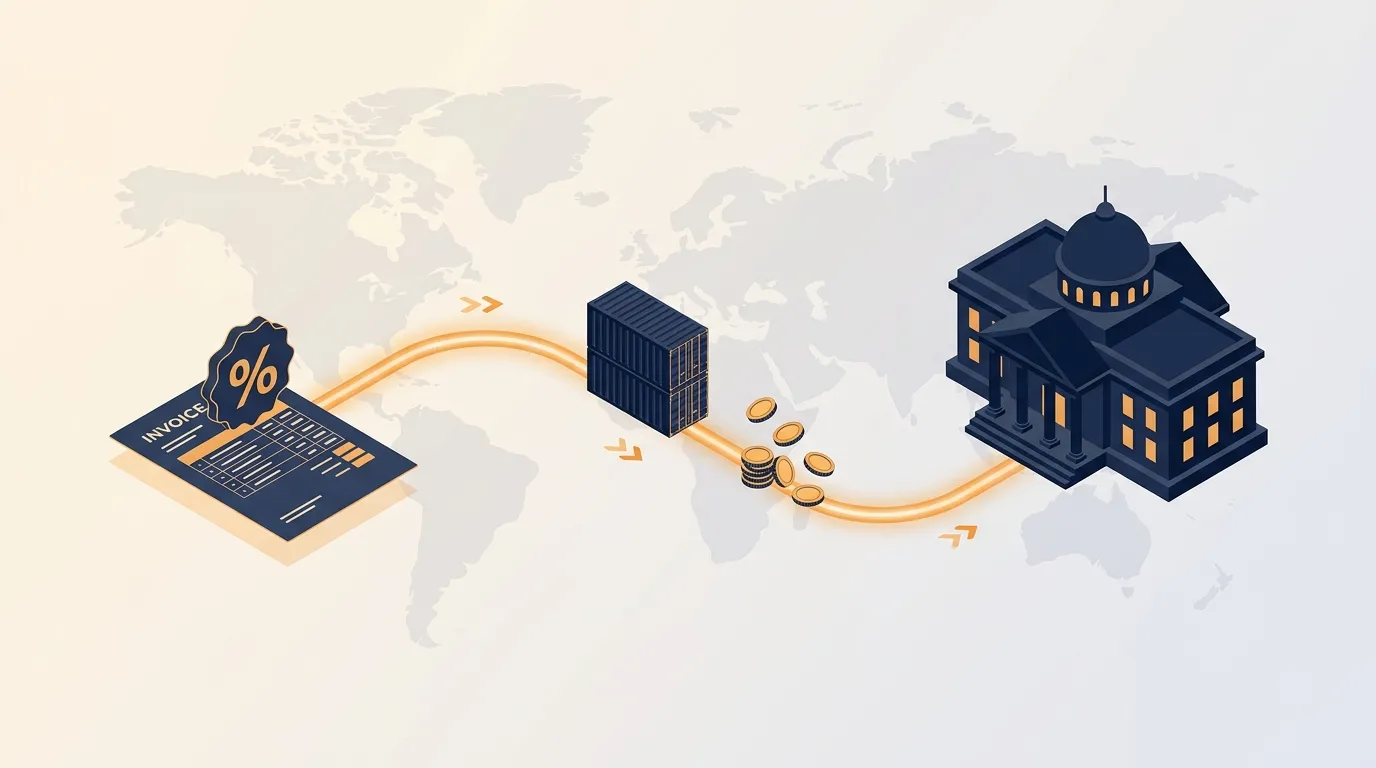
Yes and no: exports of services are zero rated under Section 16 of the IGST Act, so you charge no GST to a genuine overseas client, keep your input tax credit, and recover it as a refund. But zero rating only holds if all five export conditions below are met, and you either file a Letter of Undertaking or pay IGST and claim it back.
If you run a foreign owned Indian entity that bills overseas clients for software, consulting, or technology services, one of the first questions your finance team will ask is whether Goods and Services Tax applies to those invoices. The short answer is that genuine exports of services are treated differently from domestic sales under GST, but qualifying for that treatment depends on meeting specific conditions, not simply on the fact that your customer sits outside India.
This guide walks through how export status is determined, what it means for your invoicing, when GST registration becomes relevant, and the compliance steps that matter most for founders running Indian subsidiaries or branch operations that serve clients abroad.
When a Service Qualifies as an Export under GST
Under current GST law, a supply of services is generally treated as an export only when it satisfies a set of conditions together. Missing even one condition can mean the transaction is treated as a normal taxable supply within India, with GST implications that founders often do not expect.
Supplier and Recipient Location
The supplier of the service must be located in India, and the recipient must be located outside India. For a foreign owned Indian subsidiary billing its overseas parent or an unrelated overseas client, this condition is usually straightforward, but it needs to be checked against how the entity and the client are structured, not just where invoices are sent.
Place of Supply
The place of supply for the service must fall outside India under the applicable place of supply rules. For most professional, consulting, and software services this generally aligns with the recipient's location, but certain categories of services, such as those linked to immovable property or performance based services, follow different rules. This is one of the more technical checks and is best confirmed with a GST professional before relying on export treatment.
Payment from Outside India
Payment for the service must be received in convertible foreign exchange, or in Indian rupees where permitted under applicable rules, and routed through banking channels that generate the evidence needed to support the export claim. Cash payments, informal transfers, or payments routed through Indian bank accounts of overseas parties without proper documentation can weaken the export claim.
Relationship between Supplier and Recipient
The supplier and recipient must not be merely establishments of the same legal entity in the sense described under GST law. This condition often catches out branch offices and certain intercompany arrangements between an Indian entity and its foreign parent or group companies, where the two are treated as establishments of a distinct person for GST purposes rather than as separate legal entities dealing at arm's length. Whether a particular intercompany billing arrangement meets this condition needs to be examined on the facts, since the treatment is not always intuitive for founders coming from jurisdictions where intercompany service fees are handled differently.
Do You Charge GST to Overseas Clients
Export of Services Treatment
When a service genuinely qualifies as an export under the conditions above, it is treated as a zero rated supply. This means GST is generally not charged on the invoice to the overseas client, though the exporter may still have obligations connected to input tax credit and refund procedures, which are covered later in this guide.
Invoice Position for Overseas Customers
Invoices to overseas clients for qualifying exports are typically issued without GST, but they still need to carry the declarations and details required under current invoicing rules for export supplies, along with accurate currency and payment terms. Getting the invoice format wrong, even where the underlying transaction genuinely qualifies as an export, can create friction during refund claims or audits later.
Common Mistakes by Foreign Owned Indian Entities
A frequent mistake is assuming that any invoice billed to a foreign address automatically qualifies as an export, without checking the place of supply rules or the relationship condition. Another common issue is receiving payment through arrangements that do not clearly establish that funds came from outside India in convertible foreign exchange. Founders new to India sometimes also confuse export of services with the concept of deemed exports or with transactions that are simply outside the scope of GST, which are treated differently and carry different compliance consequences.
GST Registration for Export of Services
When Registration Becomes Relevant
Whether GST registration is required depends on factors including the entity's aggregate turnover and the nature of its supplies, assessed under the applicable registration thresholds and rules currently in force. Even where a business deals only in export supplies, registration may still be needed once turnover crosses the applicable threshold, or where the entity wants to claim refunds linked to zero rated exports. This is a point where founders should get a specific assessment rather than relying on general assumptions, since thresholds and exemptions are periodically revised. The service side of that decision is covered on the GST registration page, and the wider applicability picture in GST registration for foreign companies in India.
Documents and Records to Keep Ready
Exporters are generally expected to maintain clear records connecting each invoice to the underlying service contract, the corresponding foreign inward remittance, and the export declaration made in periodic GST returns. Bank realisation certificates or equivalent evidence of foreign exchange receipt, along with signed service agreements, are typically the documents most closely reviewed during any refund processing or departmental scrutiny.
Practical Issues for New Indian Subsidiaries
Newly incorporated Indian subsidiaries of foreign parents often set up banking and invoicing before finalising their GST position, which can create mismatches between the intercompany agreement, the invoices raised, and the payments received. It is generally advisable to finalise the GST registration decision and export documentation approach before the first overseas invoice goes out, rather than correcting the position retrospectively.
GST on Export of Software Services from India
Software Development Services
Custom software development delivered by an Indian entity to an overseas client is typically assessed against the same export conditions described earlier, with particular attention to where the recipient is located and how the contract defines the relationship between the Indian entity and the client. Where the Indian entity is a subsidiary delivering development services primarily to its own foreign parent, the relationship condition deserves careful review.
SaaS and Technology Services
Software as a service and other technology services sold to overseas customers raise additional questions around place of supply, particularly where the service is consumed by end users located in multiple countries or where the recipient is a business entity rather than an individual. These structures should generally be reviewed on a case by case basis rather than assumed to automatically qualify as exports.
Remote Support and Consulting Services
Remote technical support, IT consulting, and similar services delivered from India to clients abroad generally follow the standard export conditions, but founders should confirm that the contractual recipient, the entity actually paying for the service, and the entity receiving the benefit of the service are consistent with each other, since inconsistencies here are a common trigger for disputes during refund processing.
Refunds and Compliance for Exporters
You have two legal routes to zero rating, and the choice is mostly about cash flow:
| Export under LUT | Export with payment of IGST | |
|---|---|---|
| Tax on the invoice | None | IGST charged and paid from your funds |
| Cash flow | Nothing blocked | Tax parked with the government until refunded |
| Paperwork upfront | LUT (Form RFD-11), renewed each financial year | None beyond normal invoicing |
| Refund route | Unutilised input tax credit via RFD-01 | Refund of the IGST paid via RFD-01 |
| Fits | Almost every service exporter | Exporters with pricing or credit reasons to route tax |
Zero Rated Supply
Exports of services that meet the prescribed conditions are treated as zero rated supplies under the GST framework, meaning tax is not charged on the outward invoice, but the exporter is generally entitled to recover input tax credit related to inputs and services used to provide that export.
Letter of Undertaking
Most exporters choose to export services without payment of tax by filing a Letter of Undertaking, commonly referred to as an LUT, with the GST authorities. This allows the exporter to bill overseas clients without charging GST while still being eligible to claim a refund of unutilised input tax credit. The LUT is generally valid for a specified period and needs to be renewed under current procedures. In practice: the LUT is filed online on the GST portal as Form RFD-11, before the first zero rated invoice of the financial year, and it must be refiled every April because it lapses with the year. Filing takes minutes with an authorised signatory and two witnesses, and acknowledgment is immediate. Exporting without a valid LUT and without paying IGST is the worst of both worlds, the liability plus interest sits with you even though the client was never charged.
Refund Claims
Exporters who have paid GST on their inputs but not on their zero rated output supplies can generally claim a refund of that accumulated input tax credit through the prescribed refund process. Refund claims require accurate matching between the export invoices, the underlying foreign exchange realisation, and the GST returns filed for the relevant period, and processing timelines can vary depending on the completeness of documentation submitted. The mechanics for service exporters: refunds run through Form RFD-01 on the GST portal, unutilised input tax credit under the LUT route or the IGST paid under the payment route, with export invoices reported in GSTR-1 and the corresponding tax entries in GSTR-3B. The two proofs that decide the claim are the FIRC or bank realisation certificate showing convertible foreign exchange received, and consistency between invoice, return and remittance values. The window is two years from the relevant date, and claims stall on mismatches far more often than on eligibility.
RFD-01, Step by Step
- File the LUT in Form RFD-11 on the GST portal before the first export invoice of each financial year, if you export without payment of IGST.
- Report the exports in GSTR-1 Table 6A and in row 3.1(b) of GSTR-3B for the same period.
- Prepare Statement 3: invoice wise export details matched to FIRC or e-BRC numbers, plus the refund computation under Rule 89(4).
- File RFD-01 online for the period, within two years of the relevant date, and note the ARN from the RFD-02 acknowledgment.
- Answer any deficiency memo in RFD-03 quickly. A memo means filing afresh. Under the proviso to Rule 90(3) of the CGST Rules (inserted by Notification 15/2021-Central Tax of 18 May 2021), the time from the original RFD-01 filing to the RFD-03 memo does not count towards the two year limit. Refile promptly all the same.
- Track the provisional order in RFD-04: for zero rated claims the officer can release 90 percent within seven days of acknowledgment.
- The final order comes in RFD-06 and the money follows through RFD-05. Reconcile the credit in your bank against the claim.
FEMA Rules for Export Proceeds: FIRC, e-BRC and the Realisation Deadline
Zero rating under GST is only half the compliance story. The moment your overseas client pays, FEMA takes over.
Under FEMA, service export proceeds for exports made before 1 October 2026 must be realised and repatriated to India within nine months of the invoice date (RBI notification FEMA 23(R)/(8)/2026-RB of 5 June 2026 restored nine months after a temporary 15 month period from November 2025). For exports from 1 October 2026, the FEMA (Export and Import of Goods and Services) Regulations 2026 allow 15 months, or 18 months for invoices in Indian rupees. Your bank issues a FIRC or an e-BRC as proof of realisation, and that same proof is what the GST officer asks for when processing your refund.
Three documents anchor this trail:
- FIRA or FIRC: the foreign inward remittance advice or certificate from your AD bank, one for each receipt, naming the remitter, purpose code and amount.
- e-BRC: the electronic bank realisation certificate the bank uploads, matched invoice by invoice. Reconcile these against GSTR-1 Table 6A every quarter.
- SOFTEX or EDF: for software invoiced up to 30 September 2026, every software exporter files SOFTEX within 30 days of the invoice date, with or without STPI registration. From 1 October 2026, RBI notification FEMA 23(R)/2026-RB replaces SOFTEX with a monthly Export Declaration Form (EDF). It covers all service and software exports and goes to your AD bank within 30 days from the end of the invoice month.
Miss the realisation window and the receivable becomes a FEMA contravention that needs regularisation through your AD bank, and your GST refund claim weakens because realisation is a condition for export of services status.
Compliance Checklist before Billing an Overseas Client
Contract Review
Review the service agreement to confirm who the contracting parties are, where the recipient is genuinely located, and whether the arrangement could be read as one between establishments of the same legal person rather than between independent entities.
GST Registration Status
Confirm whether the Indian entity is registered under GST, and if registered, whether an LUT is in place before invoices are issued without charging tax.
Invoice Details
Ensure invoices carry the details required for export supplies, including currency, payment terms, and any declarations mandated under current invoicing rules, so that the documentation supports export treatment if questioned later.
Foreign Payment Evidence
Set up banking and documentation processes so that every payment received against an export invoice can be traced back to a foreign inward remittance in convertible foreign exchange, since this evidence is central to both export qualification and refund claims. The same remittance evidence feeds your FEMA reporting, and exporters of services also want their IEC in place, banks ask for it even where the law is softer about services.
The Intermediary Services Trap
For years the biggest GST dispute area for foreign owned Indian entities was Section 13(8)(b) of the IGST Act. It placed the supply of an intermediary, someone who arranges or facilitates a supply between two other parties, at the supplier's location, India. The result was 18 percent GST with no zero rating, even when the parent paid in dollars. The Finance Act 2026 omitted Section 13(8)(b) from 30 March 2026. An intermediary service to an overseas recipient now takes the recipient's location as its place of supply, and it can be zero rated if the Section 2(6) export conditions are met. Periods before 30 March 2026 remain exposed to the old rule. For those periods, the classic pattern is an Indian subsidiary doing sales support that reads like facilitating the parent's sales to Indian customers, rather than providing marketing services to the parent on its own account, principal to principal. The difference is decided by how the intercompany agreement is drafted and how invoices describe the service, which is why the contract deserves review before the first invoice, not during the first audit. A concrete example: a US SaaS parent's Indian entity that finds Indian customers, negotiates and closes on the parent's paper risks intermediary treatment; the same entity paid a fixed fee for marketing services delivered to the parent, with no role in individual sales, generally does not. Structures like this sit at the heart of a foreign subsidiary setup and are cheap to fix on paper and expensive to fix in litigation.
When to Get Professional Help
Intercompany Service Arrangements
Where an Indian entity bills its foreign parent or group companies for services, the export conditions, particularly the relationship test, deserve a specific professional review rather than a general assumption based on how similar arrangements work in other countries.
Marketplace or Intermediary Models
Businesses that connect Indian service providers with overseas customers, or that act as intermediaries in facilitating a supply between two other parties, need a separate analysis of their GST position, especially for supplies made before 30 March 2026, when Section 13(8)(b) still applied.
Repeated Refund Claims
Exporters who file refund claims on a recurring basis, or who have had claims delayed or questioned by the authorities, generally benefit from a structured review of their documentation and filing process to reduce friction in future cycles.
Key Takeaways
- Exports of services are zero rated: no GST on the invoice when the Section 2(6) conditions are met, with input tax credit intact.
- Choose the LUT route for cash flow: file RFD-11 once a year and invoice without tax, or pay IGST and claim it back.
- Refunds run through RFD-01 with a two year limit from the relevant date, and 90 percent can arrive provisionally within seven days.
- FEMA sits behind GST: realise proceeds within nine months (15 months for exports from 1 October 2026) and keep a FIRC or e-BRC for every receipt.
- The intermediary rule in Section 13(8)(b) was omitted from 30 March 2026, but earlier periods can still be taxed at 18 percent, so check your contracts.
Frequently Asked Questions
Is Indian GST applicable on the export of services?
Export of services is treated separately under GST law and is generally not subject to GST on the outward invoice, provided the transaction meets the prescribed conditions relating to supplier location, recipient location, place of supply, payment in foreign exchange, and the relationship between the parties.
Do I charge GST for services provided overseas?
If the service genuinely qualifies as an export under the conditions described above, the invoice is generally issued without GST, subject to filing the required declarations such as a Letter of Undertaking. If any condition is not met, the supply may instead be treated as a normal taxable supply.
What are the five conditions for export of services under GST?
The conditions generally relate to the supplier being located in India, the recipient being located outside India, the place of supply being outside India, payment being received in convertible foreign exchange or as otherwise permitted, and the supplier and recipient not being merely establishments of the same legal person.
Is it mandatory to take GST registration for export of services?
Registration requirements depend on the entity's turnover and the nature of its supplies under current registration rules. Even businesses dealing only in export supplies may need to register once turnover crosses the applicable threshold, or if they wish to claim refunds linked to zero rated exports, so this should be confirmed with a GST professional before the first overseas invoice is raised.
Can I export services without an LUT?
Only by paying IGST on each invoice and claiming it back through RFD-01, which parks your cash with the government. Exporting without an LUT and without paying tax leaves the liability plus interest with you. For almost everyone, filing the LUT each April is the right default.
Is export of services exempt or zero rated under GST?
Zero rated, and the difference matters. An exempt supply would kill the input tax credit on everything you buy to deliver the service; zero rating preserves that credit and lets you claim it as a refund, so your Indian cost base stays clean of embedded GST.
TALK TO AN ADVISOR
Facing this in your own entity?
Guides explain the rules. A conversation solves your specific case. Talk to a Krystal7 Consultants advisor about your India entry, FEMA or compliance position.
WRITTEN BY
CA Nandini
Co-founder · All India Rank 49, ICAINandini Hasija is a co-founder of Krystal7. She leads brand, business development and marketing, and works with founders to define their engagement. She is a Chartered Accountant and achieved All India Rank 49 in the CA examinations.
Filed under GST · All insights