IEC Registration for a Foreign Owned Company in India (2026 Guide)
How a foreign owned Indian company gets an Importer Exporter Code from DGFT, when service exporters need one, the April to June update, deactivation, and the links to customs, GST and FEMA export reporting.
Krystal7 Consultants · India entry, tax and compliance
Written by CA Nandini Hasija, Krystal7 Consultants. Last updated 23 October 2026.
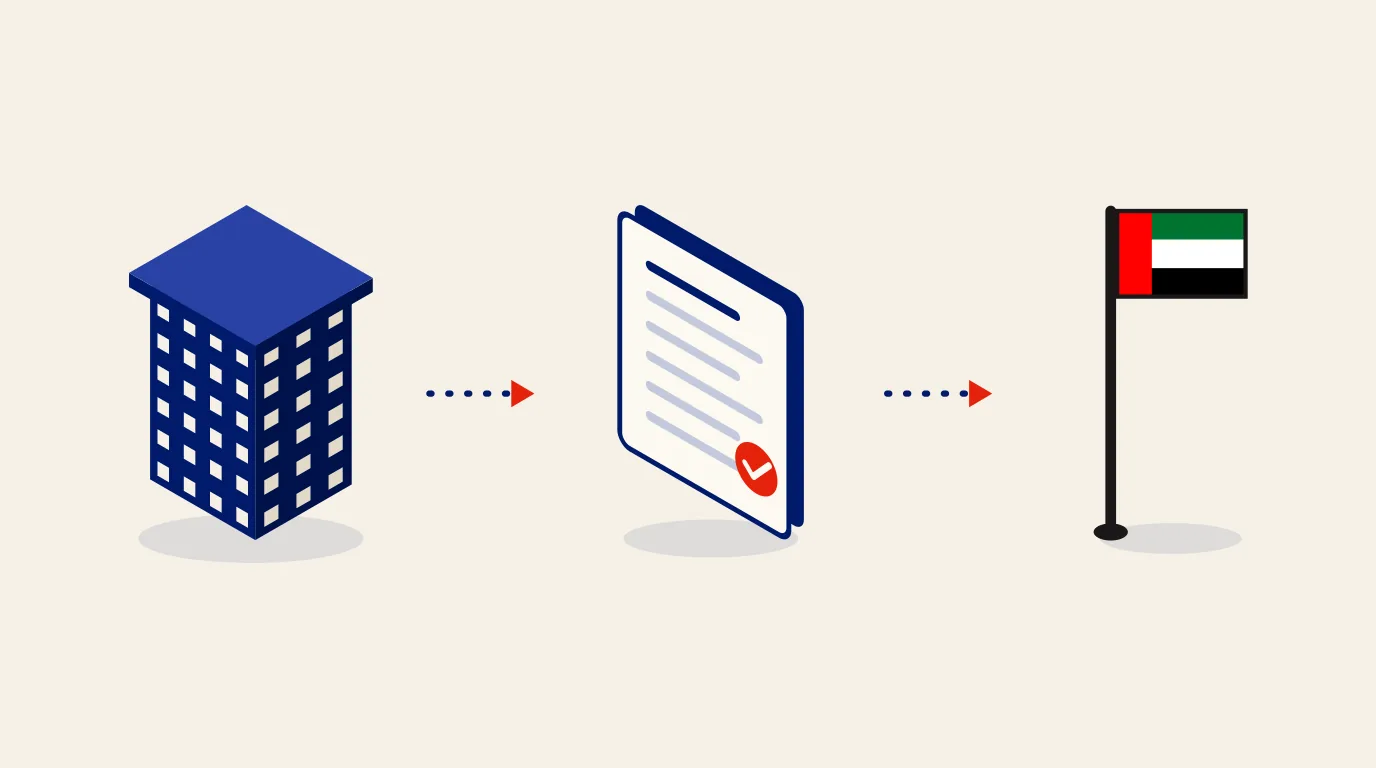
An Indian company with foreign shareholders needs an Importer Exporter Code (IEC) before it imports or exports any goods. DGFT issues it online on Form ANF-2A for a fee of INR 500, and the code is the company's PAN. A company that exports only services needs one only to claim Foreign Trade Policy benefits. Every holder must update or confirm the IEC online between April and June each year. DGFT deactivates an IEC that misses the update, under paragraph 2.05(e) of the Foreign Trade Policy 2023.
This page covers who needs an IEC, the documents, the portal steps, the exemptions, the annual update and deactivation. It then shows how the code ties into customs, GST and FEMA export reporting. It is written for the Indian subsidiary of a foreign parent and for the finance team abroad that oversees it.
What is IEC registration and who issues it?
IEC registration is the online process by which the Directorate General of Foreign Trade (DGFT) grants an Importer Exporter Code. Section 7 of the Foreign Trade (Development and Regulation) Act, 1992 bars any import or export without an IEC granted by the Director General. The IEC is the same ten character number as the holder's PAN.
The detailed rules sit in two DGFT documents. Paragraph 2.05 of the Foreign Trade Policy 2023 (FTP) sets the policy. Paragraphs 2.07 to 2.15 of the Handbook of Procedures 2023 (HBP) set the procedure. Under paragraph 1.01 of the FTP 2023, the policy took effect on 1 Apr 2023 and has no end date.
A few points from these paragraphs shape everything else on this page:
An IEC has permanent validity unless DGFT suspends or cancels it (HBP paragraph 2.10(a)).
One IEC covers all branches, divisions, units and factories of the holder (HBP paragraph 2.10(a)).
The IEC stays valid whether the unit is in the domestic tariff area, an SEZ, or an EOU, EHTP, STP or BTP scheme (HBP paragraph 2.11).
DGFT issues only one IEC against one PAN (HBP paragraph 2.12).
DGFT sends each new or updated IEC to the customs system run by the Central Board of Indirect Taxes and Customs (CBIC), as the DGFT IEC user manual describes.
Section 8 of the 1992 Act lets the Director General suspend or cancel an IEC after a written notice and a chance to be heard. A person whose IEC is suspended or cancelled can trade only under a special licence.
Does a foreign owned company in India need an IEC?
Yes, if it imports or exports goods. Foreign ownership does not change the rule or the process. An Indian Private Limited company owned by a foreign parent applies on the same Form ANF-2A as any Indian company. No RBI or FEMA approval is needed to get an IEC.
The harder questions come from the other structures a foreign group uses in India. The table sets out our reading of each case under FTP paragraph 2.05 and HBP paragraph 2.08.
Structure in India
Imports or exports goods?
IEC needed?
Our note
Indian Private Limited subsidiary
Yes
Yes
Apply after the bank account opens, because DGFT needs bank proof
Indian subsidiary exporting only services
No
Only for FTP benefits
Many still get one for eBRC and status holder purposes
LLP with foreign partners
Yes
Yes
Same process as a company, signed by a designated partner
Branch office of a foreign company
Yes, where its RBI approval allows trade
Yes
The IEC is issued against the foreign company's PAN and covers every Indian branch
Liaison office of a foreign company
No
No
A liaison office cannot trade under its RBI approval
Foreign company selling to Indian buyers with no Indian presence
No, the buyer imports
No
The Indian buyer files the bill of entry under its own IEC
A foreign company with no place of business in India cannot apply in practice. HBP paragraph 2.08(c) asks for an address proof of the applicant entity and a cancelled cheque or bank certificate. Both point to an Indian address and an Indian bank account.
For a branch office, the IEC follows the PAN of the foreign company. Because one PAN gets one IEC, all Indian branches of that company share a single code. Our guide on the branch office in India covers the RBI approval that comes first. A liaison office has no use for an IEC, because it cannot import or export on its own account.
Only when they want a benefit under the Foreign Trade Policy. FTP paragraph 2.05(a) says no export or import of goods shall happen without an IEC unless exempted. For export of services or technology, it says the IEC is necessary on the date of rendering services to claim FTP benefits. A software or consulting subsidiary with no FTP claim can export services without one.
Three practical points often decide whether a services company should get an IEC anyway.
Status holder recognition needs an IEC. The DGFT status holder FAQ says all exporters of goods, services and technology having an IEC can apply, so a services exporter can qualify.
Self generation of an eBRC on the DGFT platform needs an IEC. FAQ 10 of the DGFT eBRC FAQs says the user links an existing IEC or applies for a new one.
A bank can still report an inward remittance without an IEC for listed purpose codes. FAQ 70 of the same document says a null IEC value is acceptable in bank reporting.
GST law does not ask for an IEC on export of services. Section 2(6) of the IGST Act, 2017 defines export of services. Its tests look at where the supplier and recipient are, the place of supply and the currency of payment. The supplier and recipient must also not be mere establishments of one person. Our page on GST on export of services explains those conditions.
Status holder recognition starts at One Star Export House. Q6 of the DGFT status holder FAQ puts that tier at export performance of USD 3 million in FOB or FOR value. Most young subsidiaries are some way from it.
DGFT measures export performance over the current and previous three financial years. The applicant needs exports in at least two of the four years (Q2 of the FAQ).
The FAQ carries no date and cites no FTP paragraph. Check the current tier table in Chapter 3 of the FTP 2023 on dgft.gov.in before you rely on any tier above One Star. Importing services, such as paying the foreign parent for software or support, does not need an IEC under paragraph 2.05. That paragraph speaks only of goods and of export of services.
How does the PAN based IEC work?
Since GST, the IEC is the holder's PAN. FTP paragraph 2.05 says the IEC shall be the same as the PAN, and DGFT still issues it separately on an online application. A company therefore does not choose or receive a new number. It gets DGFT's confirmation that its PAN now works as an IEC.
The main rules that follow from the PAN link are these:
One PAN, one IEC. HBP paragraph 2.12 bars a second IEC against the same PAN. Separate plants or offices use the one code.
Legacy numeric IECs. Some older holders still have numeric codes issued before the PAN link. HBP paragraph 2.14(c) sends a PAN change on a numeric IEC to the jurisdictional Regional Authority.
Mergers and acquisitions. Where a merger, acquisition or similar event changes the PAN, HBP paragraph 2.14(e) requires a new IEC against the new PAN within 30 days, if the successor does not already hold one.
Verification. HBP paragraph 2.09 lets anyone check IEC details on the DGFT website, and the holder downloads the electronic IEC from its dashboard.
For a new subsidiary, the PAN comes with the certificate of incorporation under SPICe+. Our guide on PAN for a foreign company covers the separate route a foreign company uses for its own PAN. A branch office relies on that PAN.
What documents does DGFT need for IEC registration?
DGFT needs two uploads in every case under HBP paragraph 2.08(c). One is a cancelled cheque with the entity's pre printed name, or a bank certificate. The other is an address proof of the entity. The DGFT user manual adds proof of establishment and an active digital signature or Aadhaar of a member of the firm. Each file must be a PDF of at most 5 MB.
Item
What DGFT accepts
Tip for a foreign owned company
Proof of establishment
Certificate of incorporation for a company or LLP
Use the MCA certificate that also carries the PAN
Address proof
Sale deed, rent agreement or utility bill; an NOC from the owner if the proof is not in the entity's name
A virtual office agreement often lacks an NOC, so get one signed
Bank proof
Cancelled cheque with the entity's pre printed name, or a bank certificate
New current accounts often come without cheque books; ask the bank for the certificate
Bank validation
Account details checked through NPCI
Enter the account number exactly as the bank holds it
Signatory
A valid organisation DSC whose organisation name matches the PAN record, or Aadhaar based electronic signature of a member of the firm
Foreign directors usually have no Aadhaar, so one needs an organisation DSC carrying the company name
Entity details
PAN, CIN, GSTIN if registered, registered address, director or partner details
Keep the address identical to the MCA and GST records
Fee
INR 500 under serial 1 of Appendix 2K
Paid online at the end of the application
The DGFT user manual says individual DSCs are allowed only for proprietorship firms. For a company, its validation table asks for an organisation based token. The organisation name in the DSC must match the company name in the PAN database. Where every director lives abroad, we arrange a Class 3 organisation DSC in the company's name for one of them before the application starts.
How do you apply for an IEC on the DGFT portal?
You apply online on Form ANF-2A at dgft.gov.in, sign with a DSC or Aadhaar, and pay INR 500. HBP paragraph 2.08 says the system generates the IEC automatically and informs the applicant by email and SMS. Regional Authorities verify applications after issue.
The steps on the portal, based on the DGFT IEC user manual, are:
Register on the DGFT portal as an importer or exporter and verify the email address and mobile number by OTP.
Log in and choose "Apply for IEC".
Enter the general details of the entity: PAN, CIN, GSTIN and address with proof.
Add the directors, partners or proprietor.
Add the bank account details for validation through NPCI.
Complete the other details and accept the declaration.
Sign with the DSC or Aadhaar and pay the INR 500 fee.
Download the electronic IEC from the dashboard once the system issues it.
In our experience, the IEC issues on the same day when the PAN, name and bank data match. Most delays come from a name mismatch between the PAN record and the bank account. HBP paragraph 2.05 lets DGFT reject an incomplete application with reasons, and treats it as withdrawn if the gaps stay open for 90 days.
Our IEC registration service handles the application and the first ICEGATE steps for new subsidiaries.
Who is exempt from IEC registration?
HBP paragraph 2.07(a) exempts four groups from holding an IEC. They are government ministries and departments, persons trading for personal use, cases under a 1993 exemption order, and small border trade with four neighbours. Exempt persons quote a permanent IEC instead. A company that trades for business never falls in these groups.
The four groups in paragraph 2.07(a) are:
Persons covered by specified clauses of the Foreign Trade (Exemption from Application of Rules in Certain Cases) Order, 1993.
Ministries and departments of the Central and State Governments.
Persons importing or exporting for personal use not connected with trade, manufacture or agriculture.
Cross border trade with Nepal, Bhutan, Myanmar and China through named routes, within caps per consignment (CIF).
The caps in the fourth group are INR 25,000 for Nepal, Bhutan and Myanmar. They are INR 1,00,000 for Gunji and Namgaya Shipkila, and INR 2,00,000 for Nathula. SCOMET exports are not exempt, except for government departments.
Exempt persons do not get an IEC of their own. They quote a permanent IEC listed in HBP paragraph 2.07(b) on the customs documents.
Permanent IEC
Who uses it
AMDCG0111E
Central Government ministries and departments, and agencies they own wholly or partly
ADSGA0129E
State Government departments, and agencies they own wholly or partly
DCUNO0137E
Diplomatic personnel, counsellor officers and officials of UN agencies
IABBR0145E
Indians returning from or going abroad who claim Baggage Rules benefits
IIHIE0153E
Persons, institutions or hospitals importing or exporting for personal use not connected with trade
IIEGN0161E
Non commercial trade with Nepal
IIEGM0170E
Non commercial trade with Myanmar through the Indo Myanmar border areas
ATAEF1096E
Importers of goods for display at fairs or exhibitions under an ATA carnet
IDNBG1100E
Director, National Blood Group
ICIRN1126E
Individuals, charities or NGOs importing duty exempt goods for victims of a calamity
IIEGC1134E
Permitted goods traded with China through Gunji, Namgaya Shipkila and Nathula within the value limits
NCIEE1169E
Non commercial entities authorised by the Reserve Bank of India
None of these exemptions helps a foreign owned company that trades. A subsidiary importing samples, test equipment or spare parts for its business needs its own IEC, even for a single consignment.
What is the annual IEC update between April and June?
Every IEC holder must update its IEC details online each year during April to June, under FTP paragraph 2.05(d). If nothing has changed, the holder must still confirm the details online. Serial 6(A) of Appendix 2K sets the fee for this update at nil.
The rules date from 2021, under paragraph 2.05 of the FTP 2015-20. DGFT Notification No. 58/2015-2020 of 12 Feb 2021 made IEC updates fully online and inserted the deactivation and flagging clauses.
Notification No. 16/2015-2020 of 9 Aug 2021 amended the yearly update clause and extended that year's window to 31 Aug 2021. The FTP 2023 carried all of these into paragraph 2.05. The rule applies whether or not the holder traded during the year.
The FTP text gives no exception for a newly issued IEC. We therefore update an IEC in the first April to June window after issue, even if DGFT issued it in March.
The annual update is separate from two other duties:
HBP paragraph 2.14(b) requires changes in constitution, address, bank details or other primary details to be updated online within 30 days of the change.
HBP paragraph 2.15 requires the importer or exporter profile to be updated on any change and at least once a year.
Event
What to file on the DGFT portal
Time limit
Fee
First IEC
Form ANF-2A
Before the first import or export
INR 500
Change in address, bank, directors or constitution
Modification of IEC
Within 30 days of the change
INR 200, per the DGFT user manual
No change in the year
Online confirmation
1 April to 30 June
Nil
Some change in the year
Online update
1 April to 30 June
Nil
IEC deactivated for no update
Online update to reactivate
Any time after June
Appendix 2K lists nil only for the April to June window; check the portal fee screen
PAN changes after a merger
New IEC against the new PAN
Within 30 days
INR 500
Business closed or merged
Surrender of IEC
After all authorisations and obligations close
No fee listed in Appendix 2K
During the update, we match the director list with the latest MCA record. We also match the bank account with the AD bank and the GSTIN with the GST portal. A stale bank account on the IEC is a common error, and it flows into customs bank account registration.
When can DGFT deactivate, suspend or cancel an IEC?
DGFT deactivates an IEC that is not updated within the April to June window (FTP paragraph 2.05(e)). It can also flag an IEC for scrutiny under paragraph 2.05(f). If the holder does not address the flagged risk in time, DGFT deactivates the IEC. Suspension and cancellation are separate, heavier actions under section 8 of the 1992 Act.
Deactivation and reactivation
A deactivated IEC comes back once the holder completes the update. DGFT Trade Notice 18/2021-2022 of 20 Sep 2021 describes the route. The holder updates the IEC online, and DGFT reactivates it and sends the new status to the customs system. No visit to the Regional Authority is needed. Paragraph 2.05(e) keeps DGFT's right to act on any other breach of the FTP.
Flagging for scrutiny
Paragraph 2.05(f) does not list the risks that lead to a flag. It only says the holder must address a flagged risk in time.
Suspension and cancellation
Section 8 of the 1992 Act lets the Director General suspend or cancel an IEC. The grounds include breaches of customs, foreign exchange or other economic laws, and trade that harms India's trade relations. A written notice and a chance to respond come first. The portal has a route to apply for revoking a suspension or cancellation with reasons and documents.
Denied Entity List
A Regional Authority can place a firm on the Denied Entity List with written reasons under FTP paragraph 2.14(c). While a firm is on it, DGFT can refuse it new or renewed licences, authorisations and scrips. Paragraph 2.14(e) allows removal once the firm meets the stated conditions.
Surrender
HBP paragraph 2.13 allows an online surrender once all authorisations and obligations are closed. After a merger, the obligations can move to the successor's IEC instead. A subsidiary that is winding up should surrender its IEC as part of the closure file.
How does IEC connect with customs and ICEGATE?
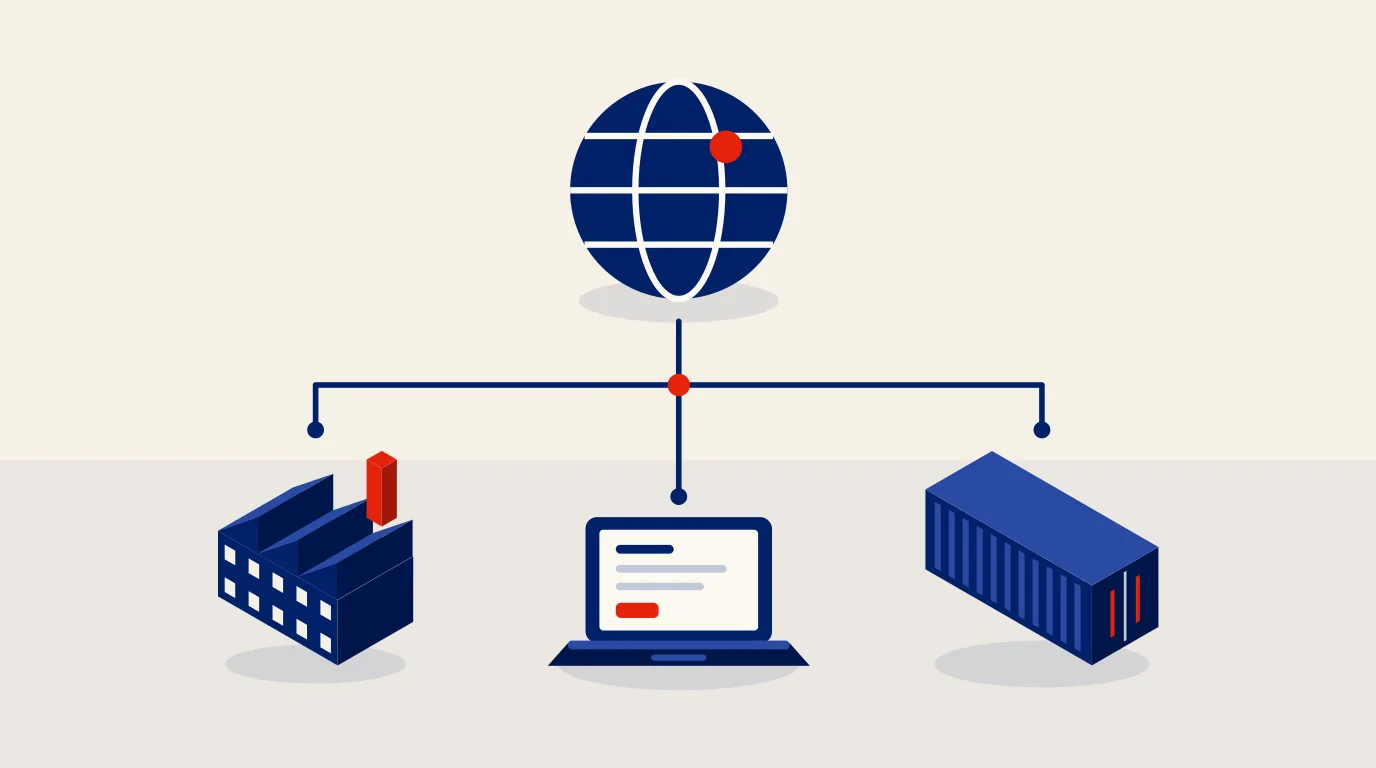
Customs knows an importer or exporter by its IEC. DGFT sends each IEC to the CBIC system on issue and after each update. The IEC holder then registers on ICEGATE, CBIC's electronic gateway, to file and track bills of entry and shipping bills and to register bank accounts.
The ICEGATE registration advisory lists IEC holders and their authorised persons as a user category. Each IEC holder can create a parent user and child users for employees. The Department approves each registration and emails the login details.
Two bank registrations on ICEGATE matter for a subsidiary that exports goods. The ICEGATE bank account manual describes both:
Foreign remittance account (AD code). The holder declares the AD bank branch it uses for export proceeds. It does this for each customs location.
Refund or incentive account. The holder registers the account that receives export incentives.
To add or change either account, the manual asks for a bank authorisation letter with a cancelled cheque or an endorsed bank statement. The letter states the IEC and its linked PAN. In it, the bank confirms that the PAN on the account is the same as the PAN on the IEC.
The IEC also sits on every bill of entry and shipping bill. A customs broker files these under the importer's or exporter's IEC, not its own. Our guide on customs duty in India covers the bill of entry and duty side for importers.
System
What the IEC does there
Who acts
DGFT portal
Holds the IEC record, annual update, FTP authorisations and eBRCs
IEC holder
Customs (ICEGATE)
Identifies the importer or exporter on bills of entry and shipping bills; links AD code and incentive bank accounts
IEC holder and customs broker
GST portal
GST returns do not carry the IEC; the common PAN links the GSTIN with shipping bill and bill of entry data
IEC holder
AD bank and RBI EDPMS
Shipping bills and export declarations are matched with proceeds received
AD bank
DGFT eBRC platform
Bank realisation data is recorded against the IEC
AD bank or IEC holder
How does IEC connect with GST registration?
The IEC and the GSTIN are separate registrations that share one PAN. A GSTIN does not replace the IEC, and an IEC does not give GST registration. A subsidiary that imports or exports goods usually needs both. It also needs a Letter of Undertaking if it exports without paying IGST.
The link matters most for IGST refunds on goods exported with payment of tax. Under rule 96(1) of the CGST Rules, 2017, the shipping bill itself is treated as the refund application. Three conditions apply:
The carrier files the departure manifest, export manifest or export report covering the shipping bill.
The exporter furnishes a valid GSTR-3B. If shipping bill data does not match GSTR-1 or GSTR-1A, the claim counts as filed only once the exporter fixes the mismatch.
The exporter completes Aadhaar authentication under rule 10B.
Rule 96(2) sends the export invoice data in GSTR-1 from the GST portal to the customs system. The IEC on the shipping bill and the GSTIN in GSTR-1 must sit under the same PAN for that match to work.
On the import side, IGST paid at customs becomes input tax credit. Customs data for each bill of entry flows to the importer's GSTIN through ICEGATE. A wrong GSTIN on the bill of entry is a common reason that credit does not show.
Declaration for goods. The exporter declares the full export value at the time of export. At EDI ports, the export declaration is deemed submitted with the shipping bill (regulation 3(1)).
Declaration for services. The Export Declaration Form is due within 30 days after the end of the month in which the invoice is raised (regulation 3(2)). Exporters of services other than software may instead file it on or before the date they receive payment. For software, the EDF replaces the SOFTEX form of the 2015 regulations.
Realisation period. Nine months from shipment for goods and nine months from invoice date for services (regulation 5(1)(a)). A proviso to regulation 5(1) makes it twelve months where the export is invoiced or settled in INR.
Extension. The AD bank may extend the period if the exporter gives reasons it accepts (second proviso to regulation 5(1)).
Small values. For a shipping bill or invoice up to INR 10,00,000, the bank may close the EDPMS entry on the exporter's declaration of realisation (first proviso to regulation 4(2)).
Set off. The AD bank may set export receivables against import payables with the same overseas buyer or supplier, or their group companies (regulation 7).
Long overdue exports. If proceeds stay unrealised for more than one year past the due date, further exports need full advance payment or an irrevocable letter of credit (regulation 13).
The IEC ties this together in practice. The shipping bill carries the IEC and the AD code, and customs passes that data on for EDPMS. The bank's realisation data then feeds the eBRC on the DGFT platform against the same IEC. GST refund claims for zero rated exports rely on that realisation proof.
The IEC rules themselves have not changed since the FTP 2023 started on 1 Apr 2023. The FEMA rules that track exports made under an IEC changed in 2026. The table lists both, so a reader can see which instrument governs which step.
Area
Old position
New position
Date
Instrument
Annual IEC update
No yearly update; the IEC stayed valid until changed
Update or confirm every April to June; deactivation if missed
12 Feb 2021 and 9 Aug 2021
DGFT Notifications No. 58/2015-2020 and No. 16/2015-2020
Old IECs not updated since 2005
Active on record
Deactivated from 6 Oct 2021; reactivated on online update
20 Sep 2021
DGFT Trade Notice 18/2021-2022
Policy base for IEC
FTP 2015-20 paragraph 2.05
FTP 2023 paragraph 2.05 and HBP 2023 paragraphs 2.07 to 2.15, with no end date
1 Apr 2023
Foreign Trade Policy 2023
FEMA export framework
FEMA 23(R)/2015-RB, export only
One set of regulations for exports and imports
1 Oct 2026
FEMA 23(R)/2026-RB of 13 Jan 2026
Services export declaration
SOFTEX form for software exports
EDF within 30 days after the invoice month
1 Oct 2026
Regulation 3(2), FEMA 23(R)/2026-RB
Realisation period, goods and services
Fifteen months from 13 Nov 2025, back to nine months from 5 Jun 2026, under the 2015 regulations
Nine months; twelve months for INR invoices
1 Oct 2026
Regulation 5(1), as amended by FEMA 23(R)/(1)/2026-RB of 22 Sep 2026
RBI dated the 2026 regulations 13 Jan 2026, and the Gazette published them on 15 Jan 2026, the day this page first went up. They came into force on 1 Oct 2026. FEMA 23(R)/(1)/2026-RB of 22 Sep 2026, published in the Gazette on 24 Sep 2026, amended the new regulations before they started. It cut their fifteen and eighteen month periods to nine and twelve months. The fifteen month period in the new text never applied.
Worked example
A subsidiary that imports parts and exports modules
Suppose a Singapore parent sets up an Indian Private Limited company to assemble modules from imported parts. It exports the modules back to the parent.
The company is incorporated on 1 Oct 2026 and receives its PAN with the certificate of incorporation.
The AD bank opens the current account on 12 Oct 2026 and issues a bank certificate the same day.
The company files Form ANF-2A on 14 Oct 2026 and pays INR 500. The IEC issues the same day.
It registers on ICEGATE and declares its AD code at the Chennai customs location.
It ships the first export consignment on 10 Dec 2026, invoiced at USD 80,000.
Regulation 5(1)(a) gives nine months from shipment. The proceeds must therefore come in by 10 Sep 2027, unless the AD bank extends the period. If the money is still outstanding after 10 Sep 2028, it is more than one year past the due date. Regulation 13 then requires full advance payment or an irrevocable letter of credit for further exports.
The company must also update the IEC between 1 Apr 2027 and 30 Jun 2027, even though DGFT issued it less than six months earlier. The DGFT fees in year one are INR 500 for the IEC and nil for the update.
A services subsidiary deciding whether it needs an IEC
A UK parent's Indian subsidiary bills the parent USD 50,000 a month for software development. It has no FTP claim today.
Annual exports are USD 50,000 × 12 = USD 600,000.
Over the current and previous three financial years, the most it could show is USD 600,000 × 4 = USD 2,400,000.
That is USD 600,000 short of the USD 3,000,000 that Q6 of the DGFT FAQ sets for a One Star Export House.
Paragraph 2.05(a) does not require an IEC for this company. FEMA still applies. For the invoice dated 31 Oct 2026, the EDF is due by 30 Nov 2026 under regulation 3(2). The money must arrive by 31 Jul 2027 under regulation 5(1)(a).
We would still apply for the IEC here. It costs INR 500, takes a day, and lets the company generate eBRCs on the DGFT platform for its GST refund files. It also means no delay if the group later ships hardware to India.
Common mistakes
Applying before the bank account is open. HBP paragraph 2.08(c) needs bank proof. Fix: open the current account first and ask the bank for the certificate if no cheque book has arrived.
Skipping the April to June update because nothing changed. Paragraph 2.05(d) needs a confirmation even when nothing changed. Fix: put a 1 April task in the compliance calendar and file the nil confirmation.
Letting a director or bank change sit on the IEC. HBP paragraph 2.14(b) gives 30 days. Fix: update the IEC in the same week as the MCA filing for a director or address change.
Assuming the customs broker's IEC covers the import. The broker files under the importer's IEC. Fix: get the subsidiary's own IEC before the first shipment, including samples and test equipment.
Using a different PAN on the bank account and the IEC. The ICEGATE incentive account needs the bank to confirm that both PANs match. Fix: keep the account in the company's own name and PAN.
Treating IEC as optional for services when the company wants eBRCs. Self generation of eBRCs needs an IEC. Fix: decide early whether eBRCs will support GST refunds.
Getting a second IEC for a new plant. HBP paragraph 2.12 allows one IEC per PAN. Fix: add the plant as a branch on the existing IEC.
Forgetting the IEC at closure. An active IEC with open authorisations blocks surrender under HBP paragraph 2.13. Fix: close or transfer obligations and surrender the IEC before strike off.
IEC registration checklist
Confirm that the entity will import or export goods, or will claim an FTP benefit for services.
Open the Indian current account and get a cancelled cheque or bank certificate.
Collect the certificate of incorporation, PAN, address proof and any owner NOC.
Arrange a Class 3 organisation DSC in the company's name for a director, or Aadhaar based signing by an Indian director.
Register on the DGFT portal and verify the email address and mobile number by OTP.
File Form ANF-2A with the documents and pay the INR 500 fee.
Download the electronic IEC and check the details on the DGFT website.
Register the IEC holder on ICEGATE and create child users for staff.
Declare the AD code and register the incentive bank account at each customs location you use.
Register for GST and file the LUT if you will export without paying IGST.
Diarise the annual IEC update for 1 April to 30 June every year.
Update the IEC within 30 days of any change in address, bank, directors or constitution.
Track every export in EDPMS against the nine month realisation period.
Surrender the IEC online when the business closes or merges.
To have us file the IEC and set up ICEGATE for a new subsidiary, email [email protected] with the incorporation and bank certificates.
Frequently Asked Questions
What is the fee for IEC registration in India?+
The fee is INR 500 under serial 1 of Appendix 2K of the Handbook of Procedures 2023. The applicant pays it online at the end of Form ANF-2A on the DGFT portal. The annual update between April and June is free under serial 6(A). The DGFT user manual shows INR 200 for a modification of IEC details.
Is the IEC number the same as the company's PAN?+
Yes. Paragraph 2.05 of the Foreign Trade Policy 2023 says the IEC shall be the same as the PAN, though DGFT still issues it separately on an online application. HBP paragraph 2.12 allows only one IEC against one PAN. Some older holders still carry numeric IECs issued before the PAN link.
Does an Indian subsidiary of a foreign company need an IEC?+
Yes, if it imports or exports any goods, including samples and test equipment. Section 7 of the Foreign Trade (Development and Regulation) Act, 1992 bars import or export without an IEC. Foreign ownership does not change the process, and no RBI approval is needed to get the code.
Does a company that only exports software services need an IEC?+
Not by law, unless it claims a Foreign Trade Policy benefit. Paragraph 2.05(a) of the FTP 2023 links the IEC requirement for services to FTP benefits. Many service exporters still get one, because status holder recognition and self generation of eBRCs on the DGFT platform need an IEC.
When is the annual IEC update due?+
Between 1 April and 30 June every year, under paragraph 2.05(d) of the Foreign Trade Policy 2023. The holder updates any changed details or confirms that nothing has changed. The update carries no fee. An IEC that is not updated in that window is deactivated under paragraph 2.05(e).
How do I reactivate a deactivated IEC?+
Log in to the DGFT portal and complete the pending update. DGFT Trade Notice 18/2021-2022 of 20 Sep 2021 says the IEC is then reactivated and sent to the customs system with its new status. No visit to the Regional Authority is needed. Paragraph 2.05(e) keeps DGFT's right to act on other breaches.
What documents are needed for IEC registration of a Private Limited company?+
HBP paragraph 2.08(c) needs a cancelled cheque with the company's pre printed name or a bank certificate, and an address proof. The DGFT portal also asks for the certificate of incorporation, PAN, director details and a DSC or Aadhaar signature. Each upload must be a PDF of at most 5 MB.
Can a foreign company get an IEC without an Indian entity?+
Not in practice. HBP paragraph 2.08(c) asks for an address proof and an Indian bank account proof. A branch office of a foreign company can get an IEC against the foreign company's PAN. Where the foreign company only sells to Indian buyers, the buyer imports under its own IEC.
Who is exempt from obtaining an IEC?+
HBP paragraph 2.07 exempts government ministries and departments, persons importing or exporting for personal use not connected with trade, certain cases under the 1993 Exemption Order, and small border trade with Nepal, Bhutan, Myanmar and China. Exempt persons quote one of twelve permanent IECs, such as AMDCG0111E for Central Government ministries.
Do I need a separate IEC for each branch or factory?+
No. HBP paragraph 2.10(a) says one IEC covers all branches, divisions, units and factories of the holder. Paragraph 2.12 bars a second IEC against the same PAN. The IEC also stays valid for SEZ, EOU, EHTP, STP and BTP units under paragraph 2.11.
How does the IEC link with GST refunds on exports?+
Under rule 96 of the CGST Rules, 2017, the shipping bill filed under the IEC is treated as the IGST refund claim for exported goods. The claim needs a valid GSTR-3B, GSTR-1 data that matches the shipping bill, and Aadhaar authentication. The IEC and GSTIN must share the same PAN.
What happens if export proceeds are not realised on time?+
Regulation 5(1)(a) of FEMA 23(R)/2026-RB gives nine months from shipment or invoice date, or twelve months if invoiced in INR. The AD bank may extend it. If proceeds stay unrealised for more than one year past the due date, regulation 13 requires full advance payment or an irrevocable letter of credit for further exports.
Can DGFT cancel an IEC?+
Yes. Section 8 of the Foreign Trade (Development and Regulation) Act, 1992 lets the Director General suspend or cancel an IEC after written notice and a chance to be heard, for breaches of customs, foreign exchange or other economic laws. The holder can apply on the DGFT portal to revoke a suspension or cancellation.
Do I need to surrender the IEC when closing an Indian subsidiary?+
Yes. HBP paragraph 2.13 allows an online surrender once all authorisations and obligations are closed, or once they move to a successor after a merger. DGFT then sends the updated IEC status to customs. Surrender belongs in the closure file before strike off.
DGFT, Foreign Trade Policy 2023, Chapter 2 (paragraphs 2.05 and 2.14), in force from 1 Apr 2023, https://content.dgft.gov.in/Website/dgftprod/4f665d2f-20cc-4887-ae6a-5ec912bc0d44/FTP2023_Chapter02.pdf
DGFT, Handbook of Procedures 2023, Chapter 2 (paragraphs 2.05 to 2.15), https://content.dgft.gov.in/Website/dgftprod/6978673f-9c59-4aac-a612-084df7b47e39/HBP2023_Chapter02.pdf
DGFT, Appendix 2K, scale of application fees, https://content.dgft.gov.in/Website/dgftprod/d62065a3-1ad4-44a2-bca7-192850af74e4/Updated_Appendix%202K.pdf
DGFT, IEC Module User Help File V4.1, https://content.dgft.gov.in/Website/IEC_Manual_V4.1.pdf
DGFT, Foreign Trade (Development and Regulation) Act, 1992, Gazette text of 10 Aug 1992, https://content.dgft.gov.in/Website/Foreign_Trade_(Development_&_Regulation)_Act,_1992.pdf
DGFT, FTP 2015-20 Chapter 2 as updated on 10 Aug 2021 (footnotes citing Notification No. 58/2015-2020 of 12 Feb 2021 and Notification No. 16/2015-2020 of 9 Aug 2021), https://content.dgft.gov.in/Website/dgftprod/a913d6f4-7830-42f6-822c-66fd85ac74f7/FTP%20Chapter2-Updated%20as%20on%20%2010.08.2021.pdf
DGFT, Trade Notice 18/2021-2022, De activation of IECs not updated, 20 Sep 2021, https://content.dgft.gov.in/Website/dgftprod/d0dbf9c6-d0ae-4f49-a9ae-e59c240ea9fe/Trade%20Notice%2018%20-%20IEC%20de-activation%20prior%202005.pdf
DGFT, FAQs on self certification of eBRC, https://content.dgft.gov.in/Website/DGFT-FAQs-on-Self-Certification-of-eBRC-dated-1.1.pdf
DGFT, FAQs on Status Holder Certificate v2.0, https://content.dgft.gov.in/Website/DGFT_FAQs-Status_Holder_Certificate_v2.0.pdf
RBI, Foreign Exchange Management (Export and Import of Goods and Services) Regulations, 2026, FEMA 23(R)/2026-RB of 13 Jan 2026 (Gazette 15 Jan 2026), amended up to 22 Sep 2026, https://www.rbi.org.in/Scripts/NotificationUser.aspx?Id=13277&Mode=0
CBIC, Central Goods and Services Tax Rules, 2017, rule 96, https://taxinformation.cbic.gov.in/content/html/tax_repository/gst/rules/cgst_rules/active/chapter10/rule96_v1.00.html
CBIC, ICEGATE user manual on bank account management, https://www.icegate.gov.in/sites/default/files/2024-11/User%20Manual-Bank%20Account%20Management%20v1.0.pdf
TALK TO AN ADVISOR
Facing this in your own entity?
Guides explain the rules. A conversation solves your specific case. Talk to a Krystal7 Consultants advisor about your India entry, FEMA or compliance position.
Nandini Hasija is a co-founder of Krystal7. She leads brand, business development and marketing, and works with founders to define their engagement. She is a Chartered Accountant and achieved All India Rank 49 in the CA examinations.
Six things you can check before you sign, and hold us to after.
A Chartered Accountant signs off
Filings go out through our Chartered Accountant practice, led by CA Nandini Hasija, All India Rank 49, ICAI.
A reply within 4 business hours
The team is online from 9:30 AM to 11:59 PM IST, which covers the working day in the UK and the UAE, the afternoon in Singapore and the morning in the US.
The fee is fixed before work starts
You see the professional fee in writing first. Government fees are passed on at cost.
Both sides of the border, one team
Company law, FEMA and RBI reporting, tax and transfer pricing sit with the same advisers.
Your due dates, tracked by us
We keep the compliance calendar for your entity and tell you what is due before it is due.
500+ clients across 5 continents
More than 50 advisers on the bench when a matter needs a specialist.
Working with the Kristal7 team has been an absolute pleasure. Their professionalism, attention to detail, pace they work at and commitment to delivering top-quality results stand out. They took the time to understand our needs and executed seamlessly. Highly recommend Kristal7 to anyone looking for a reliable partner to establish business in India.
We can't be happier after dealing with true professionals who really do things in India. Absolutely recommended, high-class professionals, Nihal knows his stuff better than anybody in India, trust me. Highly recommended if you ever need any type of business needs to be done properly and ON TIME in India! Thank you guys!!!
Krystal7 Consultants has an exemplary and professional attitude in their approach to services rendered by them. The team and it's leaders are thoroughly aggressive all throughout setting the processes timely and getting procedures done in a time bound and disciplined manner. Highly recommended Consultants to go-to.We wish them all the very best in all their future endeavours and growth story.
I had a great experience with this firm while filing my ITR! The team handled my ITR filing end-to-end, answered all my queries patiently, and made the entire process smooth and hassle-free. Nandini is highly professional, responsive, and took complete ownership throughout. Highly recommended for anyone looking for reliable tax filing assistance.
Very energetic and young professionals with best consultation and commitment of work completion on time in regionable fees. Mr. Nihal is very punctual & committed .
Very happy with my experience with them. They have thoroughly guided me through the processes and executed them as planned, for all my registrations. Definitely would recommend using their services.
Recap
Crystal Seven Consultants, especially Nandini Hassija and Nihal Srivastava, have redefined my experience with compliance management. From professionalism to problem-solving, they delivered trust, accuracy, and peace of mind—qualities rare in this industry.
Detailed Review
When Nandini first called me from Crystal Seven Consultants, I’ll admit I was hesitant. In the compliance and consultancy space, it’s common to see aggressive sales tactics with little to no delivery. But Nandini immediately broke that stereotype with her professionalism, clear communication, and genuine approach. She personally assisted me with something as important as a resignation process, ensuring it was handled responsibly and without stress.
Later, Nihal stepped in and impressed me with his technical expertise and eye for detail. He uncovered a serious compliance error (a mug-up) created by my previous consultant—something that could have been risky and damaging for my company. The way Nihal managed this issue with care, accuracy, and professionalism gave me full confidence that my compliance matters were finally in safe hands.
Today, I rest assured knowing that Daxy’s compliances are being managed with integrity, precision, and accountability. Both Nandini and Nihal have shown me that this industry can, in fact, be built on trust, transparency, and delivery.
I genuinely recommend Crystal Seven Consultants to any business owner who wants their legal, financial, and compliance matters handled not just properly—but with care, reliability, and genuine expertise.
We use Google Analytics to see how the site is used and Google Ads cookies to measure enquiries that come from our ads. You choose what we use, and you can change it at any time. Cookie policy