Customs Duty in India 2026: BCD, SWS, IGST and Valuation Explained
How customs duty in India is built from BCD, SWS, AIDC and IGST, how customs values imports from a foreign parent, how the bill of entry works on ICEGATE, and what drawback and advance authorisation save.
Krystal7 Consultants · India entry, tax and compliance
Written by CA Nandini Hasija, Krystal7 Consultants. Last updated 23 October 2026.
Customs duty in India on most imports has three layers. Basic customs duty applies at the rate in the First Schedule to the Customs Tariff Act, 1975, or a lower notified rate. The Social Welfare Surcharge adds 10 percent of that duty. IGST, usually 5 or 18 percent, applies on the assessable value plus both. AIDC replaces part of the basic duty on some goods. The value is the transaction value under section 14 of the Customs Act, 1962.
This page is for the Indian subsidiary of a foreign group that imports from its parent or from third party suppliers. It covers each part of the duty, valuation and related party rules, and classification. It then covers the bill of entry, payment, drawback, advance authorisation and a landed cost example.
What is customs duty in India and who pays it?
Customs duty is the tax India charges on goods brought into the country. Section 12 of the Customs Act, 1962 levies it at the rates in the Customs Tariff Act, 1975. The importer pays it before the goods leave customs control. For a foreign group, the importer is normally the Indian subsidiary.
The Customs Act defines an importer widely. Section 2(26) includes any owner, beneficial owner or person holding itself out as the importer, from import until clearance. In practice the importer of record is the entity whose IEC and GSTIN appear on the bill of entry.
A foreign parent with no Indian entity cannot easily act as importer. Its Indian customer or subsidiary files the bill of entry under its own IEC. Our IEC guide explains how a new subsidiary gets one.
The duty is not one rate. It is a stack of separate levies, each under its own law. Each has a different base, and only IGST is creditable against GST. That split decides the real cost of an import.
What are the components of import duty in India?
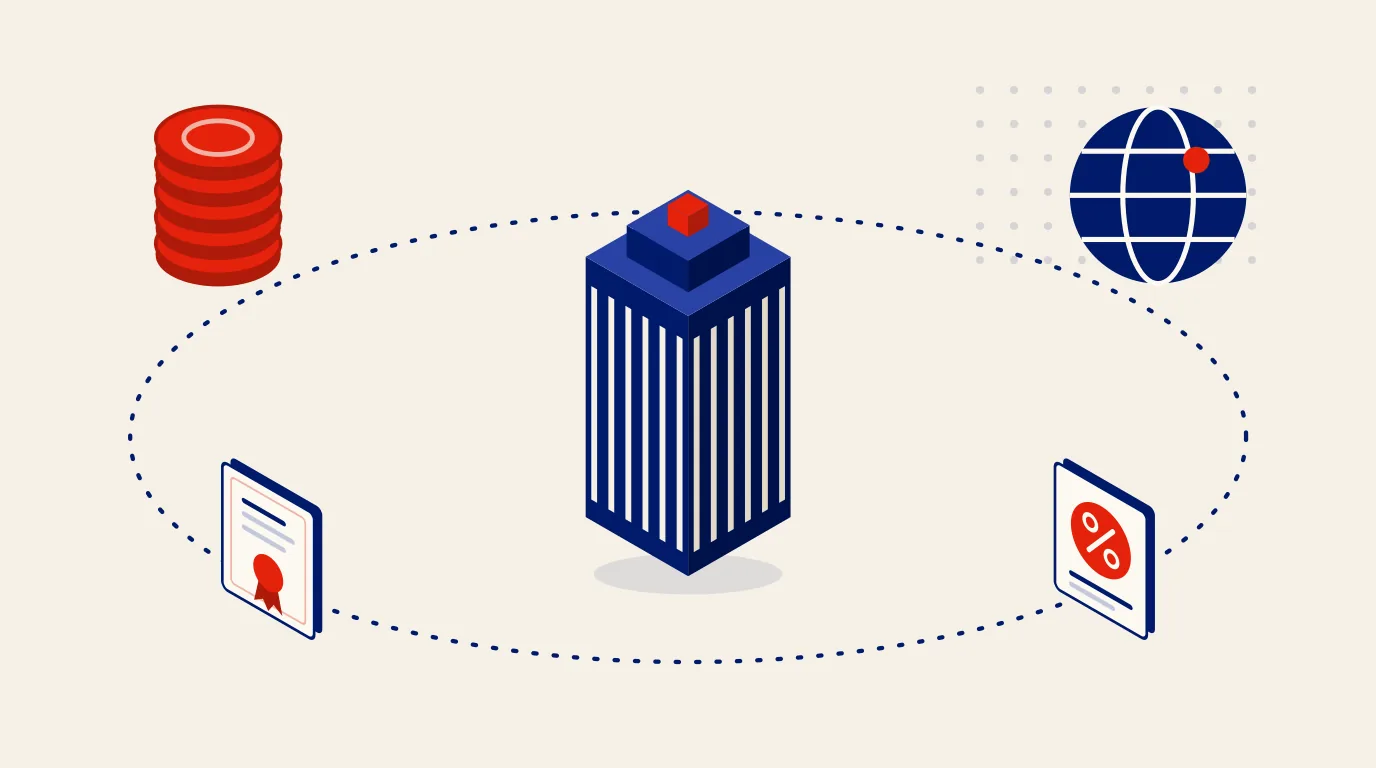
Import duty in India has up to five parts. Basic customs duty is the core. AIDC applies on some goods. The Social Welfare Surcharge is charged on the customs duties. IGST applies on the value plus those duties. Trade remedy duties such as anti dumping duty apply only where notified.
Agriculture Infrastructure and Development Cess (AIDC)
Section 124, Finance Act, 2021
Assessable value
Only on specified goods
No
Social Welfare Surcharge (SWS)
Section 110, Finance Act, 2018
Aggregate customs duties under section 12
10% for most goods
No
Integrated GST (IGST)
Section 3(7), Customs Tariff Act, 1975
Assessable value plus customs duties
5%, 18% or 40% for most goods
Yes
GST Compensation Cess
Section 3(9), Customs Tariff Act, 1975
Assessable value plus customs duties
Nil on all goods from 1 Feb 2026
Was creditable against cess only
Anti dumping, countervailing or safeguard duty
Sections 8B, 9 and 9A, Customs Tariff Act, 1975
Notified per product and source
Notified case by case
No
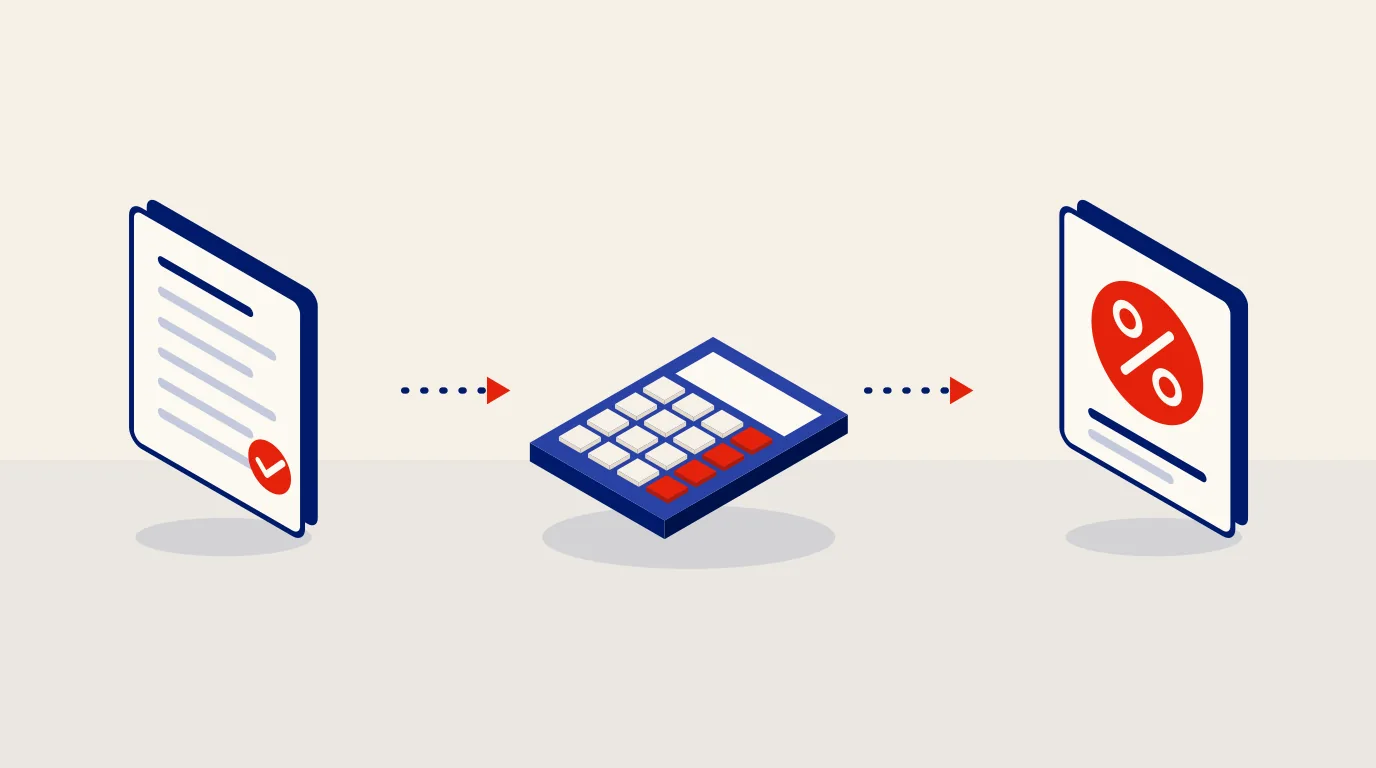
The order of calculation matters. Customs first fixes the assessable value. It then applies basic customs duty and AIDC. It adds the Social Welfare Surcharge. Finally it charges IGST on the total of the value and those duties.
A preferential rate under a free trade agreement cuts basic customs duty only. The Social Welfare Surcharge falls with it, because it is a percentage of it. IGST stays. Our guide to rules of origin under CAROTAR covers what an importer must hold to claim an FTA rate.
How is basic customs duty set and how many tariff rates are there?
The First Schedule to the Customs Tariff Act, 1975 sets a tariff rate for each eight digit tariff item. The government can lower that rate by an exemption notification under section 25 of the Customs Act. The rate you pay is the lower effective rate where a notification applies.
Section 25(1) lets the Central Government exempt goods in the public interest, either absolutely or subject to conditions. Many concessional rates sit in large general notifications rather than in the tariff itself. An importer must read both the tariff and the notifications for each line.
The tariff structure has shrunk. The Union Budget 2025-26 removed seven tariff rates for industrial goods, after seven removed in Budget 2023-24. That left "only eight tariff rates, including 'zero' rate" (PIB release 2098364, 1 Feb 2025). The same release said an item would carry no more than one cess or surcharge.
The Union Budget 2026-27 of 1 Feb 2026 went further. The Budget speech, at paragraph 145, proposed to review exemptions and fold effective rates into the tariff schedule. These concessional rates move into the First Schedule from 1 May 2026 (TRU letter, Budget 2026-27).
Some conditional exemptions lapsed on 31 Mar 2026, so the standard rate applies from 1 Apr 2026. The TRU letter gives examples from Notification 45/2025-Customs of 24 Oct 2025. Check every line you import against the tariff as it stood after 1 May 2026, not against last year's bill of entry.
How do the Social Welfare Surcharge and AIDC work?
The Social Welfare Surcharge is 10 percent of the aggregate customs duties levied under section 12 of the Customs Act. For most goods that is 10 percent of basic customs duty. AIDC is a separate duty of customs on specified goods only. Neither is creditable against GST.
Section 110 of the Finance Act, 2018 created the Social Welfare Surcharge. It replaced the education cesses on imports. Notification 11/2018-Customs exempts it or sets a lower rate on some goods. The Budget 2026-27 TRU letter, for example, exempts all goods of heading 9503 from it from 2 Feb 2026.
Section 124 of the Finance Act, 2021 created AIDC. It applies only to goods specified for it, at effective rates in Notification 11/2021-Customs as amended. Where AIDC applies, the basic customs duty on that line is usually lower. Budget 2025-26 also exempted the Social Welfare Surcharge on 82 tariff lines that carry a cess (PIB release 2098364).
The practical effect is simple. Read the line in the tariff, then the exemption notification, then the AIDC and Social Welfare Surcharge notifications. Your customs broker's system does this, but the importer carries the liability if the rate is wrong.
How is IGST charged on imports and can you claim credit?
IGST on imported goods is levied under section 3(7) of the Customs Tariff Act, 1975 at the GST rate for those goods. Section 3(8) sets the base as the assessable value plus basic customs duty and other customs duties. The importer can claim the IGST as input tax credit if the bill of entry carries its GSTIN.
The rate follows the GST rate notifications. FAQ 7 on the 56th GST Council decisions confirms this for imports (PIB FAQs, Sep 2025). It says the IGST on imported goods "will be the GST rates as notified in the rate notification". From 22 Sep 2025 most goods fall at 5 percent or 18 percent, with 40 percent for a short list of sin and luxury goods.
The credit depends on data. Customs data for each bill of entry flows from ICEGATE to the GST portal against the GSTIN quoted. The credit appears in the importer's GSTR-2B. A wrong GSTIN, or the parent's name in place of the subsidiary, breaks that link.
Basic customs duty, AIDC and the Social Welfare Surcharge stay as cost, unless the goods later earn drawback on export.
Our page on GST input tax credit rules covers the conditions and time limits for claiming the IGST credit.
Is compensation cess still payable on imports?
No. For imports cleared from 1 Feb 2026 the cess rate is nil on all goods. The GST Council ended the compensation cess on most goods from 22 Sep 2025. Notification 03/2025-Compensation Cess (Rate) of 31 Dec 2025 then set the cess to nil from 1 Feb 2026. That covered the last pan masala and tobacco entries.
The FAQs on the 56th GST Council meeting said the Council had decided "to end the Compensation Cess levy" (FAQ 38). Mid size and large cars moved to 40 percent "with no compensation cess" (FAQ 35). Tobacco items kept the old GST and cess rates until the cess loans and interest were repaid (FAQ 1).
The GST Council's December 2025 newsletter reports the final step. From 1 Feb 2026 the cess on pan masala and tobacco entries is nil, and those goods move to the 40 percent GST rate. Section 3(9) of the Customs Tariff Act still exists, but it now charges cess at a nil rate.
Tobacco products carry other levies that this page does not cover. If you import any goods from Chapters 21 or 24, check the excise linked duties separately with your broker.
How does customs value imported goods?
Customs values imported goods at their transaction value under section 14 of the Customs Act, 1962. That is the price actually paid or payable for the goods when sold for export to India. It includes freight and insurance to the place of import and the additions listed in the valuation rules.
Customs converts the value into rupees at the exchange rate "determined by the Board" (section 14 on CBIC). It uses the rate "in force on the date on which a bill of entry is presented under section 46". CBIC notifies these rates by notification. Your bank's rate on the remittance date does not count.
The Customs Valuation (Determination of Value of Imported Goods) Rules, 2007 (CVR 2007) set the detail. Rule 3 accepts the transaction value, subject to rule 10. If customs rejects it, rules 4 to 9 apply in order: identical goods, similar goods, deductive value, computed value and a residual method.
Rule 10 adds costs the buyer bears but the invoice may not show.
Addition under rule 10 of CVR 2007
Example in a group import
Commissions and brokerage, except buying commission (10(1)(a))
Commission the subsidiary pays the parent's sales agent
Value of tools, dies, moulds and materials supplied by the buyer free or at a discount (10(1)(b))
Moulds the subsidiary pays for and sends to the supplier
Royalties and licence fees related to the goods, paid as a condition of sale (10(1)(c))
Royalty to the parent on products made from imported parts
Proceeds of resale that accrue to the seller (10(1)(d))
A share of resale profit paid back to the parent
Other payments made as a condition of sale (10(1)(e))
A fee the parent requires before it will ship
Freight, loading, unloading and handling to the place of import (rule 10(2))
Ocean or air freight on a free on board contract
Insurance to the place of import (rule 10(2))
Marine cover the subsidiary buys separately
Where the invoice does not show freight or insurance, rule 10(2) supplies default percentages of the free on board value. Read the current percentages, and any cap for air freight, in rule 10(2) on cbic.gov.in before you rely on them.
Rule 12 lets the officer doubt the declared value and ask for more information. If the doubt remains, the officer can reject the value and move to rules 4 to 9.
How are imports from a related foreign parent valued?
Customs accepts the price between related parties if the relationship did not influence it, under rule 3(3) of CVR 2007. The importer declares the relationship in the bill of entry. Where royalties, licence fees or similar payments are involved, the case may go to the Special Valuation Branch (SVB).
Rule 2(2) of CVR 2007 lists when buyer and seller are deemed related. A parent and its wholly owned subsidiary always meet one of those tests. Rule 3(3)(a) accepts the price if an examination of the circumstances shows no influence. Rule 3(3)(b) accepts it if it closely approaches certain test values.
The SVB procedure comes from Circular 5/2016-Customs of 9 Feb 2016, read with Circular 4/2016-Customs for pending cases. Circular 5/2016 replaced Circular 1/98 and Circular 11/2001. JNCH set it out in Facility Notice 35/2016 of 25 Feb 2016.
Under that circular, the port first examines every related party import. Additions under rule 10(1)(a) and (b) stay with the port's appraising group. Payments under rule 10(1)(c), (d) and (e) are the ones that may go to the SVB.
Step under Circular 5/2016-Customs
Who acts
Time limit
File Annexure A questionnaire with the bill of entry
Importer
With the bill of entry, ideally 15 days before import
Prima facie examination of the relationship
Port officer
Within 3 days of the bill of entry
File Annexure B questionnaire and documents with the SVB
Some imports stay out of the SVB process. Paragraph 4.5 of the JNCH notice excludes samples and prototypes, and goods that are fully exempt or at nil duty. It also excludes imports below INR 1,00,000 each, where the total stays within INR 25,00,000 in a financial year.
The 2016 circular removed two old burdens. Customs no longer takes an extra duty deposit while the case runs. Renewal of SVB orders was "discontinued with immediate effect". A security of 5 percent of declared value applies only if the importer misses the 60 day document deadline. It lasts three months at most.
The goods are cleared on provisional assessment under section 18 while the SVB works. The Finance Act, 2025 added section 18(1B), which sets two years to finalise a provisional assessment. The Commissioner can extend it by one year for sufficient cause (TRU letter, Budget 2025-26).
Customs value and transfer pricing look at the same price from two sides. Income tax tests it at arm's length under sections 161 to 173 of the Income Tax Act, 2025. A year end transfer pricing adjustment that raises the price can raise the customs value as well. We ask clients to agree the transfer pricing policy and the customs declaration together. Our guides to transfer pricing documentation and arm's length price methods cover the income tax side.
How does HSN classification work for customs?
Every import is classified under an eight digit tariff item in the First Schedule to the Customs Tariff Act, 1975. The first six digits follow the World Customs Organization's Harmonized System. The tariff item decides the basic customs duty, any AIDC, the IGST rate and any import policy condition.
Classification follows the General Rules for Interpretation printed in the First Schedule. Section notes and chapter notes bind the result. The importer self assesses the classification under section 17(1) of the Customs Act, so the risk of a wrong code sits with the importer.
A supplier's six digit code is a starting point only. Indian eight digit items often split a six digit heading by material, use or size. We see disputes when a subsidiary copies the parent's export code without checking the Indian split.
An importer that wants certainty can apply to the Customs Authority for Advance Rulings under section 28H. Until 30 Mar 2026 a ruling bound customs for three years. The Finance Act, 2026 extended this to five years, as paragraph 165 of the Budget speech proposed. Holders of rulings in force on that date can ask the Authority to extend them.
Classification also drives GST. IGST at customs and GST on onward sales both follow the same HSN logic. A wrong code at import can mean a wrong rate on every invoice that follows.
How do you file a bill of entry on ICEGATE?
The importer, usually through a licensed customs broker, files the bill of entry electronically on ICEGATE under section 46 of the Customs Act. It quotes the importer's IEC and GSTIN, the tariff item, the value and the duty. It must be filed before the end of the day before the vessel or aircraft arrives.
Section 46(3), as amended by the Finance Act, 2021, moved India to advance filing. Board Circular 08/2021-Customs of 29 Mar 2021 sets the limits by mode of transport. Bengaluru customs explained it in Public Notice 13/2021 of 31 Mar 2021 and applied it in the system from 30 Mar 2021. Goods from some neighbouring countries can be filed by the end of the day of arrival.
Late filing has a cost. Regulation 4 of the Bill of Entry (Electronic Integrated Declaration and Paperless Processing) Regulations, 2018 charges the importer for each day of default. The daily charge is lower for the first three days and higher for each later day. For a bill of entry on which no duty is payable, JNCH records a ceiling of INR 50,000. Read the current daily amounts in regulation 4 before you brief your broker. The proper officer can waive the charge for sufficient cause under the second proviso to section 46(3) (JNCH Public Notice 29/2024).
Step
Who acts
What happens
1. Register on ICEGATE
Importer
Links the IEC, creates users, registers the bank account
2. Appoint a customs broker
Importer
Broker files under the importer's IEC, never its own
3. File the bill of entry in advance
Broker
Home consumption, warehousing or ex bond type
4. Upload documents on eSanchit
Broker
Invoice, packing list, transport document, origin proof, licences
5. Self assessment and risk check
Importer and customs
Self assessment under section 17(1); the risk system decides on facilitation, assessment or examination
6. Pay duty
Importer
Online through ICEGATE, or by the deferred date for eligible importers
7. Out of charge
Customs
Goods released; data flows to GST and to the bank for IDPMS
Three bill of entry types matter. A bill for home consumption clears goods into India on payment of duty. A warehousing bill moves goods into a bonded warehouse without paying duty yet. An ex bond bill clears them later from that warehouse.
The Finance Act, 2026, which received assent on 30 Mar 2026, substituted section 67. Warehoused goods can move between bonded warehouses on prescribed conditions. No prior permission from the proper officer is needed (item A.1(vii) in the Annexure to the Budget speech).
When must customs duty be paid and what is deferred payment?
Import duty is payable before goods are cleared for home consumption, under section 47 of the Customs Act, 1962. The due date depends on whether the bill of entry is self assessed or assessed by an officer. Eligible importers can clear first and pay later under the Deferred Payment of Import Duty Rules, 2016.
Read section 47(2) on cbic.gov.in or indiacode.nic.in for the current payment deadline. Section 28AA provides for interest on delayed payment of duty, and the rate is fixed by notification. Confirm the rate in force before you plan a payment date.
Deferred payment rests on the proviso to section 47(1). Notification 13/2026-Customs (N.T.) of 1 Feb 2026 substituted the due dates in rule 4 of the 2016 Rules from 1 Mar 2026. Duty on bills returned for payment in any month except March is now due by the 1st of the next month. Duty on March bills is due by 31 March.
Notification 12/2026-Customs (N.T.), also of 1 Feb 2026, adds a new class called the Eligible Manufacturer Importer. CBIC Circular 08/2026-Customs of 28 Feb 2026 sets the conditions. The facility runs from 1 Apr 2026 to 31 Mar 2028 (Circular 08/2026-Customs).
An Eligible Manufacturer Importer needs at least 25 bills of entry or shipping bills in the previous financial year, or 10 for an MSME. It also needs aggregate turnover above INR 5 crore across GSTINs on its PAN and two financial years of business. Our AEO guide covers the AEO tiers that also give deferred payment.
How do duty drawback and advance authorisation reduce duty?
Both schemes give back or waive customs duty on goods tied to exports. Drawback refunds duty already paid on imported goods that are re exported or used in exported products. Advance authorisation lets an exporter import inputs without paying basic customs duty, IGST and other listed duties.
Drawback has two routes under the Customs Act. Section 74 allows drawback of duty on imported goods that are re exported as they are, if customs can identify them. The percentage refunded and the time allowed to re export are set in section 74 and the rules under it. Check both on cbic.gov.in before you plan a re export. Section 75 gives drawback on imported materials used in exported goods. The rates are notified under the drawback rules made under that section.
Advance authorisation sits in Chapter 4 of the Foreign Trade Policy 2023. Paragraph 4.03(a) allows "duty free import of input" physically incorporated in the export product, with normal wastage. Fuel, oil and catalyst used in production can also be allowed (FTP 2023 Chapter 4).
Feature
Advance authorisation
Drawback under section 75
Drawback under section 74
When duty is saved
At import, duty not paid
After export, refund
After re export, refund
Duties covered
BCD, IGST, Compensation Cess, anti dumping, safeguard and others listed in FTP paragraph 4.14
Duty on inputs at the notified or fixed rate
Duty paid on the imported goods
Main condition
Minimum value addition of 15% (FTP 4.09(i))
Inputs used in the exported goods
Goods identified and re exported
Time limits
Import within 12 months (HBP 4.39(a)); export within 18 months (HBP 4.40(a))
Claim with the shipping bill
Period set in section 74
Who issues
DGFT Regional Authority
Customs
Customs
Transfer
Actual user condition (FTP 4.16(i))
Not relevant
Not relevant
The Handbook of Procedures 2023, Chapter 4 allows one revalidation of import validity for twelve months (paragraph 4.39(c)). It allows up to two six month extensions of the export obligation on payment of a composition fee (paragraph 4.40(e) and (f)).
Paragraph 4.06 of the FTP adds a Self Ratification Scheme. An exporter that holds AEO status can ratify its own input norms where no standard norm exists. That is one more reason a regular exporter may want AEO status.
What does FEMA require for import payments?
From 1 Oct 2026 import payments follow FEMA 23(R)/2026-RB of 13 Jan 2026. These are the Foreign Exchange Management (Export and Import of Goods and Services) Regulations, 2026. Regulations 9 to 12 cover the time for payment, advance payments and imports that do not arrive. The AD bank tracks each import in IDPMS.
Regulation 9 ties the payment deadline to the period in the underlying contract. The AD bank may extend it on reasons it accepts. Regulation 10 lets the AD bank allow advance payments after checking the need. Above its own thresholds, the bank may ask for a standby letter of credit or a guarantee. Interest on a delayed import payment cannot exceed the all in cost ceiling for trade credit.
Regulation 12 deals with imports that never happen. The importer must bring back any advance it paid. If it fails, or the IDPMS entry stays open, later advances need a standby letter of credit or a guarantee (FEMA 23(R)/2026-RB).
The bill of entry closes the loop. The AD bank matches the payment to the bill of entry in IDPMS. For imports up to INR 10,00,000, regulation 4(2) lets the bank close the entry on the importer's declaration. Our guide to advance remittance for imports covers the bank side in detail.
What changed in 2025 and 2026
Date
Old rule
New rule
Instrument
2 Feb 2025 and 1 May 2025, by line
More basic customs duty tariff rates
Eight tariff rates including zero for industrial goods
Union Budget 2025-26; TRU letter of 1 Feb 2025; PIB release 2098364
2025, on assent to the Finance Act, 2025
No time limit to finalise provisional assessment
Two years, extendable by one year
Section 18(1B), Customs Act, 1962
22 Sep 2025
GST slabs of 5, 12, 18 and 28 percent, with cess on many goods
Mainly 5 and 18 percent, 40 percent for a short list; cess ended except on tobacco
56th GST Council; rate notifications
1 Feb 2026
Compensation cess on pan masala and tobacco
Cess nil on all goods
Notification 03/2025-Compensation Cess (Rate)
1 Mar 2026
Earlier due dates in rule 4 of the Deferred Payment of Import Duty Rules, 2016
Paid monthly, by the 1st of the next month; March by 31 March
Notification 13/2026-Customs (N.T.)
1 Apr 2026
Deferred payment only for AEO T2 and T3 importers
Also for Eligible Manufacturer Importers until 31 Mar 2028
Valid five years; earlier rulings can be extended on request
Finance Act, 2026, amendment of section 28J(2)
30 Mar 2026
Warehoused goods moved between bonded warehouses with the proper officer's permission
No prior permission needed, on prescribed conditions
Finance Act, 2026, substituted section 67
1 May 2026
Concessional rates spread across exemption notifications
Concessional rates moved into the First Schedule
Finance Act, 2026, amendment of the First Schedule (clause 136(c) and (d) of the Bill); TRU letter, Budget 2026-27
1 Oct 2026
Import payments under the RBI Master Direction framework
Regulations 9 to 12 of the 2026 regulations
FEMA 23(R)/2026-RB
What has happened since
This page first went up on 19 Mar 2026. These events came after that date.
The Finance Act, 2026 received assent on 30 Mar 2026 (GST Council newsletter, March 2026). The Finance Bill gave the section 28J and section 67 clauses no later start date. The five year advance ruling validity and the new section 67 therefore apply from assent.
The Eligible Manufacturer Importer deferred payment facility started on 1 Apr 2026. Mangaluru customs repeated the conditions in Public Notice 11/2026 of 27 Mar 2026.
Lapsed exemptions and the cut in the rate on personal imports under heading 9804 took effect on 1 Apr 2026.
Concessional rates moved into the First Schedule to the Customs Tariff Act on 1 May 2026.
FEMA 23(R)/2026-RB came into force on 1 Oct 2026, with regulations 9 to 12 on import payments.
Worked example
An Indian subsidiary imports machine parts from its US parent. The figures and rates are illustrative. Check the real tariff item, the effective rate notification and the CBIC exchange rate on the bill of entry date.
Assumptions:
Free on board price: USD 50,000.
Ocean freight: USD 2,500. Insurance: USD 250.
CBIC exchange rate on the bill of entry date: INR 88 per USD.
Basic customs duty: 10 percent. Social Welfare Surcharge: 10 percent of basic duty. IGST: 18 percent.
The example takes the declared values and leaves out any other rule 10 addition your broker's system may apply.
Line
Calculation
Amount (INR)
Assessable value
USD 52,750 at INR 88
46,42,000
Basic customs duty
10% of 46,42,000
4,64,200
Social Welfare Surcharge
10% of 4,64,200
46,420
Value for IGST
46,42,000 + 4,64,200 + 46,420
51,52,620
IGST
18% of 51,52,620, rounded
9,27,472
Total duty paid at customs
4,64,200 + 46,420 + 9,27,472
14,38,092
Landed cost before port and broker charges
46,42,000 + 14,38,092
60,80,092
Less IGST taken as input tax credit
9,27,472
Net landed cost
51,52,620
The duty that stays as cost is INR 5,10,620. That is 11 percent of the assessable value.
Now add a related party royalty. The subsidiary pays its parent a royalty on products made from these parts. Customs finds that the royalty is related to the parts and paid as a condition of sale. The royalty attributable to this shipment is INR 4,00,000, so rule 10(1)(c) adds it to the value.
Line
Calculation
Extra amount (INR)
Extra basic customs duty
10% of 4,00,000
40,000
Extra Social Welfare Surcharge
10% of 40,000
4,000
Extra IGST
18% of 4,44,000
79,920
Total extra duty
1,23,920
Of which a straight cost
40,000 + 4,000
44,000
If customs finds this two years later, it demands the short payment under section 28 with interest under section 28AA. Spread across a year of imports, the amount can be large. Declaring the royalty in Annexure A at the first import costs far less than a demand later.
Common mistakes
Quoting the parent's name or no GSTIN on the bill of entry. Fix: file every bill under the subsidiary's own IEC and GSTIN, so the IGST credit reaches GSTR-2B.
Not declaring the relationship with the supplier. Fix: declare it in the bill of entry and file Annexure A under Circular 5/2016-Customs.
Leaving out royalties and licence fees. Fix: test each payment to the parent against rule 10(1)(c) before the first import.
Using the bank's exchange rate. Fix: use the CBIC notified rate in force on the date the bill of entry is presented.
Copying the supplier's six digit code. Fix: classify at the Indian eight digit level and read the chapter notes.
Filing the bill of entry after arrival. Fix: brief the broker to file before the end of the day before arrival.
Assuming last year's rate still applies. Fix: recheck each line after the Budget, the 1 Apr lapse date and the 1 May 2026 tariff changes.
Losing track of an advance authorisation. Fix: diary the 12 month import validity and the 18 month export obligation.
Leaving IDPMS entries open. Fix: send each bill of entry to the AD bank and match it to the payment.
Treating transfer pricing and customs as separate projects. Fix: review the customs value whenever a transfer pricing adjustment changes the price.
Checklist
Obtain the subsidiary's IEC and register it on ICEGATE before the first shipment.
Appoint a licensed customs broker and give it the IEC, GSTIN and AD code.
Classify each product at the eight digit tariff item and record the reasoning.
Read the tariff rate, the effective rate notification and the AIDC and Social Welfare Surcharge notifications for each line.
Collect the valuation file: invoice, freight and insurance, and every payment to the supplier.
Declare any relationship with the supplier and file Annexure A with the first bill of entry.
Check whether an FTA rate applies and hold the origin proof and Form I data.
File the bill of entry before the end of the day before arrival.
Pay the duty on time, or apply for deferred payment if the subsidiary qualifies.
Reconcile IGST paid at customs with GSTR-2B every month.
Send the bill of entry to the AD bank so it can close the IDPMS entry.
Review the customs value at year end against the transfer pricing result.
Our team sets up IEC, ICEGATE and the customs file for new subsidiaries through our IEC registration service.
Frequently Asked Questions
What is the customs duty rate in India?+
There is no single rate. Basic customs duty depends on the eight digit tariff item in the Customs Tariff Act, 1975, or a lower rate notified under section 25. The Social Welfare Surcharge adds 10 percent of that duty for most goods. IGST then applies, usually at 5 or 18 percent.
How is customs duty calculated in India?+
Start with the assessable value under section 14 of the Customs Act, 1962. That is the transaction value plus freight, insurance and rule 10 additions, at the CBIC exchange rate. Apply basic customs duty and any AIDC. Add the Social Welfare Surcharge. Charge IGST under section 3(7) of the Customs Tariff Act on the total.
Is IGST paid on imports creditable?+
Yes. IGST paid at customs is input tax credit for the importer registered under GST, provided the bill of entry carries its GSTIN. Customs data flows from ICEGATE to the GST portal and appears in GSTR-2B. Basic customs duty, AIDC and the Social Welfare Surcharge are not creditable.
What is the Social Welfare Surcharge on imports?+
It is a surcharge under section 110 of the Finance Act, 2018. It is 10 percent of the aggregate customs duties levied under section 12 of the Customs Act. For most goods that means 10 percent of basic customs duty. Notification 11/2018-Customs exempts or lowers it on some lines.
Is GST compensation cess still charged on imports?+
No. For imports cleared from 1 Feb 2026 the cess rate is nil on all goods. The GST Council ended the cess on most goods from 22 Sep 2025. Notification 03/2025-Compensation Cess (Rate) of 31 Dec 2025 then set it to nil from 1 Feb 2026. That covered the last pan masala and tobacco entries.
What is AIDC in customs?+
The Agriculture Infrastructure and Development Cess is a duty of customs under section 124 of the Finance Act, 2021. It applies only to goods specified for it, at rates in Notification 11/2021-Customs as amended. On those lines basic customs duty is usually lower. AIDC is not creditable against GST.
What is the assessable value for customs in India?+
It is the value on which customs charges duty. Under section 14 of the Customs Act, 1962 it is the transaction value of the goods for export to India. It includes freight and insurance to the place of import and additions under rule 10 of the Customs Valuation Rules, 2007.
Does a royalty paid to a foreign parent change the customs value?+
It can. Rule 10(1)(c) of the Customs Valuation Rules, 2007 adds royalties and licence fees related to the imported goods. The test is whether the buyer pays them as a condition of sale. Customs examines such cases at the port and may refer them to the Special Valuation Branch under Circular 5/2016-Customs.
What is the Special Valuation Branch in Indian customs?+
It is the customs unit that examines whether a relationship between buyer and seller influenced the import price. Under Circular 5/2016-Customs the importer files Annexure A with the bill of entry and Annexure B within 60 days. The SVB aims to finish within two months and gives an investigation report, not an appealable order.
When must a bill of entry be filed in India?+
By the end of the day before the vessel, aircraft or vehicle arrives. That is the rule in section 46(3) of the Customs Act, 1962, as amended by the Finance Act, 2021. The system applied it from 30 Mar 2021. Goods from some neighbouring countries can be filed by the end of the day of arrival. Late filing attracts a daily charge unless the officer waives it.
What is ICEGATE?+
ICEGATE is the electronic gateway of the Central Board of Indirect Taxes and Customs. IEC holders and customs brokers use it to file bills of entry and shipping bills, pay duty, register bank accounts and track clearance. Import data flows from it to the GST portal for input tax credit.
Can an importer defer customs duty payment?+
Yes, if it qualifies. AEO T2 and T3 importers, and from 1 Apr 2026 Eligible Manufacturer Importers, can pay under the Deferred Payment of Import Duty Rules, 2016. Since 1 Mar 2026 duty on a month's bills is due by the 1st of the next month, and March duty by 31 March.
What is advance authorisation under the Foreign Trade Policy?+
It is a DGFT authorisation under paragraph 4.03 of the Foreign Trade Policy 2023. It lets an exporter import inputs without paying basic customs duty, IGST and other listed duties. It needs 15 percent minimum value addition. Imports are allowed for 12 months and exports must follow within 18 months.
What is duty drawback in India?+
Drawback refunds customs duty on goods connected with exports. Section 74 of the Customs Act refunds duty on imported goods re exported as they are. Section 75 refunds duty on imported materials used in exported goods, at rates notified under the drawback rules made under that section.
How long is a customs advance ruling valid in India?+
Five years under section 28J(2) of the Customs Act, as amended by the Finance Act, 2026, which received assent on 30 Mar 2026. Before that, a ruling bound customs for three years. A ruling still ends earlier if the law or the facts change. Holders of rulings in force on assent can ask the Authority to extend them.
Which exchange rate applies for customs duty?+
Customs uses the CBIC rate in force on the date the importer presents the bill of entry. Section 14 of the Customs Act, 1962 sets this rule. CBIC notifies these rates by notification. The bank's rate on the date you pay the supplier does not change the customs value.
Sources
Ministry of Finance, Budget Speech 2026-27, Part B and Annexure, 1 Feb 2026, https://www.indiabudget.gov.in/doc/budget_speech.pdf
Ministry of Finance, Finance Bill, 2026 (arrangement of clauses and clause 1(2) on commencement), 1 Feb 2026, https://www.indiabudget.gov.in/doc/Finance_Bill.pdf
Ministry of Finance, Tax Research Unit, D.O. letter on customs changes in Budget 2026-27, 1 Feb 2026, https://www.indiabudget.gov.in/doc/cen/dojstru1.pdf
Ministry of Finance, Tax Research Unit, D.O. letter on customs changes in Budget 2025-26, 1 Feb 2025, https://www.indiabudget.gov.in/budget2025-26/doc/cen/dojstru1.pdf
Press Information Bureau, Union Budget 2025-26 proposes to remove seven customs tariff rates (release 2098364), 1 Feb 2025, https://www.pib.gov.in/PressReleseDetailm.aspx?PRID=2098364®=3&lang=1
CBIC, Notification 13/2026-Customs (N.T.), Deferred Payment of Import Duty (Amendment) Rules, 2026, 1 Feb 2026, https://www.indiabudget.gov.in/doc/cen/cus1326.pdf
CBIC, Circular 08/2026-Customs, deferred payment for Eligible Manufacturer Importers, 28 Feb 2026, https://static.pib.gov.in/WriteReadData/specificdocs/documents/2026/mar/doc202631807301.pdf
Press Information Bureau, FAQs on the decisions of the 56th GST Council (release 2163560), Sep 2025, https://www.pib.gov.in/PressReleasePage.aspx?PRID=2163560®=48&lang=2
GST Council Secretariat, Newsletter December 2025 (Notification 03/2025-Compensation Cess (Rate)), Jan 2026, https://gstcouncil.gov.in/sites/default/files/2026-01/monthly_newsletter_december_2025_1_0.pdf
GST Council Secretariat, Newsletter March 2026 (assent to the Finance Act, 2026), Apr 2026, https://gstcouncil.gov.in/sites/default/files/2026-04/newsletter-march-2026.pdf
CBIC, Customs Act, 1962 (text as on 30 Mar 2022, sections 2, 12, 14, 17, 18 and 25; later amendments are in the Finance Acts cited above), https://taxinformation.cbic.gov.in/content/html/tax_repository/customs/acts/1962_custom_act/documents/Customs_Act__1962_30-March-2022.html
Jawaharlal Nehru Custom House, Facility Notice 35/2016 on Circular 5/2016-Customs (SVB procedure), 25 Feb 2016, https://www.jawaharcustoms.gov.in/pdf/PN-2016/PN-35-of-2016.pdf
Bengaluru Air Cargo Customs, Public Notice 13/2021 on advance filing of bills of entry, 31 Mar 2021, https://bangalorecustoms.gov.in/wp-content/uploads/2023/12/air_pn_13_2021.pdf
Jawaharlal Nehru Custom House, Public Notice 29/2024 on waiver of late filing charges, Mar 2024, https://jawaharcustoms.gov.in/pdf/PN-2024/PN-29-2024.pdf
Directorate General of Foreign Trade, Foreign Trade Policy 2023, Chapter 4, https://content.dgft.gov.in/Website/dgftprod/a11b458e-0d61-460f-aef4-b201ed40a9aa/FTP2023_Chapter04.pdf
Directorate General of Foreign Trade, Handbook of Procedures 2023, Chapter 4, https://content.dgft.gov.in/Website/dgftprod/dc031afb-980d-4b53-aa1c-0090fda3e0aa/HBP2023_Chapter04.pdf
Reserve Bank of India, Foreign Exchange Management (Export and Import of Goods and Services) Regulations, 2026, FEMA 23(R)/2026-RB of 13 Jan 2026, amended to 22 Sep 2026, https://www.rbi.org.in/Scripts/NotificationUser.aspx?Id=13277&Mode=0
Mangaluru Customs, Public Notice 11/2026 on deferred payment for Eligible Manufacturer Importers, 27 Mar 2026, https://bangalorecustoms.gov.in/wp-content/uploads/2026/04/mcc_pn_11_2026.pdf
TALK TO AN ADVISOR
Facing this in your own entity?
Guides explain the rules. A conversation solves your specific case. Talk to a Krystal7 Consultants advisor about your India entry, FEMA or compliance position.
Nandini Hasija is a co-founder of Krystal7. She leads brand, business development and marketing, and works with founders to define their engagement. She is a Chartered Accountant and achieved All India Rank 49 in the CA examinations.
Six things you can check before you sign, and hold us to after.
A Chartered Accountant signs off
Filings go out through our Chartered Accountant practice, led by CA Nandini Hasija, All India Rank 49, ICAI.
A reply within 4 business hours
The team is online from 9:30 AM to 11:59 PM IST, which covers the working day in the UK and the UAE, the afternoon in Singapore and the morning in the US.
The fee is fixed before work starts
You see the professional fee in writing first. Government fees are passed on at cost.
Both sides of the border, one team
Company law, FEMA and RBI reporting, tax and transfer pricing sit with the same advisers.
Your due dates, tracked by us
We keep the compliance calendar for your entity and tell you what is due before it is due.
500+ clients across 5 continents
More than 50 advisers on the bench when a matter needs a specialist.
Working with the Kristal7 team has been an absolute pleasure. Their professionalism, attention to detail, pace they work at and commitment to delivering top-quality results stand out. They took the time to understand our needs and executed seamlessly. Highly recommend Kristal7 to anyone looking for a reliable partner to establish business in India.
We can't be happier after dealing with true professionals who really do things in India. Absolutely recommended, high-class professionals, Nihal knows his stuff better than anybody in India, trust me. Highly recommended if you ever need any type of business needs to be done properly and ON TIME in India! Thank you guys!!!
Krystal7 Consultants has an exemplary and professional attitude in their approach to services rendered by them. The team and it's leaders are thoroughly aggressive all throughout setting the processes timely and getting procedures done in a time bound and disciplined manner. Highly recommended Consultants to go-to.We wish them all the very best in all their future endeavours and growth story.
I had a great experience with this firm while filing my ITR! The team handled my ITR filing end-to-end, answered all my queries patiently, and made the entire process smooth and hassle-free. Nandini is highly professional, responsive, and took complete ownership throughout. Highly recommended for anyone looking for reliable tax filing assistance.
Very energetic and young professionals with best consultation and commitment of work completion on time in regionable fees. Mr. Nihal is very punctual & committed .
Very happy with my experience with them. They have thoroughly guided me through the processes and executed them as planned, for all my registrations. Definitely would recommend using their services.
Recap
Crystal Seven Consultants, especially Nandini Hassija and Nihal Srivastava, have redefined my experience with compliance management. From professionalism to problem-solving, they delivered trust, accuracy, and peace of mind—qualities rare in this industry.
Detailed Review
When Nandini first called me from Crystal Seven Consultants, I’ll admit I was hesitant. In the compliance and consultancy space, it’s common to see aggressive sales tactics with little to no delivery. But Nandini immediately broke that stereotype with her professionalism, clear communication, and genuine approach. She personally assisted me with something as important as a resignation process, ensuring it was handled responsibly and without stress.
Later, Nihal stepped in and impressed me with his technical expertise and eye for detail. He uncovered a serious compliance error (a mug-up) created by my previous consultant—something that could have been risky and damaging for my company. The way Nihal managed this issue with care, accuracy, and professionalism gave me full confidence that my compliance matters were finally in safe hands.
Today, I rest assured knowing that Daxy’s compliances are being managed with integrity, precision, and accountability. Both Nandini and Nihal have shown me that this industry can, in fact, be built on trust, transparency, and delivery.
I genuinely recommend Crystal Seven Consultants to any business owner who wants their legal, financial, and compliance matters handled not just properly—but with care, reliability, and genuine expertise.
We use Google Analytics to see how the site is used and Google Ads cookies to measure enquiries that come from our ads. You choose what we use, and you can change it at any time. Cookie policy