Data Centre India Tax Holiday 2026: Incentives, Rules and Approvals
How the Budget 2026 data centre tax holiday works under Schedule IV serial 13C, what changed in August 2026, the 15 percent safe harbour, infrastructure status, state policies, power, DPDP localisation and the FDI route.
Krystal7 Consultants · India entry, tax and compliance
Written by CA Nandini Hasija, Krystal7 Consultants. Last updated 23 October 2026.
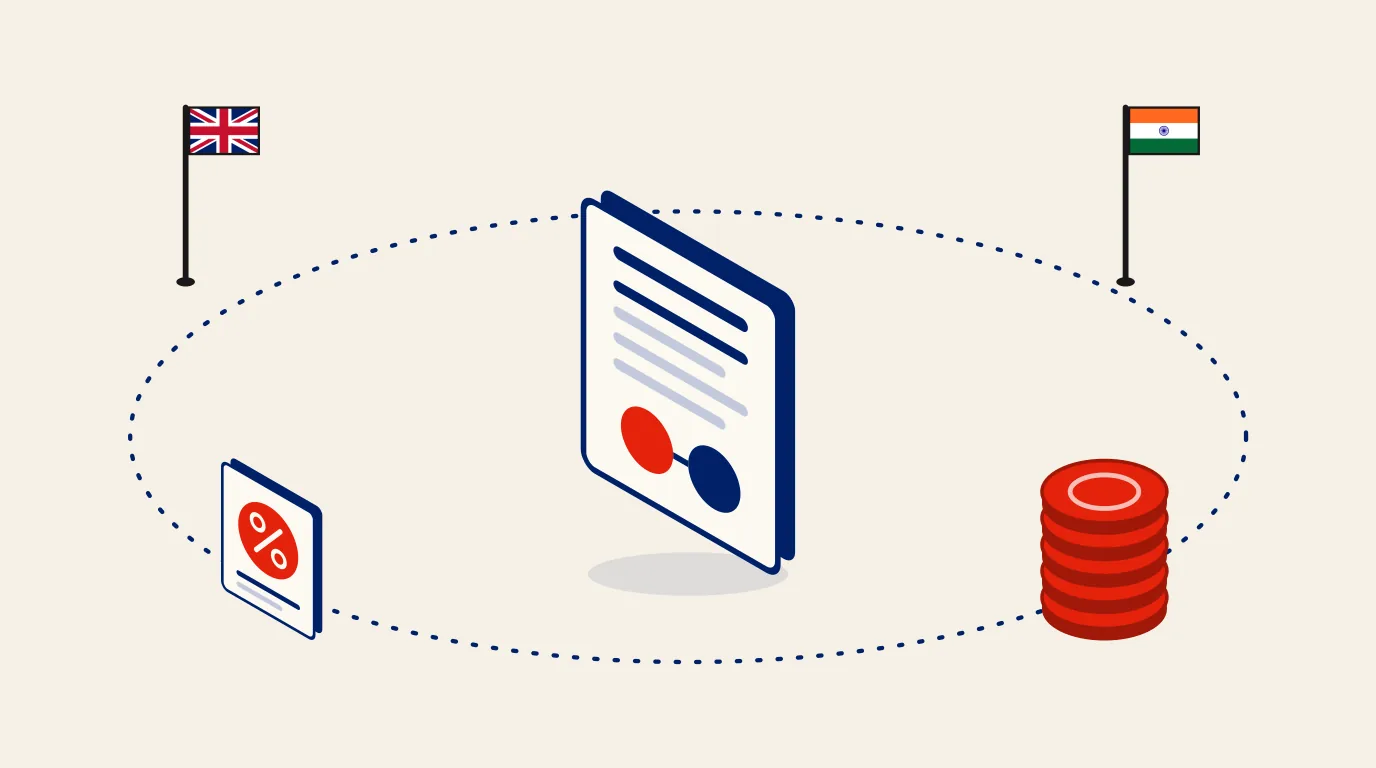
India's data centre tax holiday is Schedule IV, serial 13C of the Income Tax Act, 2025. It exempts a foreign company's Indian income from procuring data centre services from a specified data centre, up to the tax year ending 31 Mar 2047. The Finance Act, 2026 enacted it from 1 Apr 2026. Act No. 21 of 2026 later removed the notification conditions. The Indian operator is not exempt, but gets a 15 percent safe harbour under rule 89.
This page explains who the holiday helps and on what conditions, and what the Indian operator gets instead. It also covers infrastructure status, state data centre policies, power and land, the DPDP localisation position, the FDI route and a setup checklist.
What is the data centre tax holiday in India?
The data centre tax holiday is an income tax exemption for foreign companies, not for Indian operators. Schedule IV, serial 13C of the Income Tax Act, 2025 covers a foreign company that procures data centre services from a specified data centre. Its Indian income from that is exempt to the tax year ending 31 Mar 2047.
The Finance Minister announced it on 1 Feb 2026. Paragraph 130 of the Budget speech proposed a "tax holiday till 2047" for foreign companies. It covered any foreign company "that provides cloud services to customers globally by using data centre services from India". It added that Indian customers must be served through an Indian reseller entity. Item 4(i) of the Annexure to Part B described the same relief for services to any part of the world outside India.
Section 11 of the Act gives Schedule IV effect. Schedule IV footnote 48 records that the Finance Act, 2026 (Act No. 4 of 2026) inserted serials 13A, 13B and 13C with effect from 1 Apr 2026. So the first tax year covered is 2026-27 and the last is 2046-47.
The policy aim is simple. A foreign cloud provider with workloads in an Indian data centre risks Indian tax on part of its global profit. The charge would come through a business connection or a server based permanent establishment. Serial 13C removes that charge for income tied to procuring the data centre services. Our guide to permanent establishment risk explains the underlying exposure.
Who qualifies for the Schedule IV serial 13C exemption?
Only a foreign company qualifies. It must buy data centre services from a specified data centre and must not own or operate the data centre's physical infrastructure. It must sell to Indian users only through an Indian reseller company and furnish prescribed information.
Column D of serial 13C lists the conditions. As it stands on 23 Oct 2026, it reads as follows:
Clause (a), omitted. The foreign company no longer needs a Central Government notification. Act No. 21 of 2026 omitted this clause with retrospective effect from 1 Apr 2026 (footnote 49).
Clause (b). The foreign company does not own or operate any physical infrastructure or resources of the specified data centre.
Clause (c). All its sales to users in India go through a reseller entity that is an Indian company.
Clause (d). It maintains and furnishes information in the prescribed form and manner.
Clause (e). The exemption runs up to the tax year ending 31 Mar 2047.
Clause (b) shapes the whole structure. Note 3(b) defines data centre services to include servers, storage, operating systems, network and software platforms, as well as the building, power and cooling. Neither the clause nor the CBDT FAQs say whether a customer's own servers in a rented hall are resources "of the specified data centre". We take the cautious view that they are. On that view, a foreign company that places its own servers in a colocation hall risks failing clause (b). It should buy a complete service from the Indian operator instead.
Clause (d) and Note 3(c)(ii) both depend on the Income Tax Rules, 2026. Clause (d) asks the foreign company to maintain and furnish information in the prescribed form and manner. Note 3(c)(ii) asks the data centre to meet prescribed conditions. The CBDT's FAQs on the Taxation and Other Laws (Amendment) Bill, 2026 say the form and manner will come through Rules. The Income Tax Department's table of Forms 1 to 190 under the Rules has no form for this information. We also found no rule that prescribes the conditions. Check the Income Tax Rules page for a later notification before the first return.
What is a specified data centre after the August 2026 amendment?
A specified data centre is now a data centre operated by an Indian company, whether it owns or leases the facility, that meets prescribed conditions. Note 3(c) to Schedule IV sets this test. Act No. 21 of 2026 substituted it with retrospective effect from 1 Apr 2026.
The Finance Act, 2026 had set a stricter test. Footnote 51 to Schedule IV reproduces the old Note 3(c). It required a data centre set up under an approved scheme. The Ministry of Electronics and Information Technology (MeitY) had to notify it. It also had to be owned and operated by an Indian company.
Condition
As enacted by the Finance Act, 2026 (from 1 Apr 2026)
After Act No. 21 of 2026 (retrospective from 1 Apr 2026)
Notification of the foreign company
Required (clause (a))
Omitted
Approved scheme and MeitY notification of the data centre
Required (Note 3(c)(i))
Omitted
Indian company role
Owns and operates the data centre
Operates it, whether by owning or leasing
Other conditions
None in the note
Conditions as may be prescribed (Note 3(c)(ii))
Foreign company owns or operates DC infrastructure
Not allowed (clause (b))
Not allowed (clause (b))
Sales to users in India
Through an Indian reseller company (clause (c))
No change
Information to tax department
In the prescribed form (clause (d))
No change
End of exemption
Tax year ending 31 Mar 2047
No change
Source: Schedule IV and footnotes 48, 49 and 51 on incometaxindia.gov.in, read 23 Oct 2026.
The change matters most for operators that lease their buildings. Some Indian data centre companies run their halls in leased buildings. Under the original text those halls did not qualify. After the substitution they can, if the Indian company operates them.
How is the Indian data centre operator taxed?
The Indian operator pays tax on its own profit at normal rates. Serial 13C exempts only the foreign company's income. Where the operator serves a related foreign company, rule 89 of the Income Tax Rules, 2026 gives a safe harbour. The margin is an operating profit of at least 15 percent of operating expense.
Paragraph 131 of the Budget speech proposed this safe harbour for a related Indian company providing data centre services. Rule 88(h) lists "provision of the data centre services" as an eligible international transaction. Rule 89, serial 9 sets the margin.
Feature
IT services (rule 89, serial 1)
Data centre services (rule 89, serial 9)
Eligible transaction
Software, IT enabled services, KPO and software contract R&D (rule 88(a))
Provision of data centre services (rule 88(h))
Safe harbour margin
Operating profit at least 15.5% of operating expense
Operating profit at least 15% of operating expense
Revenue cap
Operating revenue up to INR 2,000 crore
No cap in the rule
Block period
Three tax years from 2026-27, continuing unless modified (rule 89(4))
Same
How to opt in
Form 49 within the time rule 91 sets
Same
Sources: rules 88 and 89 on incometaxindia.gov.in, read 23 Oct 2026.
The safe harbour does not cut the tax rate. It fixes the transfer price, so the operator avoids a benchmarking dispute. An operator that opts for section 200 pays 22 percent plus surcharge and cess on its profit. Our guide to safe harbour rules explains the opt in and the block period. Our transfer pricing advisory team prepares the Form 49 and the cost base.
How does the Indian reseller requirement work?
All of the foreign company's sales to users in India must go through an Indian reseller company. The reseller buys the cloud service from the foreign company and sells it to Indian customers. The reseller pays Indian tax on its own margin, and the foreign company keeps the exemption on its data centre income.
Paragraph 130 of the speech and item 4(i) of the Annexure state the purpose. The Annexure says sales to Indian users "shall be made through an Indian reseller entity and taxed appropriately". Clause (c) of serial 13C turns that into a condition.
Three practical points follow from the clause:
All Indian sales, not most. One direct contract with an Indian customer breaches clause (c). We move every Indian contract to the reseller before the first tax year of the claim.
The reseller need not be related. Clause (c) asks only for an Indian company. Many groups still use their own Indian subsidiary to keep control of pricing and customers.
Payments to the foreign company. The reseller pays the foreign company for the service. Withholding under section 393 and the treaty position on those payments need a separate review.
A reseller that is a group company has its own transfer pricing exposure on the resale margin. In our reading, the resale margin is not a safe harbour transaction, because rule 88(h) covers only the provision of data centre services.
What does infrastructure status give a data centre?
Infrastructure status gives a data centre project access to infrastructure lending on the terms banks and financial institutions offer listed sectors. PIB's backgrounder of 14 Sep 2026 records that the Union Budget 2022-23 included data centres in the Harmonised List of Infrastructure.
2020. About 375 MW of installed data centre power capacity.
August 2026. About 1.57 GW.
2030 (projection). Nearly 8 GW.
Investment. Nearly USD 70 billion underway and USD 90 billion in announced projects.
Power demand. The Central Electricity Authority estimates demand could reach 17 GW by 2031-32.
Infrastructure status is not a tax incentive. The income tax relief sits only in Schedule IV and the safe harbour. The status helps on the financing side, where lenders can treat the project as infrastructure.
Which state data centre policies offer incentives?
Several states run data centre policies with subsidies, stamp duty relief and power concessions. We cite three official texts. They are Uttar Pradesh's Data Center Policy 2026, Andhra Pradesh's Data Center Policy (4.0) and the data centre chapter of Maharashtra's IT and ITES Policy 2023. Each sets its own thresholds, caps and periods.
Feature
Uttar Pradesh Data Center Policy 2026
Andhra Pradesh Data Center Policy (4.0)
Maharashtra IT and ITES Policy 2023 (para 5.1)
Instrument and date
G.O. No. 536/78-2-2026/E-105226, 9 Jul 2026
G.O.Ms.No.6, ITE&C Dept., 14 Nov 2024
GR No. ITP-2021/P.K.170/Udyog-2, 27 Jun 2023
Period
Five years from notification (para 6.1)
Five years or until a new policy, whichever is later
Not stated in the GR text we read
Eligibility
Park at least 40 MW; unit above 2 MW and below 40 MW; edge sites (paras 5.1 to 5.3)
New units, expansion; tailor made package case by case above 50 MW or INR 5,000 crore of plant and equipment
New and expanding registered data centres; may locate in any zone (5.1.5)
Capital or interest subsidy
Unit: 7% capital subsidy, cap INR 20 crore (INR 2 crore a year). Park: 60% interest subsidy for 7 years, cap INR 10 crore a year and INR 50 crore overall
100% net SGST reimbursement on capital goods, or 10% capital subsidy on plant and machinery
None in para 5.1; power tariff subsidy instead
Stamp duty
100% on purchase or lease of government land; 50% on the second transaction
100% on first sale
100% on land or building purchase, lease and mortgage (5.1.1)
Electricity
Unit: 100% electricity duty exemption for 10 years. Park: cost of one of two grids reimbursed (the lower); transmission and wheeling relief for 25 years
Industrial tariff; dual grid case by case
Permanent electricity duty exemption (5.1.2); industrial tariff and INR 1 a unit subsidy for 5 years outside Zone 1 (5.1.3); no load shedding (5.1.11)
Land
25% to 50% rebate on sector rates for land from state agencies, by region
Land cost discount only for tailor made projects, under APLMA rules
Additional FSI (5.1.16) and parking relief (5.1.7); 24x7 water in MIDC and other industrial area authority areas (5.1.15)
Three cautions apply to every state policy. First, captive data centres are often excluded: paragraphs 5.2 and 5.3 of the UP policy exclude captive units and captive edge sites. Second, paragraph 11(v) of the UP policy caps combined central and state incentives at 100 percent of fixed capital investment. Third, check which text applies to your project. Maharashtra also has an older data centre scheme, a corrigendum of 16 Sep 2016 under the Package Scheme of Incentives 2013, with an INR 1,500 crore investment floor. The 2023 policy sets out its own data centre incentives in paragraph 5.1.
The UP policy also replaced the Uttar Pradesh Data Center Policy 2021 (First Amendment 2022) under paragraph 6.1. A 2021 Letter of Comfort holder keeps benefits already availed. Our guide to state manufacturing incentives explains how state subsidies are taxed and accounted for.
How do data centres secure power and land in India?
Power and land come mainly through state policy and state agencies. Uttar Pradesh offers open access, 24x7 supply on dual feeders, energy banking and transmission relief. Andhra Pradesh applies the industrial tariff and decides dual grid support case by case. Land usually comes from state industrial agencies at a policy rebate.
Section 8.4 of the UP Data Center Policy 2026 lists seven power measures. Five matter most:
Open access. A unit outside a park may buy power on the open market (8.4(i)).
Distribution licence. A park may apply for a power distribution licence (8.4(iii)).
Deemed franchisee. A unit may opt for deemed franchisee status (8.4(iv)).
Round the clock supply. Parks and units get 24x7 supply if they arrange two dedicated feeders (8.4(v)).
Energy banking. Annual banking of energy is allowed (8.4(vi)).
Paragraph 7.1.5 adds the cost relief. Intrastate transmission and wheeling charges get a 50 percent exemption, rising to 75 percent for renewable power sourced in the state. Interstate purchases get a 100 percent exemption on intrastate transmission. The relief runs for 25 years, for the first eight parks or an extra 2 GW, whichever comes first.
At the national level, the PIB backgrounder of 14 Sep 2026 lists clean power measures for data centres. They include the Green Energy Open Access Rules and the Green Energy Corridor scheme. It also notes that BIS technical committee LITD 31 covers standards for power, carbon and water usage effectiveness. Groundwater use falls under the Ministry of Jal Shakti guidelines.
Land comes with stamp duty relief and rebates. Paragraph 7.1.3 of the UP policy gives a rebate on sector rates for land from state agencies. It is 25 percent in Madhyanchal and Paschimanchal and 50 percent in Bundelkhand and Purvanchal. Paragraph 7.1.4 exempts stamp duty fully on the purchase or lease of government land.
Do the DPDP Rules require data to be stored in India?
No, not as a general rule. The Digital Personal Data Protection Act, 2023 allows transfers outside India except to countries the Central Government restricts under section 16(1). We found no notification restricting any country as on 23 Oct 2026. Localisation can apply to significant data fiduciaries under rule 13 of the DPDP Rules, 2025, and under sector laws.
The DPDP Rules, 2025 were notified as G.S.R. 846(E) on 13 Nov 2025. Their main business duties, including rule 15 on transfers, apply from 13 May 2027.
Source of the rule
What it requires
Who it binds
From
Section 16(1), DPDP Act, 2023
Transfers allowed except to countries the Centre restricts by notification
Every data fiduciary
13 May 2027
Rule 15, DPDP Rules, 2025
Requirements the Centre may set on making transferred data available to a foreign State
Every data fiduciary
13 May 2027
Rule 13, DPDP Rules, 2025
Personal data the Centre specifies on a committee's advice must stay in India, with its traffic data
Significant data fiduciaries only
13 May 2027
Section 16(2), DPDP Act, 2023
Any law with a higher degree of protection, such as RBI's directions on storing payment system data in India, prevails
Regulated sectors
13 May 2027
Section 17(1)(d), DPDP Act, 2023
Most duties, including section 16, do not apply to processing foreign residents' data under a contract with a foreign person
For a data centre business, this has a clear consequence. Demand for Indian hosting comes from sector rules and customer choice, not from a general DPDP mandate. A significant data fiduciary in India may still need Indian hosting if the Centre specifies its data under rule 13. A colocation or cloud operator should therefore offer Indian region hosting with audit support.
Which FDI route applies to a data centre company?
A data centre company in India takes foreign investment up to 100 percent on the automatic route. We found no data centre entry in the Master Direction's sector rules. Paragraph 5.2.3 of RBI's Master Direction on Foreign Investment in India allows 100 percent in unlisted sectors on the automatic route.
The Master Direction, updated as on 15 Jun 2026, also carries the limits that matter here:
Land border countries. Paragraph 3.2 sends investment from a country sharing a land border with India to the Government route. It also covers beneficial owners in such a country. A Cabinet release of 10 Mar 2026 on pib.gov.in keeps non controlling beneficial ownership of up to 10 percent on the automatic route. See our guide to Press Note 3.
Real estate business. Paragraph 3.1 prohibits FDI in real estate business. Explanation (ii) to paragraph 2.26 says rent earned on a lease of property, not amounting to transfer, is not real estate business. A data centre earning service fees and rack rentals is therefore outside the prohibition, in our reading.
Telecom activities. A data centre company that also offers connectivity under a telecom authorisation must meet the telecom sector conditions as well.
After each issue of shares, the company files Form FC-GPR within 30 days on the FIRMS portal. Our page on FDI automatic route sectors lists the sectors with caps, and our guide to FC-GPR filing gives the steps.
What structure do foreign cloud groups use?
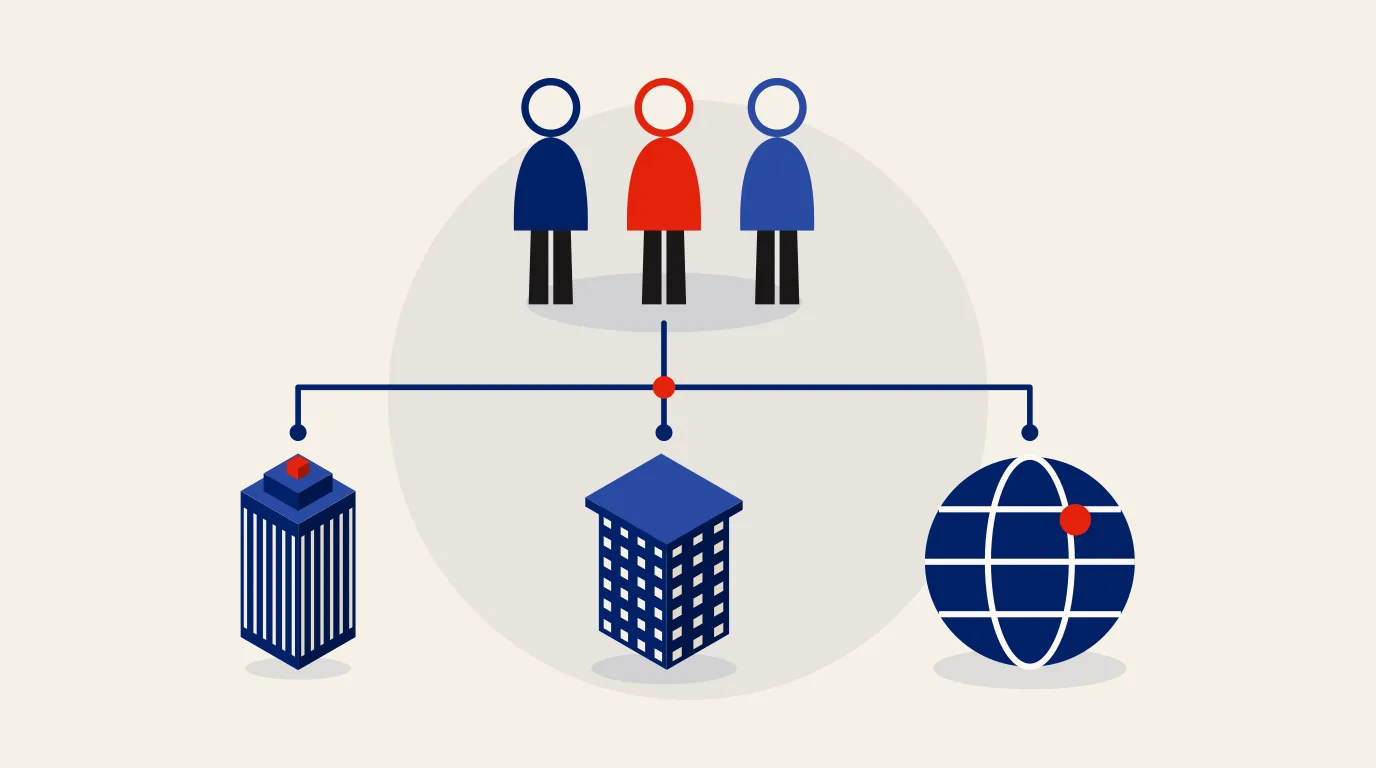
A foreign cloud group can use three layers. An Indian operating company owns or leases and operates the data centre. The foreign company buys data centre services from it. An Indian reseller company, often the same group's Indian subsidiary, sells the cloud service to Indian customers.
Entity
Role
Income tax position
Key test
Foreign cloud company
Buys data centre services; serves customers worldwide
Indian income from procuring the services exempt under serial 13C to tax year 2046-47
Owns no DC infrastructure; all Indian sales through a reseller; files prescribed information
Indian data centre company
Owns or leases and operates the facility; supplies the full service
Taxed at normal rates; 15% safe harbour if it serves a related foreign company
Operates the facility; meets prescribed conditions
Indian reseller company
Sells the cloud service to users in India
Taxed at normal rates on its resale margin
Holds every Indian customer contract
Sources: Schedule IV serial 13C; rules 88 and 89.
Two entities can be the same company. One Indian subsidiary can operate the data centre and act as reseller, if it keeps separate accounts for each activity. We prefer separate entities where the volumes are large, because the safe harbour covers only the data centre services and not the resale.
What changed in 2026
Item
Old rule
New rule
Date
Instrument
Foreign company using Indian data centre services
No specific exemption; business connection risk
Exempt under Schedule IV serial 13C to tax year ending 31 Mar 2047
1 Apr 2026
Finance Act, 2026 (Act No. 4 of 2026)
Notification of the foreign company
Required by clause (a)
Omitted
Retrospective from 1 Apr 2026
Act No. 21 of 2026 (assent 17 Aug 2026)
Specified data centre
Approved scheme, MeitY notification, owned and operated by an Indian company
Operated by an Indian company, owned or leased, with prescribed conditions
Retrospective from 1 Apr 2026
Act No. 21 of 2026 (assent 17 Aug 2026)
Transfer pricing for a related Indian operator
Benchmarking only
15% safe harbour on operating expense, no revenue cap
Tax year 2026-27
Rules 88(h) and 89, Income Tax Rules, 2026
Uttar Pradesh incentives
Data Center Policy 2021 (First Amendment 2022)
Data Center Policy 2026
9 Jul 2026
G.O. No. 536/78-2-2026/E-105226
Personal data transfers
IT Act rules, no general transfer rule
Section 16 negative list; rule 13 localisation for specified SDF data
13 May 2027
DPDP Act, 2023; G.S.R. 846(E)
What has happened since this page was first published?
We first published this page on 7 Mar 2026. At that date the exemption was a proposal in the Finance Bill, 2026, announced on 1 Feb 2026. These events followed:
30 Mar 2026. The Finance Act, 2026 (Act No. 4 of 2026) received assent. It inserted serial 13C into Schedule IV from 1 Apr 2026.
1 Apr 2026. The Income Tax Act, 2025 and the Income Tax Rules, 2026 came into force. Rule 89 carried the data centre safe harbour.
9 Jul 2026. Uttar Pradesh notified its Data Center Policy 2026 and repealed the 2021 policy.
4 to 17 Aug 2026. The Taxation and Other Laws (Amendment) Bill, 2026 (Bill No. 150 of 2026) was introduced in Lok Sabha on 4 Aug 2026. Lok Sabha passed it on 6 Aug 2026 and Rajya Sabha on 10 Aug 2026. The Act received assent on 17 Aug 2026 and was published that day (Gazette CG-DL-E-17082026-275521). As Act No. 21 of 2026, it dropped both notification tests and allowed leased data centres, all from 1 Apr 2026.
14 Sep 2026. PIB published its data centre backgrounder with the 1.57 GW capacity figure for August 2026.
The PIB backgrounder still describes the holiday as available to "notified foreign companies". That reflects the original text. Schedule IV on incometaxindia.gov.in shows the notification condition omitted. Our page on Budget 2026 for foreign owned companies covers the other Schedule IV serials.
Worked example
Scenario 1: safe harbour for a related operator. A US cloud group owns IndiaDC Private Limited, which leases and operates a data centre in Noida. In tax year 2026-27, IndiaDC's operating expense for services to the US parent is INR 400 crore. It opts into the safe harbour through Form 49.
Line
Amount (INR crore)
Operating expense
400.00
Minimum operating profit at 15%
60.00
Minimum price for data centre services
460.00
Tax on INR 60 crore under section 200 at 22% plus 10% surcharge and 4% cess (25.168%)
15.10
The US company pays INR 460 crore for the services. Its Indian income from procuring them is exempt under serial 13C. That holds if it owns no servers in the hall and sells to Indian users only through an Indian reseller.
Scenario 2: Uttar Pradesh subsidy caps. IndiaDC's Noida hall is a 30 MW data centre unit, between 2 MW and 40 MW. Its eligible fixed capital investment, excluding land and building, is INR 900 crore.
A 7 percent capital subsidy on INR 900 crore is INR 63 crore. Paragraph 7.2.1 caps it at INR 20 crore in total and INR 2 crore a year. So IndiaDC receives at most INR 20 crore, at up to INR 2 crore a year, not INR 63 crore. Boosters in paragraphs 7.2.7 and 7.2.8 can raise the caps for AI compute or green operations. It also gets the 100 percent electricity duty exemption for ten years under paragraph 7.2.2.
A 60 MW park with INR 30 crore of annual term loan interest fares differently. Sixty percent of the interest is INR 18 crore, capped at INR 10 crore a year under paragraph 7.1.1. The INR 50 crore overall cap is reached in year five, so years six and seven bring nothing.
Common mistakes
Calling it a holiday for Indian operators. Serial 13C exempts only the foreign company. Fix: model the Indian operator at normal rates with the 15 percent safe harbour.
Placing group owned servers in the hall. Clause (b) bars the foreign company from owning or operating physical infrastructure or resources of the data centre, and the cautious reading catches its own servers. Fix: move server ownership to the Indian operator and buy a full service.
Keeping one direct Indian contract. Clause (c) needs all Indian sales through an Indian reseller company. Fix: novate every Indian customer contract to the reseller.
Waiting for a MeitY notification. Act No. 21 of 2026 removed both notification tests. Fix: check whether the Rules now prescribe conditions for a specified data centre.
Applying the safe harbour to resale. Rule 88(h) covers only the provision of data centre services. Fix: benchmark the reseller's margin separately.
Treating DPDP as a localisation mandate. Section 16 uses a restricted list, and we found no country on it as on 23 Oct 2026. Fix: map sector rules and rule 13 risk customer by customer.
Counting the headline subsidy. State caps bind fast. Fix: compute the subsidy after annual and overall caps before you sign the land deal.
Ignoring Press Note 3. Beneficial owners in a land border country can push the investment to the Government route, subject to the 10 percent non controlling carve out. Fix: trace the cap table to the ultimate owners before the first allotment.
Checklist
Decide which entity will operate the data centre and confirm it is an Indian company that owns or leases the facility.
Check whether the Income Tax Rules prescribe conditions for a specified data centre under Note 3(c)(ii) of Schedule IV.
Move ownership of servers and other physical resources to the Indian operator.
Set up or appoint the Indian reseller company and move every Indian customer contract to it.
Price the data centre services at or above the 15 percent safe harbour margin, or benchmark them.
File Form 49 to opt into the safe harbour within the time rule 91 sets.
Furnish the information serial 13C(d) requires, in the form the Rules prescribe, each tax year.
Apply for the state policy incentive and the Letter of Comfort before you buy or lease land.
Compute subsidies after the annual and overall caps in the state policy.
Screen the shareholders for Press Note 3 and file Form FC-GPR within 30 days of each allotment.
Map customer data flows against section 16 of the DPDP Act and sector localisation rules before 13 May 2027.
Email [email protected] with your proposed data centre structure and we will review it against serial 13C.
Frequently Asked Questions
What is the data centre tax holiday in Budget 2026?+
It is the exemption in Schedule IV, serial 13C of the Income Tax Act, 2025. A foreign company's Indian income from procuring data centre services from a specified data centre is exempt up to the tax year ending 31 Mar 2047. The Finance Act, 2026 enacted it from 1 Apr 2026.
Does the data centre tax holiday last until 2047?+
Yes. Clause (e) of Schedule IV serial 13C allows the exemption up to the tax year ending 31 Mar 2047. That is tax year 2046-47. The first tax year covered is 2026-27, because the Finance Act, 2026 inserted serial 13C with effect from 1 Apr 2026.
Does an Indian data centre company get the tax holiday?+
No. Serial 13C exempts only a foreign company's income. The Indian operator pays tax at normal rates. Where it serves a related foreign company, rule 89 of the Income Tax Rules, 2026 accepts an operating profit of at least 15 percent of operating expense as arm's length.
What is a specified data centre?+
Under Note 3(c) to Schedule IV of the Income Tax Act, 2025, it is a data centre operated by an Indian company, whether owned or leased, that meets prescribed conditions. Act No. 21 of 2026 substituted this definition with retrospective effect from 1 Apr 2026, removing the MeitY notification test.
Does the foreign company need a government notification?+
No. Clause (a) of serial 13C required one, but Act No. 21 of 2026 omitted it with retrospective effect from 1 Apr 2026. The foreign company must still meet clauses (b) to (e): no ownership of DC infrastructure, Indian reseller for Indian sales, prescribed information and the 2047 limit.
Can the foreign company own servers in the Indian data centre?+
Not safely. Clause (b) of serial 13C requires that the foreign company does not own or operate any physical infrastructure or resources of the specified data centre. Note 3(b) counts servers, storage and network equipment as part of the data centre services, so we advise buying a full service.
Why does the exemption need an Indian reseller?+
Clause (c) of serial 13C requires all sales to users in India to go through a reseller entity that is an Indian company. The Budget 2026 Annexure said these sales should be taxed appropriately in India. The reseller pays tax on its own resale income.
What safe harbour applies to data centre services?+
Rule 88(h) of the Income Tax Rules, 2026 lists the provision of data centre services as an eligible international transaction. Rule 89, serial 9 sets the margin at an operating profit of at least 15 percent of operating expense, with no revenue cap. The company opts in through Form 49.
Do data centres have infrastructure status in India?+
Yes. PIB's backgrounder of 14 Sep 2026 records that the Union Budget 2022-23 included data centres in the Harmonised List of Infrastructure. The status eases access to infrastructure credit. It gives no income tax deduction of its own.
Which states have data centre policies?+
Uttar Pradesh notified its Data Center Policy 2026 on 9 Jul 2026, and Andhra Pradesh its Data Center Policy (4.0) on 14 Nov 2024. Maharashtra's IT and ITES Policy 2023 of 27 Jun 2023 has a data centre chapter in paragraph 5.1. Other states also run policies.
What incentives does the Uttar Pradesh Data Center Policy 2026 give?+
A data centre unit gets a 7 percent capital subsidy capped at INR 20 crore and a ten year electricity duty exemption. A park gets a 60 percent interest subsidy capped at INR 50 crore. Both get stamp duty relief on government land and transmission charge relief.
Do the DPDP Rules require data localisation?+
Not generally. Section 16(1) of the DPDP Act, 2023 allows transfers except to countries the Centre restricts, and we found no restricted country as on 23 Oct 2026. Rule 13 of the DPDP Rules, 2025 can require a significant data fiduciary to keep specified data in India from 13 May 2027.
Is FDI in data centres allowed under the automatic route?+
Yes, up to 100 percent. We found no data centre entry in the Master Direction's sector rules, and paragraph 5.2.3 of RBI's Master Direction on Foreign Investment allows 100 percent on the automatic route in unlisted sectors. Press Note 3 still applies to land border investors.
Is a data centre a real estate business for FDI purposes?+
Not in our reading. FDI in real estate business is prohibited, but Explanation (ii) to paragraph 2.26 of RBI's Master Direction says rent on a lease of property not amounting to transfer is not real estate business. A data centre earns service and rack fees.
What should a foreign cloud company do before claiming serial 13C?+
It should buy a full data centre service from an Indian operator, hold no infrastructure in the hall and route every Indian sale through an Indian reseller company. It should also furnish the information the Rules prescribe under clause (d) for each tax year.
Sources
Income Tax Department, Schedule IV, Income Tax Act, 2025, with footnotes 48 to 51, read 23 Oct 2026, https://www.incometaxindia.gov.in/w/schedule-iv-4
Income Tax Department, Rule 88, Income Tax Rules, 2026, read 23 Oct 2026, https://www.incometaxindia.gov.in/w/rule-88-3
Income Tax Department, Rule 89, Income Tax Rules, 2026, read 23 Oct 2026, https://www.incometaxindia.gov.in/w/rule-89-3
Ministry of Law and Justice, The Taxation and Other Laws (Amendment) Act, 2026 (Act No. 21 of 2026), assent 17 Aug 2026, Gazette of India Extraordinary Part II Section 1 No. 37, CG-DL-E-17082026-275521, listed on https://egazette.gov.in
Lok Sabha, The Taxation and Other Laws (Amendment) Bill, 2026 (Bill No. 150 of 2026), as introduced, https://prsindia.org/files/bills_acts/bills_parliament/2026/Taxations_Bill_2026.pdf
Central Board of Direct Taxes, FAQs on the Taxation and Other Laws (Amendment) Bill, 2026, https://www.incometaxindia.gov.in/documents/d/guest/faqs_the_taxation_and_other_laws_amendment_bill_2026
Income Tax Department, FAQs and guidance notes on forms as per Income Tax Rules, 2026 (Forms 1 to 190), https://www.incometaxindia.gov.in/faqs-and-guidance-notes-on-forms-as-per-income-tax-rules-2026
Ministry of Finance, Budget 2026-2027 Speech, paragraphs 130 and 131 and Annexure to Part B, 1 Feb 2026, https://www.indiabudget.gov.in/doc/budget_speech.pdf
Ministry of Finance, Memorandum explaining the provisions in the Finance Bill, 2026, 1 Feb 2026, https://www.indiabudget.gov.in/doc/memo.pdf
Press Information Bureau, Data Centres in India: Infrastructure for the Digital Age, 14 Sep 2026, https://static.pib.gov.in/WriteReadData/specificdocs/documents/2026/sep/doc_9859_20260914_10550401.pdf
Government of Uttar Pradesh, Department of IT and Electronics, Uttar Pradesh Data Center Policy 2026, G.O. No. 536/78-2-2026/E-105226, 9 Jul 2026, https://invest.up.gov.in/wp-content/uploads/2026/08/policy_En.pdf
Government of Andhra Pradesh, ITE&C Department, Andhra Pradesh Data Center Policy (4.0), G.O.Ms.No.6, 14 Nov 2024, https://apiic.in/wp-content/themes/custom-theme/assets/Pdfs/2024ITC_33902_MS6.pdf
Government of Maharashtra, Industries, Energy and Labour Department, IT and ITES Policy 2023, GR No. ITP-2021/P.K.170/Udyog-2, 27 Jun 2023, https://midc.maharashtra.gov.in/wp-content/uploads/2026/07/IT-and-ITES-Policy-2023.pdf
Government of Maharashtra, Industries, Energy and Labour Department, Covering Data Centers under Package Scheme of Incentives 2013, Corrigendum No. PSI-2016/C.R.172/Ind-8, 16 Sep 2016, https://gr.maharashtra.gov.in/Site/Upload/Government%20Resolutions/English/201609161300085910.pdf
Reserve Bank of India, Master Direction on Foreign Investment in India, updated as on 15 Jun 2026, https://www.rbi.org.in/Scripts/BS_ViewMasDirections.aspx?id=11200
Ministry of Electronics and Information Technology, Digital Personal Data Protection Rules, 2025, G.S.R. 846(E), 13 Nov 2025, https://www.meity.gov.in/static/uploads/2025/11/53450e6e5dc0bfa85ebd78686cadad39.pdf
Ministry of Electronics and Information Technology, The Digital Personal Data Protection Act, 2023 (Act 22 of 2023), https://www.meity.gov.in/static/uploads/2024/06/2bf1f0e9f04e6fb4f8fef35e82c42aa5.pdf
TALK TO AN ADVISOR
Facing this in your own entity?
Guides explain the rules. A conversation solves your specific case. Talk to a Krystal7 Consultants advisor about your India entry, FEMA or compliance position.
Nandini Hasija is a co-founder of Krystal7. She leads brand, business development and marketing, and works with founders to define their engagement. She is a Chartered Accountant and achieved All India Rank 49 in the CA examinations.
Six things you can check before you sign, and hold us to after.
A Chartered Accountant signs off
Filings go out through our Chartered Accountant practice, led by CA Nandini Hasija, All India Rank 49, ICAI.
A reply within 4 business hours
The team is online from 9:30 AM to 11:59 PM IST, which covers the working day in the UK and the UAE, the afternoon in Singapore and the morning in the US.
The fee is fixed before work starts
You see the professional fee in writing first. Government fees are passed on at cost.
Both sides of the border, one team
Company law, FEMA and RBI reporting, tax and transfer pricing sit with the same advisers.
Your due dates, tracked by us
We keep the compliance calendar for your entity and tell you what is due before it is due.
500+ clients across 5 continents
More than 50 advisers on the bench when a matter needs a specialist.
Working with the Kristal7 team has been an absolute pleasure. Their professionalism, attention to detail, pace they work at and commitment to delivering top-quality results stand out. They took the time to understand our needs and executed seamlessly. Highly recommend Kristal7 to anyone looking for a reliable partner to establish business in India.
We can't be happier after dealing with true professionals who really do things in India. Absolutely recommended, high-class professionals, Nihal knows his stuff better than anybody in India, trust me. Highly recommended if you ever need any type of business needs to be done properly and ON TIME in India! Thank you guys!!!
Krystal7 Consultants has an exemplary and professional attitude in their approach to services rendered by them. The team and it's leaders are thoroughly aggressive all throughout setting the processes timely and getting procedures done in a time bound and disciplined manner. Highly recommended Consultants to go-to.We wish them all the very best in all their future endeavours and growth story.
I had a great experience with this firm while filing my ITR! The team handled my ITR filing end-to-end, answered all my queries patiently, and made the entire process smooth and hassle-free. Nandini is highly professional, responsive, and took complete ownership throughout. Highly recommended for anyone looking for reliable tax filing assistance.
Very energetic and young professionals with best consultation and commitment of work completion on time in regionable fees. Mr. Nihal is very punctual & committed .
Very happy with my experience with them. They have thoroughly guided me through the processes and executed them as planned, for all my registrations. Definitely would recommend using their services.
Recap
Crystal Seven Consultants, especially Nandini Hassija and Nihal Srivastava, have redefined my experience with compliance management. From professionalism to problem-solving, they delivered trust, accuracy, and peace of mind—qualities rare in this industry.
Detailed Review
When Nandini first called me from Crystal Seven Consultants, I’ll admit I was hesitant. In the compliance and consultancy space, it’s common to see aggressive sales tactics with little to no delivery. But Nandini immediately broke that stereotype with her professionalism, clear communication, and genuine approach. She personally assisted me with something as important as a resignation process, ensuring it was handled responsibly and without stress.
Later, Nihal stepped in and impressed me with his technical expertise and eye for detail. He uncovered a serious compliance error (a mug-up) created by my previous consultant—something that could have been risky and damaging for my company. The way Nihal managed this issue with care, accuracy, and professionalism gave me full confidence that my compliance matters were finally in safe hands.
Today, I rest assured knowing that Daxy’s compliances are being managed with integrity, precision, and accountability. Both Nandini and Nihal have shown me that this industry can, in fact, be built on trust, transparency, and delivery.
I genuinely recommend Crystal Seven Consultants to any business owner who wants their legal, financial, and compliance matters handled not just properly—but with care, reliability, and genuine expertise.
We use Google Analytics to see how the site is used and Google Ads cookies to measure enquiries that come from our ads. You choose what we use, and you can change it at any time. Cookie policy