How Much Authorised Capital a Foreign Subsidiary Needs: Our View
Our view on how much authorised capital a foreign subsidiary in India should start with: why ₹15 lakh is the default, what a later SH-7 increase costs, and when a higher start is worth it.
Krystal7 Consultants · India entry, tax and compliance
Written by Nihal Srivastava, Krystal7 Consultants. Last updated 26 October 2026.
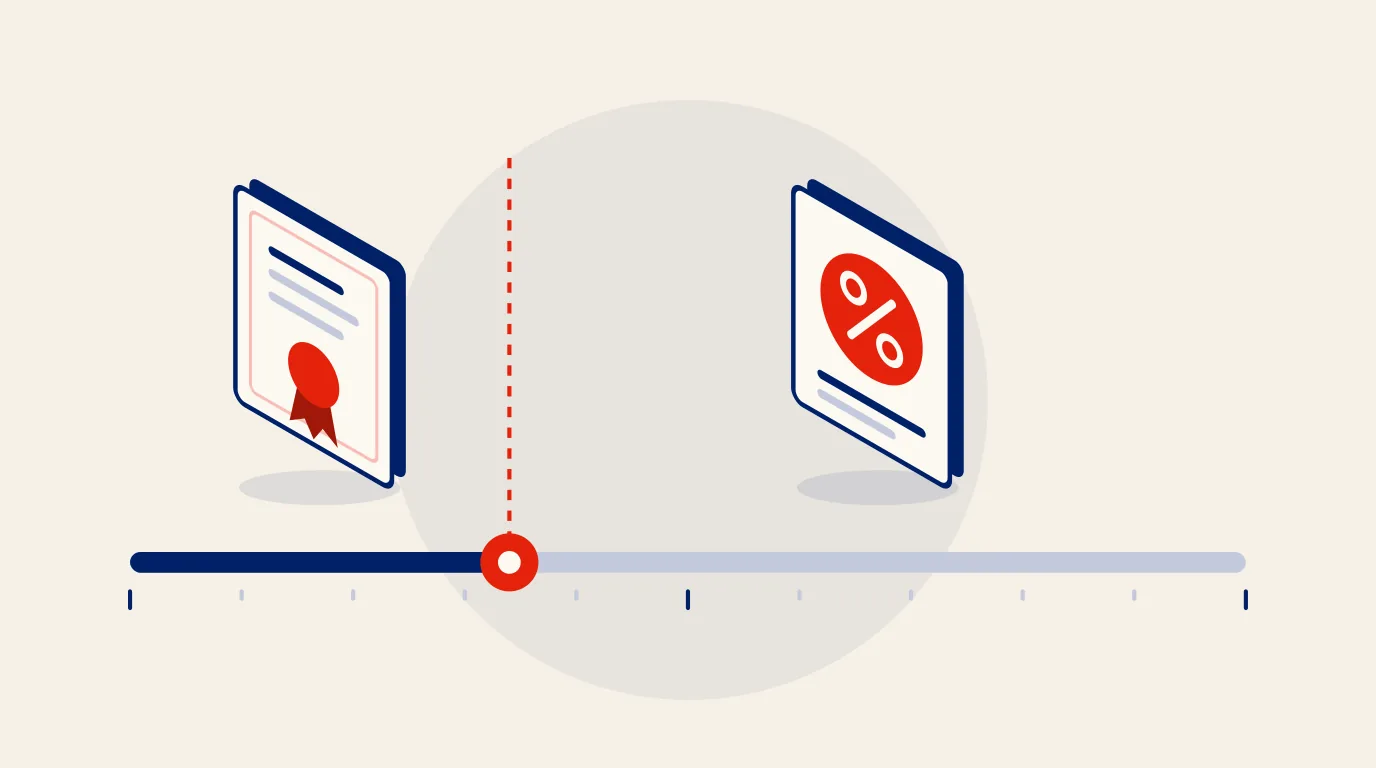
Our view is that most foreign subsidiaries should start with exactly ₹15 lakh of authorised capital. The MCA registration fee is nil up to that line. The saving also survives later increases, because the SH-7 fee deducts the scale fee on the existing ₹15 lakh. Incorporating at ₹15 lakh and later moving to ₹50 lakh costs ₹1,05,000 in MCA fees, against ₹1,56,000 to start at ₹50 lakh. We advise a higher start only when a remittance above ₹15 lakh will land before the company can pass an increase.
This is a practitioner opinion with the numbers behind it. Where a point is law, we cite the rule. Where it is our judgement, we say so. The page covers the three kinds of capital, the ₹15 lakh fee line and stamp duty by state. It then covers the FDI timing rules, the cost of a later increase in Delhi and Karnataka, and when a loan from the parent fits better than shares.
What is the difference between authorised, subscribed and paid up capital?
Authorised capital is a ceiling, and nobody pays it in. It caps the share capital the company can issue without changing its memorandum of association (MoA). It also sets the MCA registration fee and, in many states, the stamp duty. Paid up capital is the money that has reached the company against shares it has issued.
Term
Meaning in the Companies Act, 2013
Example for a new subsidiary
Authorised (nominal) capital
Section 2(8): the capital the MoA authorises as the maximum share capital
₹15,00,000 in the capital clause
Subscribed capital
Section 2(86): the part of the capital that members have for the time being subscribed
The parent and a nominee subscribe for ₹10,00,000 of shares
Paid up share capital
Section 2(64): the money credited as paid up on shares issued
₹10,00,000 once the remittance arrives and the shares are issued
Source: Companies Act, 2013, section 2, as hosted by the Income Tax Department (read 26 Oct 2026).
The gap between authorised and paid up capital is headroom. It costs nothing to hold, and it lets the parent send more money later without a change to the MoA. MCA's public company data shows both figures, so a counterparty can see the headroom.
Is there a minimum capital for a Private Limited company in India?
No. MCA's ease of doing business page records that the Companies (Amendment) Act, 2015 removed the requirement for minimum paid up capital. There is no statutory minimum for authorised capital either. A company can incorporate with ₹1 lakh of authorised capital if that is all it needs.
The subscribers still have to pay. Section 10A of the Companies Act, 2013 requires a director to declare, within 180 days of incorporation, that every subscriber to the MoA has paid for the shares agreed. Missing it costs the company ₹50,000 and each officer in default ₹1,000 a day, up to ₹1 lakh. Our guide on INC-20A for a foreign subsidiary covers that filing.
So the real question is how much headroom to buy at incorporation and how much money to put in during year one. Those are two decisions, and we treat them separately.
Why do so many foreign subsidiaries incorporate at exactly ₹15 lakh?
Because ₹15 lakh is the highest capital that pays no MCA registration fee. Rule 38(2) of the Companies (Incorporation) Rules, 2014 switches off the SPICe+ fee up to that line, and G.S.R. 180(E) of 6 Mar 2019 set it there from 18 Mar 2019. One rupee above it, the fee applies to the whole capital.
A subsidiary pays the higher of the two fee scales. Section 2(85) of the Companies Act, 2013 excludes holding and subsidiary companies from the small company definition. So a company owned by a foreign parent pays the other company scale. That scale is ₹36,000 for the first ₹10 lakh, then ₹300 for every ₹10,000 or part up to ₹50 lakh. It drops to ₹100 for every ₹10,000 up to ₹1 crore and ₹75 above that.
The waiver keeps its value when the company grows. The fee on an increase, filed in Form SH-7, is the scale fee on the new capital less the scale fee on the existing capital. The scale fee on ₹15 lakh is ₹51,000, which the company never paid. So reaching any capital above ₹15 lakh in two steps costs ₹51,000 less than incorporating there directly.
Target authorised capital
Incorporate at the target
Incorporate at ₹15 lakh, then file SH-7
Saving
₹25 lakh
₹81,000
₹30,000
₹51,000
₹50 lakh
₹1,56,000
₹1,05,000
₹51,000
₹1 crore
₹2,06,000
₹1,55,000
₹51,000
₹10 crore
₹8,81,000
₹8,30,000
₹51,000
Source: MCA instruction kit for Form SH-7, Table 1 and the rule on the fee for an increase; rule 38(2), Companies (Incorporation) Rules, 2014 (read 26 Oct 2026). MCA fees only; stamp duty is in the next table.
The direct route also carries the ₹500 SPICe+ fee that rule 38(2) names above ₹15 lakh, so the real saving is ₹51,500. Our authorised capital fee calculator runs the same arithmetic for any pair of figures.
Below ₹15 lakh, part of the waiver is wasted. Between ₹5 lakh and ₹15 lakh, each ₹1 lakh below the line adds ₹3,000 to any later SH-7 fee, because the scale charges ₹300 for every ₹10,000 in that band. A ₹10 lakh company that grows to ₹50 lakh pays ₹1,20,000 in SH-7 fees, against ₹1,05,000 from ₹15 lakh.
In our view, that is why ₹15 lakh is the default. It costs nothing to use, and it keeps paying for as long as the company exists.
How much does stamp duty change with capital in each state?
Stamp duty on the articles of association (AoA) follows the state of the registered office, and in many states it grows with authorised capital. MCA collects it in the SPICe+ challan at incorporation and in the SH-7 challan on an increase.
State
AoA duty at ₹15 lakh
AoA duty at ₹50 lakh
AoA duty at ₹1 crore
Duty on an SH-7 increase from ₹15 lakh to ₹50 lakh
Delhi
₹2,250
₹7,500
₹15,000
₹5,250 (0.15% of the increase)
Haryana
₹120
₹120
₹120
Nil
Maharashtra
₹3,000
₹10,000
₹20,000
₹7,000 (₹1,000 per ₹5 lakh or part)
Karnataka
₹1,000
₹2,500
₹5,000
₹2,000 (₹500 per ₹10 lakh or part)
Tamil Nadu
₹300
₹300
₹300
Nil
Telangana
₹2,250
₹7,500
₹15,000
₹5,250 (0.15%, min ₹1,000)
Gujarat
₹7,500
₹25,000
₹50,000
₹17,500 (0.5% of new less 0.5% of old)
Uttar Pradesh
₹500
₹500
₹500
Nil
West Bengal
₹300
₹300
₹300
Nil
Kerala
₹5,000
₹25,000
₹50,000
Nil
Sources: MCA e stamp schedule and SH-7 instruction kit, Annexure A (read 26 Oct 2026). The Delhi and Haryana figures at ₹15 lakh match our SPICe+ challans of 15 Oct 2026 and 14 Aug 2026.
Two patterns matter for the decision. In Delhi, Telangana, Maharashtra and Gujarat, the duty on a later increase equals the duty you would have paid up front, so timing does not change the stamp bill. In Karnataka, rounding to each ₹10 lakh or part makes the two step route ₹500 dearer on MCA's figures, and ₹5,000 dearer on the state's current schedule.
In Haryana, Tamil Nadu, Uttar Pradesh, West Bengal and Kerala, MCA's annexure shows no duty on an increase. Kerala is the sharpest case. AoA duty is ₹25,000 at ₹50 lakh, but ₹5,000 at ₹15 lakh with nil on the later increase, so the two step route saves ₹20,000 there.
These are MCA's figures. Karnataka and Maharashtra have since raised their rates. On their current schedules, AoA duty at ₹15 lakh is ₹10,000 in Karnataka and ₹4,500 in Maharashtra, and the increase from ₹15 lakh to ₹50 lakh costs ₹20,000 and ₹10,500. Budget the state figure until your challan shows otherwise. Our company registration cost calculator prices each state for incorporation.
How do FDI rules shape the first capital decision?
The FDI reporting rules put a clock on the parent's money, and authorised capital decides whether the company can meet it. Under FEMA 395/2019-RB, as amended up to 13 Jun 2026, shares must be issued to the foreign investor within 60 days of receiving the money. If they are not, the money must be refunded within 15 days after those 60 days. The company then reports the issue in Form FC-GPR within 30 days.
Event
Deadline
Rule
Remittance reaches the company's bank account
Day 0
Starts the 60 day clock
Shares issued to the foreign parent
Within 60 days of receipt
FEMA 395/2019-RB, Schedule I, Part A, paragraph 2
Refund if shares are not issued
Within 15 days after the 60 days
Same schedule, paragraph 3
Form FC-GPR
Within 30 days of the issue
FEMA 395/2019-RB, regulation 4(1)
Declaration of commencement (INC-20A)
Within 180 days of incorporation
Companies Act, 2013, section 10A
Form SH-7 after an increase
Within 30 days of the change
Companies Act, 2013, section 64(1)
Sources: RBI, FEMA 395/2019-RB as amended to 13 Jun 2026; Income Tax Department copy of section 10A; MCA SH-7 instruction kit (read 26 Oct 2026).
Authorised capital is the maximum share capital the company may have. If the parent wires ₹40 lakh into a company with ₹15 lakh of authorised capital, the company can issue at most ₹15 lakh of shares at face value. It must raise its authorised capital and issue the rest inside the 60 days, or send the excess back.
Authorised capital caps the face value of shares, not the price. A premium above face value does not use up headroom. Rule 21 of the FEMA (Non Debt Instruments) Rules, 2019 requires shares taken on subscription to the MoA to be issued at face value. Later issues to a non resident must be priced at no less than fair value. That fair value must be certified by a chartered accountant, a SEBI registered merchant banker or a practising cost accountant.
In our view, a large premium in year one is rarely the simple answer, because the valuation has to support it. Our guide on FEMA pricing for share issues explains the method. The FC-GPR filing guide covers the 30 day report, and the PAS-3 guide covers the allotment return.
Our advice is to raise authorised capital before the money leaves the parent's account. A wholly owned subsidiary can usually do this quickly. Section 101(1) allows shorter notice for a general meeting if a majority of the members consent and they hold at least 95 percent of the paid up voting capital. A parent and its nominee hold all of it between them.
How much paid up capital does the company need in year one?
Size paid up capital to the cash the company will spend before its own income arrives. That is a judgement, and it depends on the operating model. A captive service company billing its parent on a cost plus basis needs much less than a company selling to Indian customers.
The bank account comes first. On Krystal7 filings, the bank account opens about 30 calendar days after incorporation, and only then can the parent remit share money. US based signatories can complete their KYC at ICICI Bank's New York branch, which saves a trip. Our guide on the bank account for an Indian subsidiary lists the documents.
Here is a worked example. The figures for salaries, rent and set up spend are assumptions for illustration, not market data.
Item
Assumption or result
Operating model
Bengaluru engineering subsidiary paid by its US parent on a cost plus basis
Monthly cost
₹7,00,000 (four engineers at ₹1,50,000 cost to company each, plus ₹1,00,000 for the office)
Billing
The subsidiary invoices at month end and the parent pays 30 days later
Months funded before the first receipt
2, so ₹14,00,000
Set up spend (rent deposit, equipment)
₹5,00,000
Paid up capital needed in year one
₹19,00,000
Authorised capital at incorporation
₹15,00,000, with nil MCA fee
Increase before the second remittance
₹15 lakh to ₹20 lakh: SH-7 fee ₹15,000 plus Karnataka duty of ₹500 on MCA's figures, or ₹5,000 on the state's current schedule
Sources: assumptions as stated; MCA SH-7 instruction kit, Table 1 and Annexure A (read 26 Oct 2026).
Incorporating straight at ₹20 lakh would have cost ₹66,000 in MCA fees. The two step route costs ₹15,000 and one extra filing. In our view, ₹51,000 is worth one extra filing for most parents.
What does an increase in authorised capital cost later?
An increase has three steps. The board calls a general meeting. The members pass a resolution under section 61(1) of the Companies Act, 2013, which needs the articles to permit it. An ordinary resolution is enough unless the articles ask for more. The company then files Form SH-7 within 30 days under section 64(1).
The SH-7 fee is the scale fee on the new capital less the scale fee on the old. Stamp duty on the increase follows the state. If the SH-7 is late, MCA's kit adds 2.5 percent of the fee for each month of delay up to six months. After six months the rate is 3 percent a month.
Line
Delhi subsidiary
Karnataka subsidiary
Scale fee on ₹50 lakh (other company scale)
₹1,56,000
₹1,56,000
Less scale fee on ₹15 lakh
₹51,000
₹51,000
SH-7 fee
₹1,05,000
₹1,05,000
Stamp duty on the ₹35 lakh increase
₹5,250 (0.15%)
₹2,000 (₹500 per ₹10 lakh or part)
Government cost, filed on time
₹1,10,250
₹1,07,000
Extra if SH-7 is one month late (2.5% of the fee)
₹2,625
₹2,625
Sources: MCA SH-7 instruction kit, Tables 1 and 3 and Annexure A; MCA e stamp schedule (read 26 Oct 2026).
The Karnataka column uses MCA's annexure. Karnataka's current schedule, in force from 3 Feb 2024, charges ₹5,000 for every ₹10 lakh or part. On that basis the duty on the ₹35 lakh increase is ₹20,000 and the total ₹1,25,000. Budget the higher figure until the challan shows otherwise.
New shares issued after the increase start the FEMA clock again. Each issue to the parent needs its own FC-GPR within 30 days and a PAS-3 return.
When do we advise going higher at incorporation?
For a subsidiary, the fee maths always favours ₹15 lakh plus a later increase, by ₹51,500. So when we advise a higher figure at incorporation, the reason is time or process, not cost. These are the cases where, in our view, it is worth paying.
A large remittance arriving with no time for a general meeting
Sometimes the parent will send more than ₹15 lakh within weeks of the bank account opening, and its own approvals will not allow a general meeting first. In that case, incorporate at the figure it will send. Round it to a level that leaves headroom for the next tranche. The extra fee buys certainty on the 60 day clock.
A regulator that sets a capital floor
Some licences need capital before the application. RBI's FAQ on NBFCs, updated on 15 Sep 2026, says a company seeking NBFC registration needs a net owned fund of ₹10 crore from the start. Specialised classes such as NBFC P2P lenders and account aggregators need ₹2 crore.
Even here, the company can incorporate at ₹15 lakh and increase before the capital arrives, and the ₹51,000 saving still holds. We go straight to the higher figure only when the regulator's timetable leaves no room. Where the FDI rules set a minimum capitalisation for a sector, Schedule I of the NDI Rules counts the premium received towards it.
One approval round for the parent's board
Some parent boards prefer to approve the Indian capital once. If the first year budget is fixed and the board will not meet again for months, we weigh the ₹51,500 against the delay of a second approval. In our view the fee saving usually wins, but it is the parent's call.
When do we advise going lower than ₹15 lakh?
Rarely. Lower authorised capital saves only stamp duty, and only in states where the AoA duty grows with capital. In Kerala, ₹10 lakh instead of ₹15 lakh saves ₹3,000 of AoA duty. In Gujarat it saves ₹2,500, and in Delhi ₹750.
Against that, each ₹1 lakh between ₹5 lakh and ₹15 lakh that you leave unused adds ₹3,000 to a subsidiary's later SH-7 fee. Going to ₹10 lakh in Kerala saves ₹3,000 today and costs ₹15,000 at the first increase. We advise a lower figure only when the company will never need more equity, which in our view is uncommon for a subsidiary.
Should the parent fund the subsidiary with equity or a loan?
A loan from the parent needs no authorised capital, but it brings its own rules. The Foreign Exchange Management (Borrowing and Lending) regulations were amended by FEMA 3(R)(5)/2026-RB of 9 Feb 2026. Under them, any person resident outside India can lend to an Indian company as an external commercial borrowing (ECB). Loans from a related party lender must be on arm's length terms.
Point
Shares
Loan from the parent (ECB)
Uses authorised capital
Yes, at face value
No
Main deadlines
Issue within 60 days of receipt; FC-GPR within 30 days of issue
Loan registration number (LRN) before drawdown; Form ECB 2 within 7 days after the month of drawdown or servicing
Price
No less than fair value; face value on MoA subscription
In line with market conditions; arm's length for a related party
Minimum term
None
Average maturity of 3 years (1 to 3 years for manufacturing borrowers with up to USD 150 million of ECB)
Size limit
FDI sector cap
Higher of USD 1 billion of outstanding ECB or total borrowing up to 300% of net worth
Money back to the parent
Dividends or a buyback
Interest and repayment
Sources: RBI, FEMA 3(R)(5)/2026-RB of 9 Feb 2026, Schedule I paragraphs 2, 5, 6, 9, 10 and 16; FEMA 395/2019-RB; NDI Rules, rule 21 (read 26 Oct 2026).
Preference shares and debentures that are not fully and mandatorily convertible count as ECB, not equity. Fully and mandatorily convertible instruments sit on the equity side. Our guide on CCDs and preference shares under FDI covers the difference.
In our view, the first year should be funded with shares. A loan suits a defined capital project with a repayment plan, or a parent that wants a fixed return before profits allow dividends. Our ECB guide covers the filings. If a loan has already been made, our guide on converting a loan into equity covers that route.
Which authorised capital should you choose?
Situation
Our starting authorised capital
Why
First year equity up to ₹15 lakh
₹15 lakh
Nil MCA fee and headroom at no cost
First year equity above ₹15 lakh, sent in tranches
₹15 lakh, then an increase before the tranche that needs it
Saves ₹51,500 in MCA fees; a wholly owned subsidiary can meet at short notice
One remittance above ₹15 lakh soon after the bank account opens, and no time for a general meeting
The amount to be sent, plus headroom
Protects the 60 day clock
NBFC registration to follow
₹15 lakh, then an increase before the capital arrives, unless the timetable is tight
₹10 crore net owned fund needed from the start
Registered office in Haryana, Tamil Nadu, Uttar Pradesh, West Bengal or Kerala
₹15 lakh
MCA's annexure shows no stamp duty on a later increase
Parent funds mainly through a loan
₹15 lakh
An ECB uses no authorised capital
Foreign founders hold the shares personally, not through a parent
₹15 lakh
The company may qualify for the small company scale, which makes increases cheaper
Source: our view, based on the MCA SH-7 fee table, MCA e stamp schedule, FEMA 395/2019-RB and RBI's NBFC FAQ (read 26 Oct 2026).
Common mistakes
Incorporating one rupee or more above ₹15 lakh without a reason. Fix: start at ₹15,00,000 and increase when the money is committed, which saves ₹51,500 for a subsidiary.
Letting the remittance land before the increase. Fix: pass the resolution and file SH-7 before the parent wires money above the headroom, so the 60 day clock never runs short.
Choosing ₹10 lakh to look cautious. Fix: remember that a subsidiary at ₹10 lakh pays ₹15,000 more on its first SH-7 than one at ₹15 lakh.
Treating authorised capital as money the parent must send. Fix: send only what year one needs. Authorised capital is a ceiling.
Forgetting FC-GPR on the second allotment. Fix: file a fresh FC-GPR within 30 days of every issue to the parent, including the second and later ones.
Filing SH-7 late. Fix: file within 30 days of the resolution. Each month of delay adds 2.5 percent of the fee for the first six months.
Drawing a parent loan before the LRN. Fix: obtain the loan registration number through the bank before any drawdown, and file ECB 2 within 7 days after each month with activity.
Checklist for choosing authorised capital
Write down the first year cash need from the operating model, month by month.
Mark when the bank account will open and when each remittance will leave the parent.
Check whether a regulator or an FDI sector condition sets a capital floor.
Check whether the company will be a subsidiary or held directly by individuals.
Price stamp duty for the registered office state at ₹15 lakh and at the target, using MCA's sheet and the state schedule.
Compare incorporating at the target with ₹15 lakh plus a later SH-7, using the fee calculator.
Decide whether any part of the funding should be a loan, and if so plan the LRN.
Set the capital clause at ₹15,00,000 unless one of the reasons above applies.
Diary the 60 day issue limit, the 30 day FC-GPR and the 180 day INC-20A from the dates they start.
If you already know your funding plan and need the increase filed on time, our increase in authorised capital service handles the resolution, the SH-7 and the FC-GPR that follows.
Frequently Asked Questions
Is there a minimum authorised capital for a Private Limited company in India?+
No. Neither the Companies Act, 2013 nor the rules set a minimum for authorised capital. The Companies (Amendment) Act, 2015 also removed the minimum paid up capital requirement.
Why do so many foreign subsidiaries start at ₹15 lakh?+
Because ₹15 lakh is the highest authorised capital that pays no MCA registration fee. The saving also survives later increases, because the SH-7 fee deducts the scale fee on the existing ₹15 lakh. For a subsidiary that saving is ₹51,000, plus the ₹500 SPICe+ fee.
Can paid up capital be lower than authorised capital?+
Yes. Authorised capital is only the ceiling in the MoA. A company with ₹15 lakh authorised can have ₹1 lakh paid up, and the subscribers must pay for their shares before the INC-20A declaration, within 180 days of incorporation.
Can the parent send more money than the authorised capital?+
It can, but the company cannot issue shares beyond its authorised capital. It must increase authorised capital and issue the shares within 60 days of receiving the money, or refund the excess within the next 15 days. A premium above face value does not use up authorised capital.
What happens if shares are not issued within 60 days?+
The company must refund the money within 15 days after the 60 days end. That rule is in Schedule I, Part A of FEMA 395/2019-RB. A late refund or late issue is a FEMA contravention that may need compounding.
What does it cost to increase from ₹15 lakh to ₹1 crore?+
The SH-7 fee for a subsidiary is ₹1,55,000. That is the ₹2,06,000 scale fee on ₹1 crore less the ₹51,000 on ₹15 lakh. Stamp duty is extra: ₹12,750 in Delhi at 0.15 percent of the increase, and nil in Haryana on MCA's annexure.
Does an increase attract stamp duty in every state?+
No. MCA's SH-7 annexure shows nil duty on an increase in Haryana, Tamil Nadu, Uttar Pradesh, West Bengal and Kerala. Delhi, Telangana, Maharashtra, Karnataka and Gujarat charge it on the increase.
Can a subsidiary use the small company fee scale?+
No. Section 2(85) of the Companies Act, 2013 excludes holding and subsidiary companies from the small company definition. A company owned by a foreign parent always pays the other company scale above ₹15 lakh.
Do we need a valuation report for the first allotment?+
Not for shares taken by the subscribers to the MoA. Rule 21 of the NDI Rules requires those shares to be issued at face value. Later issues to the parent must be at no less than fair value, certified by a chartered accountant, a SEBI registered merchant banker or a practising cost accountant.
Is a loan from the parent simpler than more share capital?+
No. An ECB avoids authorised capital but adds its own filings. It needs an LRN before drawdown, an average maturity of at least 3 years in most cases, arm's length pricing and ECB 2 reports. Not using authorised capital is its main advantage.
How long does an increase in authorised capital take?+
The law sets only the filing limit: SH-7 within 30 days of the change. A wholly owned subsidiary can hold the general meeting at shorter notice when members with 95 percent of the paid up voting capital consent. The parent's own approvals usually set the pace.
Does a larger authorised capital make the company look stronger?+
No, in our view. MCA's company data shows authorised and paid up capital side by side, and readers look at the paid up figure. A large authorised figure with a small paid up figure only shows that the founders paid a bigger fee.
Sources
Ministry of Corporate Affairs, Ease of doing business initiatives (minimum paid up capital removed in 2015; zero fee up to ₹15 lakh under G.S.R. 180(E) of 6 Mar 2019), read 26 Oct 2026, https://www.mca.gov.in/content/mca/global/en/ease-of-doing-business/initiatives.html
Ministry of Corporate Affairs, Instruction kit for Form SH-7 (Table 1 fee slabs, Table 3 delay fee, Annexure A stamp duty), read 26 Oct 2026, https://www.mca.gov.in/content/dam/mca-aem-forms/instructionkits/Instruction%20Kit_SH-7.pdf
Ministry of Corporate Affairs, e stamp duty schedule for MoA, AoA and SH-7 (undated), read 26 Oct 2026, https://www.mca.gov.in/mca/documents/eStamp_rate.pdf
Income Tax Department, Companies Act, 2013, section 2 (clauses 8, 64, 85, 86 and 87), read 26 Oct 2026, https://www.incometaxindia.gov.in/w/section-2-148
Income Tax Department, Companies Act, 2013, section 10A (commencement of business), read 26 Oct 2026, https://www.incometaxindia.gov.in/w/section-10a-50
India Code, Companies Act, 2013 (sections 61, 64 and 101), read 26 Oct 2026, https://indiacode.nic.in/handle/123456789/2114?locale=en
The Institute of Chartered Accountants of India (Vasai branch), text of rule 38, Companies (Incorporation) Rules, 2014, read 26 Oct 2026, https://vasai.icai.org/detail/27001.aspx
Reserve Bank of India, FEMA 395/2019-RB, Mode of Payment and Reporting of Non Debt Instruments Regulations, 2019, amended up to 13 Jun 2026, read 26 Oct 2026, https://www.rbi.org.in/Scripts/NotificationUser.aspx?Id=11723&Mode=0
Reserve Bank of India, Foreign Exchange Management (Non Debt Instruments) Rules, 2019, updated up to 2 Sep 2026 (rule 21; Schedule I paragraph 3), read 26 Oct 2026, https://rbi.org.in/scripts/bs_viewcontent.aspx?Id=5083
Reserve Bank of India, FEMA 3(R)(5)/2026-RB, Borrowing and Lending (First Amendment) Regulations, 9 Feb 2026, read 26 Oct 2026, https://www.rbi.org.in/Scripts/NotificationUser.aspx?Id=13306&Mode=0
Reserve Bank of India, FAQs on NBFCs (updated 15 Sep 2026), read 26 Oct 2026, https://www.rbi.org.in/Scripts/FAQView.aspx?Id=92
Government of Karnataka, Karnataka Stamp (Amendment) Act, 2023 (Karnataka Act No. 04 of 2024), notification DPAL 39 SHASANA 2023 of 3 Feb 2024 (articles 10 and 33), read 26 Oct 2026, https://www.nesl.co.in/wp-content/uploads/2026/03/6828-gazette-notification.pdf
Office of the Controller General of Patents, Designs and Trade Marks, Karnataka Stamp Act, 1957 schedule before the 2024 amendment (reference copy), read 26 Oct 2026, https://ipindia.gov.in/storage/uploads/reference/34jbp2zX0TnSxkdes8Wy27lWucOEgA4Ys6vfk7ts.pdf
Krystal7 Consultants, SPICe+ Part B challans paid 14 Aug 2026 (Haryana) and 15 Oct 2026 (Delhi), SRNs and payer names withheld, internal filing record
TALK TO AN ADVISOR
Facing this in your own entity?
Guides explain the rules. A conversation solves your specific case. Talk to a Krystal7 Consultants advisor about your India entry, FEMA or compliance position.
Nihal Srivastava is a co-founder of Krystal7. He leads client delivery and operations, working with foreign founders on India entry, business structuring and cross border compliance.
Six things you can check before you sign, and hold us to after.
A Chartered Accountant signs off
Filings go out through our Chartered Accountant practice, led by CA Nandini Hasija, All India Rank 49, ICAI.
A reply within 4 business hours
The team is online from 9:30 AM to 11:59 PM IST, which covers the working day in the UK and the UAE, the afternoon in Singapore and the morning in the US.
The fee is fixed before work starts
You see the professional fee in writing first. Government fees are passed on at cost.
Both sides of the border, one team
Company law, FEMA and RBI reporting, tax and transfer pricing sit with the same advisers.
Your due dates, tracked by us
We keep the compliance calendar for your entity and tell you what is due before it is due.
500+ clients across 5 continents
More than 50 advisers on the bench when a matter needs a specialist.
Working with the Kristal7 team has been an absolute pleasure. Their professionalism, attention to detail, pace they work at and commitment to delivering top-quality results stand out. They took the time to understand our needs and executed seamlessly. Highly recommend Kristal7 to anyone looking for a reliable partner to establish business in India.
We can't be happier after dealing with true professionals who really do things in India. Absolutely recommended, high-class professionals, Nihal knows his stuff better than anybody in India, trust me. Highly recommended if you ever need any type of business needs to be done properly and ON TIME in India! Thank you guys!!!
Krystal7 Consultants has an exemplary and professional attitude in their approach to services rendered by them. The team and it's leaders are thoroughly aggressive all throughout setting the processes timely and getting procedures done in a time bound and disciplined manner. Highly recommended Consultants to go-to.We wish them all the very best in all their future endeavours and growth story.
I had a great experience with this firm while filing my ITR! The team handled my ITR filing end-to-end, answered all my queries patiently, and made the entire process smooth and hassle-free. Nandini is highly professional, responsive, and took complete ownership throughout. Highly recommended for anyone looking for reliable tax filing assistance.
Very energetic and young professionals with best consultation and commitment of work completion on time in regionable fees. Mr. Nihal is very punctual & committed .
Very happy with my experience with them. They have thoroughly guided me through the processes and executed them as planned, for all my registrations. Definitely would recommend using their services.
Recap
Crystal Seven Consultants, especially Nandini Hassija and Nihal Srivastava, have redefined my experience with compliance management. From professionalism to problem-solving, they delivered trust, accuracy, and peace of mind—qualities rare in this industry.
Detailed Review
When Nandini first called me from Crystal Seven Consultants, I’ll admit I was hesitant. In the compliance and consultancy space, it’s common to see aggressive sales tactics with little to no delivery. But Nandini immediately broke that stereotype with her professionalism, clear communication, and genuine approach. She personally assisted me with something as important as a resignation process, ensuring it was handled responsibly and without stress.
Later, Nihal stepped in and impressed me with his technical expertise and eye for detail. He uncovered a serious compliance error (a mug-up) created by my previous consultant—something that could have been risky and damaging for my company. The way Nihal managed this issue with care, accuracy, and professionalism gave me full confidence that my compliance matters were finally in safe hands.
Today, I rest assured knowing that Daxy’s compliances are being managed with integrity, precision, and accountability. Both Nandini and Nihal have shown me that this industry can, in fact, be built on trust, transparency, and delivery.
I genuinely recommend Crystal Seven Consultants to any business owner who wants their legal, financial, and compliance matters handled not just properly—but with care, reliability, and genuine expertise.
We use Google Analytics to see how the site is used and Google Ads cookies to measure enquiries that come from our ads. You choose what we use, and you can change it at any time. Cookie policy