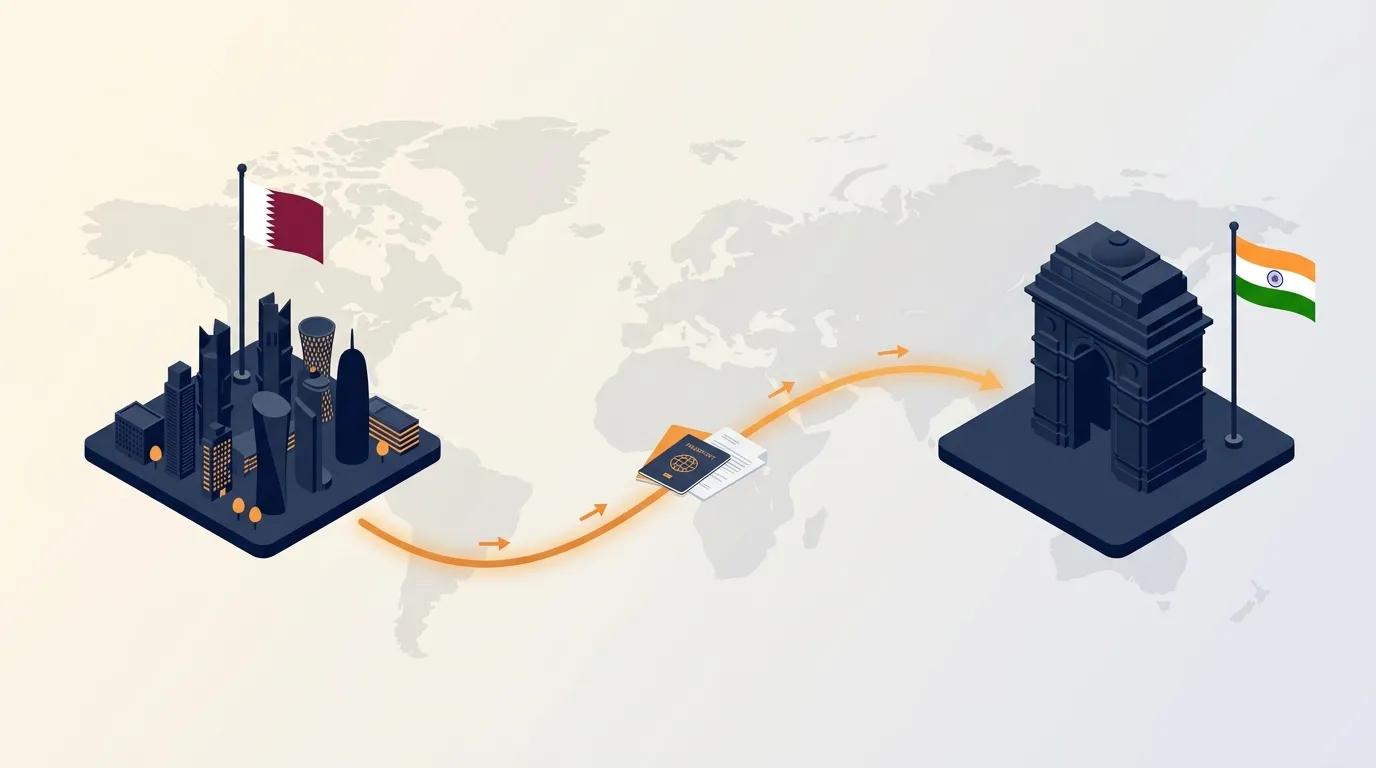
Company registration in India runs on the same statutory rail whoever the parent is, but the Qatar corridor carries its own FEMA reporting, treaty and banking wrinkles. Here is the process, cost and timeline that actually holds in 2026.
## The Qatar to India Corridor in 2026
Qatari family offices and QIA adjacent capital continue to look at India for consumer, infrastructure and healthcare positions, and 2026 is seeing more of that capital move from passive investment conversations into active operating structures. For some Qatari groups, India is a market entry. For others, it is a regional operating base, a sourcing hub or a long term platform for downstream investment.
The practical attraction is clear. India offers scale, deep managerial talent and sectors where patient GCC capital can deploy with real operating leverage. But for a Qatari parent that wants more than a minority portfolio stake, the question becomes structural: how do you register a company in India from Qatar cleanly, with the right remittance path, the right ownership documents and a compliance calendar that does not become a mess after incorporation.
This guide walks through that route for 2026: the preferred subsidiary structure, the incorporation sequence in India, the document legalisation chain in Qatar, SWIFT remittance and FIRC handling, the treaty position on dividends and royalties, and the compliance obligations that begin once the Indian entity is live. It is written for family office principals, CFOs and operating teams who want a practical plan rather than a broad market note.
A helpful operational detail is time zone overlap. Qatar runs two and a half hours behind India, which gives you a clean shared work window for legalisation follow ups, board approvals and bank compliance calls.
## Entity Choice: Qatari Parent LLC or QFC Entity, Indian Private Limited Subsidiary
For most Qatari promoters, whether the parent is a mainland Qatari LLC or a QFC entity, the Indian operating vehicle is best set up as a private limited company. That structure allows 100 percent foreign ownership in most sectors under India's automatic route, gives the Indian company its own legal identity, and lets it hire, contract, invoice and hold licences locally.
Alternative structures such as liaison offices or branch offices exist, but they are narrower tools and usually do not suit a parent that wants a full operating footprint. A private limited subsidiary is the standard structure banks and regulators understand, and it is the one our [foreign subsidiary setup service](/services/foreign-subsidiary.html) is designed around for cross border India entry.
The parent entity form in Qatar matters less than the quality of the ownership documentation and authorising resolutions. What Indian authorities and banks care about is a clean chain of authority, clear beneficial ownership and properly legalised records they can rely on.
## Step by Step Incorporation: DSC, Name Reservation, SPICe+, MoA
Once the cross border document set is ready, the Indian formation sequence is relatively standard.
- Digital Signature Certificate for the proposed directors
- Name reservation through the MCA portal
- SPICe+ filing for incorporation, PAN, TAN and related registrations
- Memorandum of Association and Articles of Association reflecting the Qatari parent as subscriber
- Certificate of Incorporation from the Registrar of Companies
- Bank account opening, capital remittance and post incorporation filings
What tends to move the real timeline is not the Indian portal. It is the quality and completeness of the legalised Qatar side documents before the filing starts.
## Documents and the Legalisation Chain in Qatar
Qatar is not an apostille corridor for this purpose. The relevant documents need to go through a consular legalisation chain before they are usable in India.
The sequence is: notarise the corporate documents in Qatar, authenticate them at the Qatari Ministry of Foreign Affairs, and then legalise them at the Indian Embassy in Doha. Only after that do they become suitable for the Indian incorporation pack.
Typical documents include the parent company's registration and constitutional records, board or shareholder resolutions approving the Indian subsidiary, and identity and address records for directors, signatories and beneficial owners. The exact set depends on the parent structure and the Indian bank's KYC expectations, but the core principle is the same: the Indian side needs a complete and legally authenticated ownership and authority file.
This is one of the places where a great deal of time gets lost if the document set is prepared in a local format that works in Doha but not in the form an Indian registrar or bank wants to see. The cure is simple and unglamorous: build the Qatar documents to the Indian checklist, not just to the home jurisdiction's internal standard.
## Resident Director Requirement
Indian company law requires every private limited company to have at least one director who has been resident in India for the statutory period in the preceding year. A Qatari family office or operating business usually does not have such a person internally, so the normal structure includes a nominee resident director in India.
This is a routine compliance step. The nominee director fulfils the Indian legal requirement while the Qatari parent retains ownership and board control. The resident director is not a substitute owner and does not change the commercial control structure.
## Banking, SWIFT Remittance and FIRC
Once the company is incorporated and its bank account is active, the Qatari parent remits capital into India by SWIFT transfer. In practice, QNB and other major Qatari banks often route through correspondent banking channels for this corridor, and Indian banks will want a clean view of source of funds, beneficial ownership and the parent authorisation set.
When the funds land, the Indian bank issues a Foreign Inward Remittance Certificate, or FIRC, confirming the inflow and its purpose. After the shares are allotted to the Qatari parent, the Indian company must file Form FC-GPR within 30 days of allotment. This is core [FEMA compliance](/services/fema-compliances.html), and if it is missed or filed inaccurately, the clean up later is more painful than doing it correctly the first time.
## Corridor Taxes: Corporate Tax, GST and the India Qatar Treaty
At the Indian operating level, the subsidiary pays Indian corporate tax at 25 percent under the standard regime or 22 percent under the newer concessional regime where the conditions are met. GST at 18 percent applies to most services, with other rates depending on the specific supply.
For remittances back to Qatar, the treaty position is attractive. Dividend withholding is generally 5 percent where the Qatari company holds at least 10 percent of the capital, and 10 percent otherwise. Royalties are generally taxed at 10 percent. That makes it worth planning the ownership and cash extraction model properly from the start, especially if the parent expects technology licensing, service fees or regular dividend flows.
That is where our [transfer pricing advisory](/services/transfer-pricing-advisory.html) support becomes useful, particularly if the Indian company will pay group service charges, brand royalties or management fees. And when the focus turns to bringing cash back to Doha cleanly, our guide on [repatriation of profits from India](/insights/repatriation-of-profits-from-india-to-a-foreign-parent-the-2026-strategic-guide) is the practical starting point.
## Ongoing Compliance Calendar
The recurring compliance stack for a Qatari owned Indian subsidiary is predictable but needs active management.
- Annual FLA return by 15 July each year
- Registrar of Companies annual filings
- Monthly GST compliance where applicable
- Monthly TDS compliance and related quarterly filings
- Statutory audit and annual income tax return
The risk is not that these filings are conceptually difficult. The risk is that an overseas parent assumes they can be handled casually after incorporation. They cannot. A missed annual FLA filing or recurring GST delay creates avoidable friction with banks, auditors and future remittance planning. Our [virtual CFO service](/services/ecfo.html) is built to manage exactly this calendar for overseas parents that want clean reporting without building a full local back office immediately.
## Local Reporting to the Qatari Parent
The Indian subsidiary maintains statutory books under Indian accounting rules and on the Indian financial year. The Qatari parent will usually want monthly or quarterly management reporting aligned to its own investment committee rhythm, treasury oversight and audit requirements.
That means building a reporting bridge from Indian statutory books into the parent format from the start. If the Indian company is handling related party services, import contracts or cross charges, those numbers also need to tie back to transfer pricing support and treaty claims. Clean monthly reporting is not an optional luxury in this corridor, it is what keeps the ownership and cash flow story coherent.
## Timeline and Fees
For a Qatari parent with documents prepared correctly, the Indian incorporation itself can move on a normal timeline once the legalised document pack is ready. In practical terms, many structures can move through incorporation and immediate registrations within about 30 to 45 days after the document chain is complete.
The legalisation process in Qatar is the step that tends to drive the front end timeline, especially where multiple shareholder or family office layers need to be documented and signed. Once that part is done, the Indian filing path is comparatively mechanical.
Fees should be quoted on a fixed basis before signing, covering the incorporation, the first foreign investment reporting cycle and the initial compliance setup. That gives the parent a real execution budget and avoids drift.
## Why Qatari Investors Pick Krystal7
Qatari investors and operating businesses usually want one team that can coordinate legalisation, banking and Indian compliance as a single workstream. We bring over 10 years of cross border practice, more than 10,000 startups and founders advised across India and five continents. Our work is led by Chartered Accountants, we reply to first inquiries within 4 business hours, and we quote fixed fees before the engagement begins. That matters in a corridor where the ownership documents, remittance record and treaty access all need to line up cleanly from the first filing onward.
The [wholly owned subsidiary in India guide](/insights/wholly-owned-subsidiary-in-india) covers the structure most parents pick, and the [registration service page](/services/foreign-subsidiary.html) shows the fixed fee.
## Frequently Asked Questions
### Can a Qatari company own 100 percent of an Indian subsidiary
Yes. In most sectors under India's automatic route, a Qatari parent LLC or QFC entity can own 100 percent of an Indian private limited subsidiary without a local shareholder.
### How long does it take to register an Indian company from Qatar
Once the legalised document pack is ready, the Indian incorporation itself usually fits within a 30 to 45 day window. The front end timeline is often driven by notarisation, Ministry of Foreign Affairs authentication and Indian Embassy legalisation in Doha.
### Which documents need legalisation in Qatar
The Qatari parent's registration and constitutional documents, authorising board or shareholder resolutions, and director, signatory and beneficial owner identity documents usually need notarisation in Qatar, authentication at the Qatari Ministry of Foreign Affairs, and legalisation at the Indian Embassy in Doha.
### What is the dividend withholding rate under the India Qatar treaty
Dividend withholding is generally 5 percent where the Qatari company holds at least 10 percent of the capital, and 10 percent otherwise. Royalties are generally taxed at 10 percent under the treaty.
### Do I need to travel to India to incorporate
No. The process can usually be handled remotely if the legalised Qatar documents are prepared correctly and the Indian resident director requirement is covered within the structure.
### What does it cost to set up an Indian subsidiary from Qatar
Costs depend on scope and document complexity, but the right approach is a fixed fee agreed before signing, covering incorporation, the first stage of FEMA compliance and the immediate post incorporation setup.
Frequently Asked Questions
Can a Qatari company own 100 percent of an Indian subsidiary
How long does it take to register an Indian company from Qatar
Which documents need legalisation in Qatar
What is the dividend withholding rate under the India Qatar treaty
Do I need to travel to India to incorporate
What does it cost to set up an Indian subsidiary from Qatar
Facing this in your own entity?
Guides explain the rules. A conversation solves your specific case. Talk to a Krystal7 advisor about your India entry, FEMA, or compliance position.
Book a Discovery Call